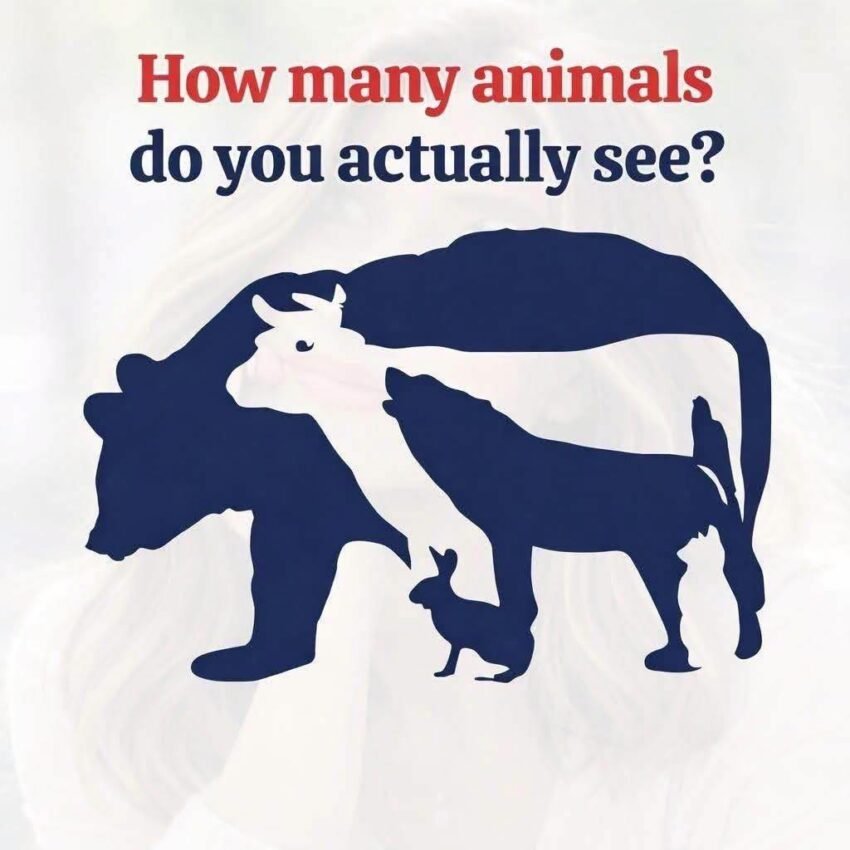
The Hidden Menagerie: How Many Animals Do You Actually See Without Knowing It?
Take a slow walk down your suburban street, wander through a manicured city park, or simply sit on your back porch for ten minutes. How many animals do you think are actively sharing that immediate space with you?
If you count the neighborhood golden retriever being walked on a leash, a stray cat darting behind a trash can, and a couple of pigeons pecking at the pavement, your conscious tally might land at four or five.
We tend to measure our coexistence with the animal kingdom by what registers in our direct field of vision. We assume that if we can’t see, hear, or trip over an animal, it simply isn’t there.
Yet, modern ecological research reveals that humanity is living inside a staggering, invisible menagerie. At any given second, thousands of creatures are crawling beneath your feet, nesting in your roof, tunneling through your lawn, and hovering just beyond the limits of human perception. The number of animals you actually see is a microscopic fraction of the wild world living inches away from your daily life.
The Scale of the Unseen: Why Our Eyes Deceive Us
Human sensory evolution is tuned for survival, not exhaustive biodiversity tracking. Our eyes focus on large, fast-moving threats or resources—things that look like food, predators, or companions.
According to biodiversity studies tracking urban and suburban ecosystems, a typical backyard or apartment balcony in a temperate climate plays host to hundreds of distinct species and thousands of individual animals every single day.
-
The Subterranean Majority: Beneath a single square foot of healthy garden soil live millions of microscopic nematodes, thousands of earthworms, mites, springtails, and centipedes.
-
The Aerial Cloud: Above your head, invisible during daylight hours or camouflaged against bark, countless spiders, beetles, moths, and micro-birds operate in synchronized shifts.
-
The Nocturnal Workforce: The moment the sun dips below the horizon, the cast of characters completely swaps out. Mice, voles, bats, raccoons, and thousands of nocturnal insects wake up to run a parallel society that operates while we sleep.
When you walk down a city sidewalk, you are passing through an ecosystem as densely populated as a coral reef—you are simply blind to the scale because of size, camouflage, and behavioral timing.
The Four Invisible Zones of Coexistence
To comprehend how many animals are truly around you, we can break your immediate environment down into four distinct ecological zones.
1. The Underground Micro-World
You walk across thousands of living organisms every time you cross a lawn or a paved park trail. Earthworms churn the soil, cicada nymphs spend years drinking root sap in total darkness, and colonies of ants build sprawling metropolis networks right beneath your running shoes.
2. The Architectural Horizon (Your Home)
Unless you live in a sterile, airtight bunker, your house or apartment building is an active wildlife habitat. House mice nest in wall voids, silverfish patrol dark bathroom baseboards, dust mites populate your bedding by the millions, and spiders anchor themselves in every upper corner. You do not own your home; you share it with an uninvited tenancy.
3. The Canopy and Airspace
Look up at a suburban oak tree. You might spot a squirrel or a blue jay. But hidden within the canopy leaves and bark fissures are dozens of caterpillar species, parasitic wasps, aphids farmed by ants, and camouflage-expert tree frogs. Every tree is an entire apartment complex of biological activity.
4. The Chemical and Microbial Layer
While microscopic organisms blur the line between “animal” and “microbe,” the sheer volume of tardigrades (water bears) clinging to moss on your brick walls or microscopic Demodex mites living harmlessly in human facial hair follicles proves that our bodies themselves are living ecosystems.
The Cultural Blindness: Why We Feel Isolated from Nature
In modern society, humans live inside heavily insulated bubbles. We walk on asphalt, climate-control our indoor air, pave over dirt, and exterminate anything that crawls across our kitchen counters.
This artificial separation creates a profound psychological illusion that we are separate from nature—that we live in human-made zones while animals live exclusively out in “the wild” national parks and deep forests.
Data from environmental psychology studies shows that this perceived isolation contributes significantly to urban fatigue and eco-anxiety. When you mentally disconnect from the living world around you, you forget that you are part of a massive, functioning biological web. Realizing how many creatures are quietly coexisting with you transforms a lonely concrete walk into a dynamic safari through a hidden urban jungle.
Step-by-Step Guide: How to Uncover the Hidden Animals Around You
If you want to pull back the curtain and actually see the staggering volume of life operating right under your nose, follow this practical observation framework.
-
Change Your Elevation: Stop looking straight ahead at eye level. Kneel down, grab a magnifying glass, and spend five minutes inspecting a single patch of grass or a crumbling brick wall.
-
Turn on the Night Vision: Set up a cheap motion-activated trail camera in your backyard or on a balcony ledge for one weekend. Review the footage to see what roams your space after midnight.
-
Listen Past the Noise: Close your eyes in a local park for sixty seconds. Strip away the sound of cars and focus entirely on animal frequencies: the rustling of leaf litter, the high-pitched social chatter of hidden birds, or the hum of unseen insects.
-
Inspect the Micro-Habitats: Look under rotting logs, lift up a loose garden stone, or check the underside of a trash bin lid. These micro-habitats are high-density hubs for beetles, pill bugs, salamanders, and spiders.
-
Track the Residue: Look for physical evidence rather than the animal itself—chewed leaves, feathers caught in branches, scat on a trail, or paw prints in fresh mud or snow.
Comparative Analysis: Perceived Wildlife vs. Ecological Reality
| Observation Method | What the Average Human Sees | What Is Actually Present |
| A 15-Minute City Walk | 2 dogs, 4 pigeons, 1 squirrel | 400+ insects, dozens of hidden rodents, thousands of spiders, countless microbes |
| A Suburban Backyard | A passing cat, a robin in the grass | 50+ bird species visiting weekly, underground colonies of millions of ants, nocturnal mammals |
| Inside Your Living Room | Zero animals (hopefully) | Silverfish, dust mites, hidden spiders, microscopic skin-dwelling organisms |
Pros and Cons of Knowing How Many Animals Are Around You
Pros:
-
Deepened Ecological Empathy: Builds a profound respect for the resilience and complexity of urban nature.
-
Curiosity and Grounding: Pulls you out of digital fatigue by turning everyday walks into exploratory hunts.
-
Better Pest Management: Understanding natural micro-habitats helps you manage home pests organically without toxic chemical over-reliance.
Cons:
-
Germaphobia and Paranoia: Realizing how many spiders and insects live in your home can trigger unnecessary squeamishness or anxiety for anxious individuals.
-
Over-Inspection Fatigue: Constantly looking down and scanning for movement can make it hard to relax during a casual stroll.
Common Mistakes and How to Fix Them
-
Mistake 1: Equating “Quiet” with “Empty.” Assuming that a quiet forest or a silent city alleyway means no animals are present.
-
The Fix: Understand that most animals are evolutionary masters of concealment and camouflage. Silence often means animals are freezing to watch you, not that they aren’t there.
-
-
Mistake 2: Measuring Life Solely by Size. Disregarding anything smaller than a house cat as insignificant to the local ecosystem.
-
The Fix: Shift your perspective to realize that insects and microorganisms drive the literal foundation of the food web that keeps larger animals and humans alive.
-
-
Mistake 3: Relying Entirely on Daytime Observation. Looking for wildlife only between 9 AM and 5 PM.
-
The Fix: Step outside at dusk or dawn. That is when the true density of mammalian and insect life wakes up to shift cycles.
-
Expert-Level Insights: The Urban Adaptation Phenomenon
Urban ecologists have documented a fascinating evolutionary shift: animals in human-dominated landscapes are rapidly adapting to our schedules and structures. Raccoons, coyotes, peregrine falcons, and urban foxes are becoming smarter, bolder, and more synchronized with human rhythms. They know when garbage trucks run, where streetlights attract moths, and how to navigate storm drain systems like underground highways. The animals you don’t see aren’t hiding from us out of fear anymore—they are actively outsmarting us, living right alongside us in an invisible parallel society.
Frequently Asked Questions
How many animals are in an average suburban backyard?
While exact numbers vary by region and season, a typical suburban yard easily houses tens of thousands of individual animals—ranging from microscopic soil nematodes and earthworms to hundreds of insects, dozens of birds, and a rotating cast of small mammals like mice, squirrels, and moles.
Why do we notice so few of them during the day?
Most animals are naturally cautious, relying on camouflage, nocturnal habits, or burrowing to stay hidden from predators (including humans). Their survival depends on staying out of sight.
Are there really spiders in every house?
Yes. Common house spiders (like cellar spiders and jumping spiders) are specialized to live indoors where they hunt other household pests like flies and mosquitoes. They occupy dark corners, basements, and window frames completely out of our line of sight.
How can I attract more visible wildlife to my space?
If you want to see more wildlife, install a native plant garden, put up a clean bird feeder or birdbath, leave a small brush pile untouched in a corner of your yard, and avoid using chemical pesticides that wipe out the foundational insect base.
Do city animals live shorter lives than rural animals?
It depends on the species. While urban animals face dangers like cars, domestic pets, and rat poison, they also benefit from abundant food waste and fewer natural apex predators, leading to fascinating localized survival adaptations.
What is the most common animal living near humans that we never see?
Earthworms and soil arthropods win by sheer volume. In terms of vertebrates, mice and hidden nocturnal rodents outnumber human visibility by exponential margins in almost every town and city.
Does seeing fewer animals mean an ecosystem is dying?
Often, yes. A sudden absence of common birds, insects, and small mammals is one of the earliest ecological warning signs of habitat destruction, pesticide overuse, or environmental pollution.
How do scientists actually count animals they can’t see?
Scientists use advanced ecological tools like environmental DNA (eDNA) sampling (testing water or soil for shed genetic material), acoustic monitoring arrays, motion-activated camera traps, and mark-recapture population studies.
You are never truly alone. Step outside, look past the obvious surface of your daily routine, and remember that you are sharing your world with a vast, invisible empire of life ticking along right beside you.