The Secret Ingredient to Rescuing Milky White Laundry (And Keeping It Dazzling Forever)
There is a distinct kind of laundry heartbreak that happens when you pull your favorite white linens, crisp cotton shirts, or hotel-quality bedsheets out of the dryer, only to find them sporting a dull, dingy, milky-gray cast.
No matter how much expensive detergent you dump into the dispenser or how hot the water cycle is, those whites have lost their sparkle. Over time, fabric softeners, residual body oils, hard water minerals, and detergent buildup bake into the fibers, leaving a stubborn milky film that standard bleach often makes worse by chemically locking the yellowing compounds into synthetic threads.
Before you throw your whites in the trash or resign yourself to wearing muted greyish-white tees, there is a miraculous, all-natural household ingredient that strips away years of dingy buildup in a single wash.
Let’s uncover the secret ingredient, why your whites turn milky in the first place, and how to restore dazzling brilliance to your laundry room.
Understanding Why Whites Turn Milky and Dull
To fix milky laundry, you first have to understand what causes it. When you wash clothes in hard water, calcium and magnesium bind with leftover laundry detergent and body oils. This creates a microscopic, chalky soap scum that coats every single fiber of your fabric.
When light hits this uneven, chalky residue, it scatters instead of reflecting cleanly. The result? A dull, milky-white appearance that looks permanently dirty, even right after a wash cycle.
Harsh chlorine bleach is often the first thing people reach for, but bleach is a oxidizing agent that can scorch natural fibers, weaken cotton, and react with iron in hard water to turn fabrics permanently yellow. You need something that breaks down mineral bonds and lifts organic residue safely.
The Miracle Ingredient: Washing Soda (Sodium Carbonate)
When it comes to stripping away milky residue and restoring blinding brightness, Washing Soda (Sodium Carbonate) is the undisputed champion of the laundry room.
Not to be confused with standard baking soda (sodium bicarbonate), washing soda is a powerful, highly alkaline mineral compound. With a high pH level, it acts as a natural water softener, breaks down grease and oils instantly, and opens up fabric fibers so trapped dirt and soap scum can wash completely away down the drain.
If washing soda isn’t in your pantry, a powerful secondary alternative is pure white vinegar paired with hydrogen peroxide, which works as an oxygen-bleach booster to lift organic grayness without toxic fumes.
Why Using Natural Mineral Strippers Beats Chemical Bleach
-
Zero Toxic Fumes: Unlike chlorine bleach, washing soda and natural boosters do not release harsh chemical vapors that irritate your lungs and eyes.
-
Protects Fabric Integrity: Natural mineral cleaning strips away buildup without dissolving or weakening delicate cotton and linen fibers.
-
Deep Mineral Chelating: Washing soda neutralizes hard water minerals at the molecular level, preventing future milky residue from forming.
Step-by-Step Actionable Guide: The Ultimate Whitening Soak
For severely dingy, milky-white laundry, a pre-soak is the secret weapon that guarantees dramatic results.
-
Fill Your Basin or Washer: Fill a large tub, utility sink, or your washing machine with the hottest water safe for your fabric type.
-
Add the Miracle Ingredient: Dissolve 1/2 cup of washing soda directly into the hot water until it is fully dissolved. (You can boost this by adding 1/2 cup of hydrogen peroxide).
-
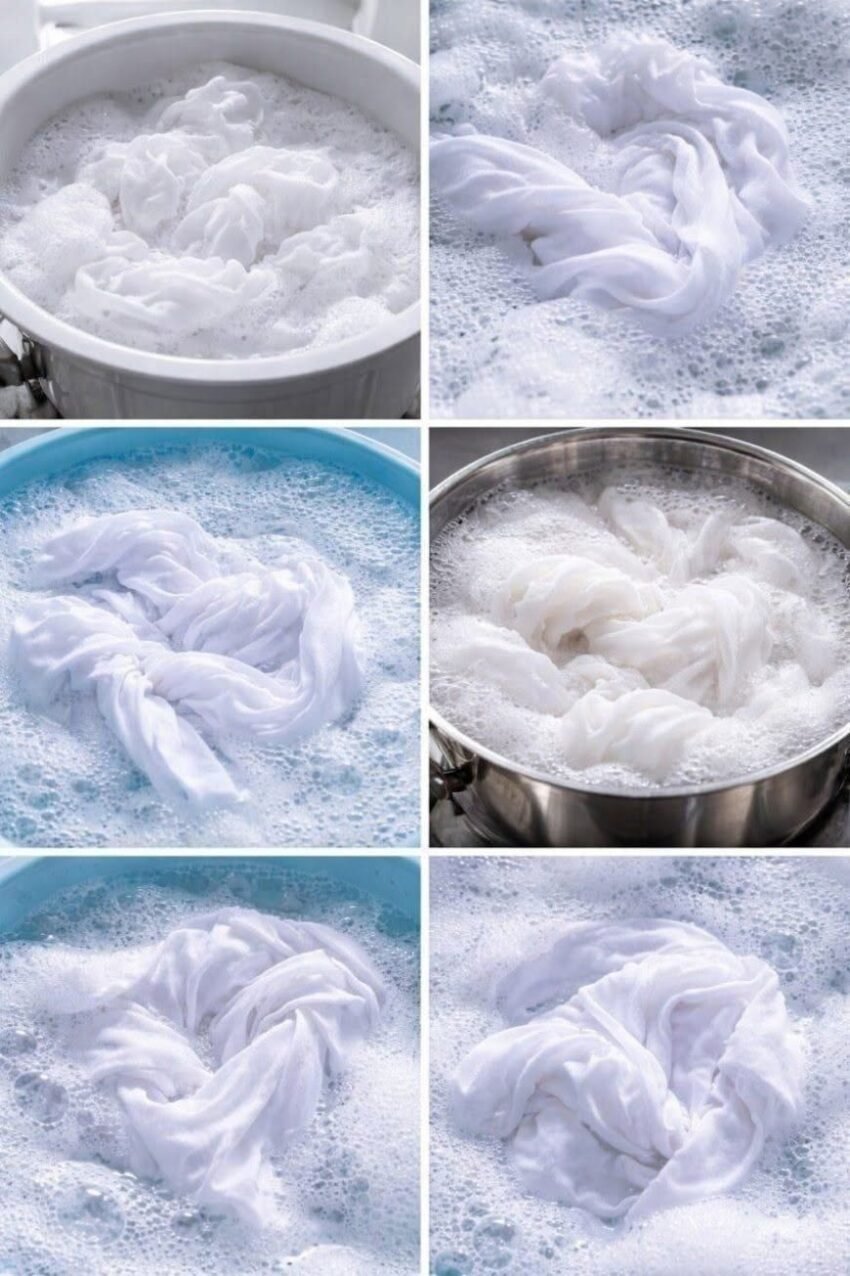
Submerge Your Whites: Place your milky, dull whites into the solution, ensuring they are completely submerged.
-
The Long Soak: Let them soak for at least 4 hours, or ideally overnight. You will literally watch the water turn a cloudy greyish-yellow as the trapped buildup is stripped from the fabric.
-
Run a Normal Cycle: Drain the soak water, transfer the items to your washing machine, and run a normal wash cycle using your regular detergent plus a half-cup of washing soda in the drum.
Washing Soda Soaking vs. Standard Detergent Washing
| Feature | Standard Detergent Washing | Washing Soda Deep Soak |
| Residue Removal | Leaves microscopic soap scum and mineral buildup over time | Strips away years of trapped oils, minerals, and detergent film |
| Water Quality | Struggles against hard water minerals | Softens water and neutralizes calcium and magnesium instantly |
| Fabric Brightness | Whites turn milky, dull, and grey over months | Restores crisp, brilliant, reflective whiteness |
| Safety | Gentle for daily use, but fails on deep buildup | Safe for natural fibers, highly effective restorative treatment |
Common Mistakes and How to Fix Them
-
Mistake: Using too much standard laundry detergent, thinking more soap equals cleaner clothes.
-
Fix: Over-dosing detergent is the #1 cause of milky laundry buildup. Use half the recommended amount of detergent and let washing soda do the heavy lifting.
-
-
Mistake: Mixing colors in your washing soda hot soak.
-
Fix: Washing soda strips dyes as well as buildup; keep this treatment strictly for pure whites and light linens.
-
-
Mistake: Drying dingy whites in a high-heat dryer before the residue is fully removed.
-
Fix: Heat sets stains and mineral buildup permanently. Never machine dry whites if they still look grey or milky—re-soak them until they are bright.
-
Expert-Level Insights and Insider Knowledge
Professional launderers and textile conservationists know that maintaining bright whites is a game of chemistry, not brute force. When hard water meets commercial detergents containing fillers, a microscopic wax-like coating forms on textiles.
Using an alkaline booster like washing soda shifts the electrical charge of the fabric and the soil particles, causing them to repel each other rather than cling together. Furthermore, hanging your freshly washed whites outside in the sun introduces natural UV rays that act as a free, photonic bleaching agent, interacting with residual moisture to oxidize any remaining trace discoloration.
Frequently Asked Questions
-
Can I use baking soda instead of washing soda?
Baking soda (sodium bicarbonate) is much milder and won’t cut through heavy mineral buildup the way washing soda (sodium carbonate) does. If you only have baking soda, bake it in the oven at 400°F for an hour to turn it into washing soda!
-
Is washing soda safe for an HE (High-Efficiency) washing machine?
Yes. Washing soda dissolves completely in hot water and helps prevent detergent scum buildup from clogging your machine’s internal pipes.
-
Why do my whites turn yellow instead of milky?
Yellowing is typically caused by protein stains (sweat, body oils) reacting with heat or aluminum-based antiperspirants, whereas milky-gray is caused by soap and mineral residue.
-
Can I use washing soda on colored clothes?
Washing soda is too harsh for bright colors and can cause fading over time; reserve it strictly for whites and natural linen loads.
-
How often should I do a deep whitening soak?
You only need to strip your whites every 3 to 6 months, or whenever you notice them losing their crisp, bright appearance.
-
Does water temperature matter when using washing soda?
Crucially, yes. Washing soda dissolves and activates best in hot water, which helps melt away trapped body oils and soap film.
-
Can vinegar replace washing soda?
Vinegar is acidic and great for softening fabrics and removing minor odors, but washing soda is alkaline, making it far superior at stripping away stubborn soap scum and mineral residue.
-
Why do hotel sheets stay so much whiter than home laundry?
Hotels use commercial industrial laundry systems with precise alkaline chemical injectors and high-temperature sanitizing washes that prevent milky residue accumulation.
Action Checklist
-
What to do:
-
Add 1/2 cup of washing soda to your hot water white loads to soften water and boost brightness.
-
Soak severely dull or milky whites overnight in a hot water and washing soda basin.
-
Line-dry your whites in the sun whenever possible to harness natural UV bleaching.
-
-
What to avoid:
-
Do not overuse standard laundry detergent, which creates the very soap scum that turns whites milky.
-
Do not use chlorine bleach on mineral-stained fabrics, as it can lock the discoloration in permanently.
-
Do not dry dingy whites in a hot machine before ensuring the buildup is fully stripped.
-
Don’t let hard water and soap scum turn your favorite whites into a dull, milky disappointment. Ditch the toxic bleach, harness the power of washing soda, and bring your laundry back to brilliant life overnight.