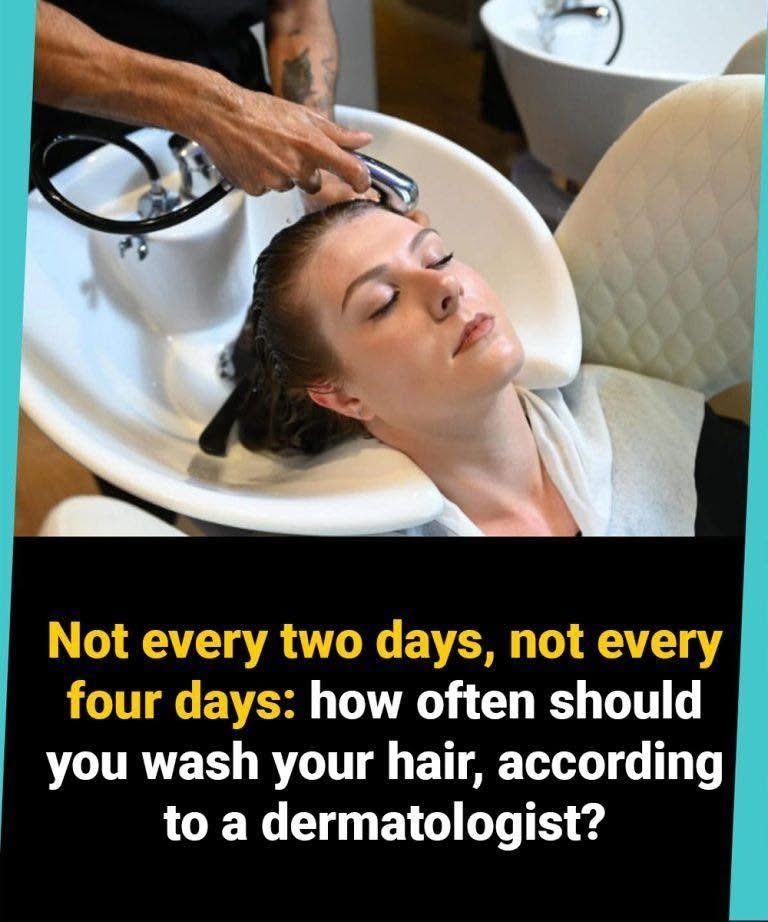
The Golden Rule: There Is No One-Size-Fits-All Schedule
According to dermatologists, there is no rigid, universal rule like washing every two days or every four days that applies to everyone. Instead, the ideal hair-washing frequency depends almost entirely on your hair texture, scalp type, and genetics.
Here is how dermatologists break down how often you should actually wash your hair:
1. By Hair Type and Scalp Needs
-
Oily or Fine Hair: Needs more frequent cleansing. If you have fine hair or an oily scalp, sebum accumulates quickly and can weigh your hair down, meaning washing every 1 to 2 days (or even daily) is usually best.
-
Normal / Medium Hair: Typically thrives on a middle-ground schedule of washing every 2 to 3 days, which allows natural oils to condition the strands without causing heavy buildup.
-
Thick, Coarse, Curly, or Coily Hair: Needs much less frequent washing. Because natural scalp oils have a harder time traveling down textured or curly strands, and because these hair types tend to be drier, washing every 1 to 2 weeks (or when needed) prevents breakage and extreme dryness.
2. Key Factors That Shift the Timeline
-
Age: As we age, our scalp’s oil production naturally decreases, meaning mature hair often benefits from stretching washes out to every 3 to 4 days with a hydrating formula.
-
Activity Level: While heavy sweating and workouts might make you feel like you must wash daily, dermatologists note that your wash schedule should still anchor primarily on your scalp type and oil production rather than just your gym routine.
Frequently Asked Questions
1. Can you “train” your hair to need fewer washes? To a degree, yes. If you are used to washing daily, your scalp may temporarily overproduce oil if you stop suddenly. Gradually extending your time between washes gives your scalp time to rebalance its oil production.
2. Is it bad to wash your hair every day? It isn’t inherently dangerous, but for many people (especially those with dry, thick, or color-treated hair), daily washing strips away essential natural oils, leading to brittleness, frizz, and dryness.
Action Checklist
What to Do:
-
Match your washing frequency to your specific hair texture and oil production rather than following a strict calendar rule.
-
Focus your shampoo primarily on your scalp rather than scrubbing the ends of your hair, preventing unnecessary dryness.
What to Avoid:
-
Assuming a rigid schedule (like forcing yourself to wait 4 days when your scalp is naturally oily) works for every hair type.
Forget arbitrary timelines. The right time to wash your hair is when your scalp tells you it’s needed—balancing your natural oil production with your hair’s unique texture to keep both your scalp and strands healthy.