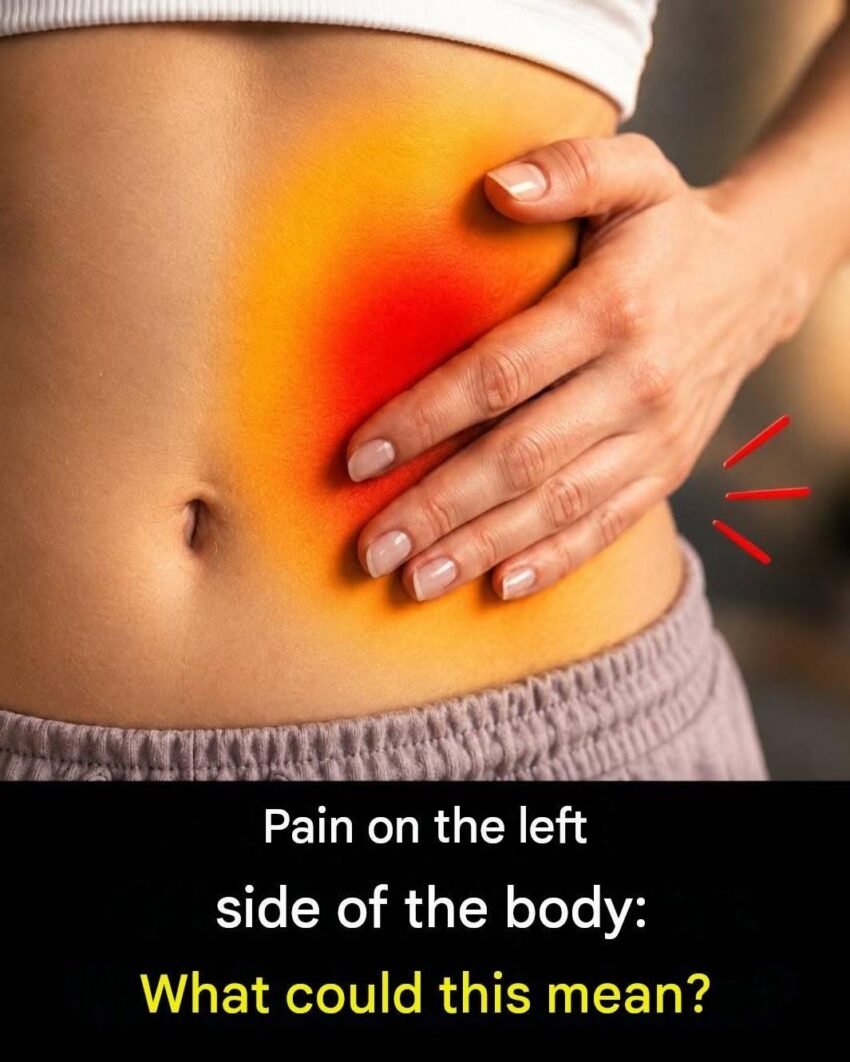
The Left-Side Warning: What Pain on the Left Side of Your Body Actually Means and When to Panic
Pain is the body’s alarm system. When you stub your toe, tweak your lower back, or pull a hamstring, your brain pinpoints the discomfort instantly, letting you adjust, rest, and recover. But what happens when the pain settles exclusively on the left side of your body?
Because the human body is not perfectly symmetrical, left-sided pain carries a unique psychological and clinical weight. Our minds instantly leap to the most terrifying conclusion: a cardiac arrest or a major stroke.
While serious medical emergencies certainly demand immediate attention, left-sided aches and pains can stem from a wide variety of sources—ranging from simple musculoskeletal quirks to gastrointestinal anomalies and neurological triggers. Knowing how to decode left-sided pain can save your life or spare you an unnecessary panic attack.
The Anatomy of Asymmetry: Why Left-Side Pain Feels Different
To understand left-sided discomfort, we must look at visceral lateralization—the anatomical fact that our internal organs are unequally distributed.
-
The Heart and Spleen: Your heart rests slightly left of center, and your spleen (a vital organ for immune function and blood filtration) lives exclusively in the upper left quadrant of your abdomen.
-
The Colon and Lungs: The descending colon runs down the entire left side of your lower abdomen, and your left lung shares chest cavity space with the cardiac muscle.
Because major organs are clustered uniquely on this side, pain originating here can be referred pain—meaning a problem in an organ sends neurological signals that the brain registers as discomfort in the surrounding skin, muscles, or joints.
Decoding Left-Side Pain by Region
Pain on the left side requires context. Let’s break down what your body is trying to tell you based on where the discomfort strikes.
1. Upper Left Chest and Shoulder Pain
-
What It Could Mean: This is the classic, high-stakes zone. Beyond musculoskeletal chest wall strain (costochondritis) or trapped gas, left-sided chest pressure, tightness radiating down the left arm, or a gripping ache in the left shoulder can signal cardiac ischemia or a myocardial infarction. The vagus nerve bridges the heart, left shoulder, and jaw, making referred cardiac pain notoriously deceptive.
-
The Action Triggers: If chest pain is accompanied by shortness of breath, cold sweats, dizziness, or jaw tightness, treat it as a medical emergency immediately.
2. Upper Left Abdominal Pain (Below the Ribcage)
-
What It Could Mean: This area houses your stomach, pancreas, and spleen. Sharp, localized pain here can indicate gastritis (inflammation of the stomach lining), a peptic ulcer, or an enlarged spleen (splenomegaly). Sometimes, trapped gas in the splenic flexure of the colon (where the colon bends near the spleen) creates a sharp, stabbing pressure that mimics a heart attack, causing panic that quickly subsides once digestion moves.
3. Lower Left Abdominal Pain
-
What It Could Mean: The undisputed heavyweight champion of lower left abdominal pain is diverticulitis—inflammation or infection of small pouches (diverticula) that form in the wall of the colon. Because waste hardens as it travels down the descending colon, this area is a prime site for localized infection, cramping, and tenderness. For women, lower left pain can also indicate ovarian cysts or endometriosis.
4. Left-Sided Head, Neck, and Facial Pain
-
What It Could Mean: Throbbing pain strictly localized to the left side of the head is frequently linked to migraines, tension headaches, or temporal arteritis. However, sudden left-sided facial drooping, weakness in the left arm or leg, and slurred speech are textbook warning signs of a stroke affecting the right hemisphere of the brain (which controls the left side of the body).
The Cultural Anxiety: Why We Hyper-Fixate on Left-Side Symptoms
In modern society, health anxiety is heavily amplified by digital symptom checkers. If you type “left arm ache and chest tightness” into a search engine, you are instantly hit with worst-case scenarios.
While health literacy is critical, this hyper-fixation often creates a vicious cycle: anxiety triggers physical symptoms (like rapid heart rate, chest muscle tension, and shallow breathing), which mimics a cardiac event, which in turn fuels more health panic. Learning the difference between sharp, fleeting musculoskeletal spasms and dull, progressive visceral distress helps break this anxiety loop.
Step-by-Step Guide: How to Assess Your Left-Side Pain
When left-sided pain strikes, do not panic. Run through this objective, step-by-step triage protocol.
-
Test the Trigger (Palpation Test): Press gently on the painful area with your fingers. If pressing on your chest wall, ribs, or abdominal muscles reproduces the sharp pain instantly, it is almost certainly musculoskeletal or localized inflammation, not an internal organ crisis.
-
Evaluate the Onset and Quality: Did the pain hit like a freight train out of nowhere, or did it build slowly over hours or days? Sharp, knife-like pain that flashes for a second is rarely cardiac; deep, squeezing, relentless pressure is a red flag.
-
Check for Systemic Red Flags: Are you experiencing nausea, cold sweats, unexplained breathlessness, dizziness, fever, or changes in your bowel habits (like blood in the stool)?
-
Rest and Monitor for 15 Minutes: Sit down, slow your breathing, and drink a glass of water. If the pain is simple gas or postural strain, it will begin to soften within a quarter of an hour.
-
Seek Professional Evaluation: If pain persists, worsens, or is accompanied by systemic red flags, stop guessing and schedule an appointment with your physician or visit urgent care.
Comparative Analysis: Harmless Musculoskeletal Pain vs. Dangerous Visceral Warnings
| Metric | Benign Musculoskeletal / Gas Pain | Dangerous Cardiac / Organ Warning |
| Trigger | Movement, twisting, heavy lifting, heavy meals | Appears spontaneously during rest or light activity |
| Duration | Fleeting, sharp spasms or temporary gas cramps | Continuous, unrelenting pressure lasting > 15 minutes |
| Response to Pressure | Hurts worse when you press on the area with fingers | Unaffected by pressing on the skin or chest wall |
| Associated Signs | None, or localized muscle soreness | Shortness of breath, sweating, radiation to jaw/arm |
Pros and Cons of Hyper-Monitoring Your Body
Pros:
-
Early Emergency Detection: Catastrophes like heart attacks, strokes, or acute diverticulitis are caught before they become fatal.
-
Body Awareness: Teaches you to recognize normal physiological quirks versus abnormal distress.
Cons:
-
Hypochondriacal Panic: Turning every minor muscle twitch or gas bubble into an existential threat.
-
Medical Burnout: Unnecessary emergency room visits for benign musculoskeletal aches can rack up massive medical bills and anxiety.
Common Mistakes and How to Avoid Them
-
Mistake 1: Assuming Age Grants Immunity. Believing that because you are in your 20s or 30s, left-sided chest pain or neurological numbness couldn’t possibly be serious.
-
The Fix: While heart attacks are statistically rarer in young adults, congenital conditions, stress-induced cardiomyopathy, and neurological issues can occur at any age. Always prioritize symptoms over demographic averages.
-
-
Mistake 2: Self-Diagnosing With Internet Lists. Concluding you have a terrifying disease based on a single vague symptom.
-
The Fix: Look at symptom clusters. A single symptom in isolation is often meaningless; a cluster of symptoms (e.g., lower left pain + fever + nausea) provides a clear diagnostic picture.
-
-
Mistake 3: Masking Pain With Over-the-Counter Meds. Popping painkillers for severe, persistent abdominal or chest pain without investigating the root cause.
-
The Fix: Use painkillers only for diagnosed, minor musculoskeletal strains. Never mask severe, unexplained visceral pain.
-
Expert-Level Insights: The Brain-Gut and Cardiac Connection
Cardiologists and neurologists emphasize that the nervous system does not have dedicated sensory pathways for every internal organ. Instead, visceral nerves share spinal cord entry points with somatic nerves from your skin and muscles. When an organ like your heart or colon struggles, your brain gets confused about where the signal originated, projecting the pain outward to the left arm, shoulder, or side of the abdomen. Understanding this neural crosstalk explains why a failing organ can make your skin or shoulder feel bruised and aching.
Frequently Asked Questions
Could left-sided rib pain just be gas?
Yes. Trapped gas in the splenic flexure of the colon (where the large intestine turns near the spleen) frequently creates sharp, localized pain under the left ribcage that easily mimics heart or lung issues.
What are the primary signs of diverticulitis in the lower left abdomen?
Diverticulitis typically presents as steady, aching pain in the lower left abdomen, often accompanied by fever, nausea, alternating bouts of constipation and diarrhea, and abdominal tenderness.
Why does a heart attack hurt on the left side specifically?
Because the human heart is positioned slightly to the left of the sternum, and its primary nerve pathways feed into the spinal segments corresponding to the left chest, shoulder, and arm.
When should I go straight to the ER for left-side pain?
Go to the emergency room immediately if left-sided chest pain is crushing, tight, or burning, and is accompanied by shortness of breath, cold sweats, lightheadedness, or pain radiating down your left arm or up into your jaw.
Can anxiety cause pain exclusively on the left side of the body?
Yes. Anxiety frequently causes hyperventilation, muscle tension, and chest wall spasms (costochondritis) that commonly manifest as a sharp ache or tightness on the left side of the chest.
Is left-sided back pain a sign of kidney trouble?
It can be. While kidney stones or kidney infections usually cause flank pain in the back just below the ribcage that can radiate to either side, left-sided kidney issues will hurt specifically on the left flank.
How do doctors differentiate between muscle strain and heart pain?
Doctors use an electrocardiogram (ECG) to check electrical heart activity, blood tests to check for cardiac enzymes (like troponin), and physical examinations to see if pressing on the chest wall reproduces the pain.
What should I do if my left arm feels numb and weak?
If left arm numbness is accompanied by facial drooping and slurred speech, call 911 immediately as a stroke sign. If it occurs only when turning your head, it may be a pinched nerve in the cervical spine.
Left-sided pain demands respect, not panic. By understanding the anatomical map of your body, recognizing the difference between sharp muscle tension and deep visceral distress, and listening to your symptom clusters, you can respond wisely and protect your health.