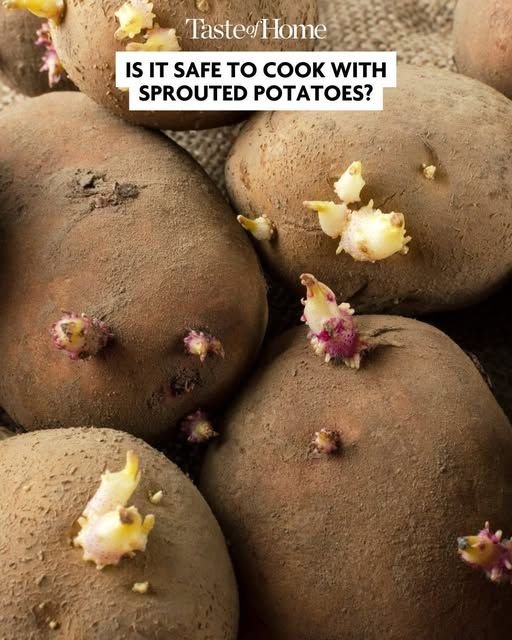
Sprouting Potatoes: Can You Still Eat Them or Should You Throw Them Away?
Wondering whether sprouting potatoes are safe to eat? Learn why potatoes sprout, when they’re still edible, and the warning signs that mean it’s time to toss them.
We’ve all been there.
You’re cleaning out the pantry when you discover a bag of potatoes you completely forgot about. At first glance, they seem fine—until you notice tiny white sprouts poking out from the skin. Sometimes those sprouts are accompanied by green patches, wrinkled skin, or a softer texture than you remember.
Now you’re faced with the question every home cook eventually asks:
Can you still eat a sprouting potato?
The answer isn’t a simple yes or no.
In some cases, sprouting potatoes can still be used safely. In others, they’re better off in the compost bin—or even replanted in the garden. Understanding the difference can help you avoid unnecessary food waste while protecting your health.
Let’s dig into what causes potatoes to sprout, when they’re safe to eat, and when it’s time to say goodbye.
Why Do Potatoes Sprout?
Potatoes are living plant structures known as tubers.
Even after harvesting, they remain biologically active. Given enough time, warmth, moisture, or light exposure, potatoes begin preparing for growth by producing sprouts from their “eyes.”
This is a completely natural process.
Sprouting typically occurs when potatoes are stored in conditions that encourage growth, such as:
- Warm temperatures
- Excess humidity
- Exposure to light
- Long storage periods
The sprouts are essentially the potato’s attempt to create a new plant.
What Happens Inside a Sprouting Potato?
As sprouts develop, the potato uses stored nutrients and energy to support new growth.
Over time, this can cause the potato to become:
- Softer
- Wrinkled
- Less flavorful
- Less nutritious
More importantly, sprouting can be associated with increased levels of naturally occurring compounds called glycoalkaloids.
These compounds help protect potatoes from pests and disease, but excessive amounts may be harmful to humans.
Can You Eat a Potato That Has Sprouted?
The Short Answer
Sometimes, yes.
A potato with a few small sprouts may still be edible if:
- The potato remains firm
- There are no large green areas
- The sprouts are removed completely
- The potato shows no signs of spoilage
Many people simply cut away the sprouts and any surrounding tissue before cooking.
However, not every sprouting potato should be saved.
When Sprouting Potatoes Become Unsafe
The biggest concern isn’t the sprout itself.
It’s the increased concentration of glycoalkaloids, particularly:
- Solanine
- Chaconine
Higher levels can develop in:
- Sprouts
- Green areas
- Damaged portions of the potato
Consuming large amounts may cause symptoms such as:
- Nausea
- Vomiting
- Stomach discomfort
- Diarrhea
- Headache
Although serious poisoning is uncommon, food safety experts generally recommend caution.
What About Green Potatoes?
Green coloration deserves special attention.
Contrary to popular belief, the green color itself isn’t toxic.
The green pigment is chlorophyll, which forms when potatoes are exposed to light.
However, chlorophyll often develops alongside increased glycoalkaloid production.
A potato with small green spots may still be salvageable if the green portions are generously removed.
If a large portion of the potato is green, disposal is usually the safer choice.
Signs a Sprouting Potato Is Still Okay to Use
You may be able to use the potato if:
✔ The sprouts are small
✔ The potato remains firm
✔ There are minimal or no green areas
✔ There is no mold
✔ The potato smells normal
✔ The texture is not excessively shriveled
In these cases, removing the sprouts and any green sections may make the potato suitable for cooking.
Signs It’s Time to Throw It Away
Discard the potato if:
✘ It is very soft or mushy
✘ It has extensive green coloring
✘ The sprouts are large and numerous
✘ It has mold growth
✘ It produces an unpleasant odor
✘ It is severely shriveled
At this point, the quality and safety of the potato may be compromised.
Does Cooking Destroy the Harmful Compounds?
This is a common misconception.
Unfortunately, standard cooking methods do not reliably eliminate glycoalkaloids.
Boiling, baking, roasting, or frying may reduce some compounds slightly, but they are relatively heat-stable.
That’s why trimming away sprouts and green areas before cooking remains important.
Can You Plant Sprouting Potatoes Instead?
Absolutely.
In fact, sprouting potatoes are often used to grow new potato plants.
If the potato is no longer appealing for cooking but remains healthy enough to sprout, you can:
- Cut it into sections containing eyes.
- Allow cut surfaces to dry for a day or two.
- Plant in well-draining soil.
- Keep the soil consistently moist.
With proper care, a single sprouting potato can eventually produce multiple new potatoes.
How to Prevent Potatoes From Sprouting
Proper storage significantly extends potato shelf life.
Store in a Cool Location
Ideal temperatures generally range between 45°F and 50°F (7°C to 10°C).
Keep Them Dark
Light encourages sprouting and greening.
A dark pantry or cellar works best.
Avoid Plastic Bags
Potatoes benefit from airflow.
Paper bags, baskets, or mesh containers are often better choices.
Keep Potatoes Away From Onions
Onions release gases that may accelerate sprouting.
Storing them separately can help extend freshness.
Buy Only What You’ll Use
Bulk purchases save money only if the food gets used before spoiling.
Common Myths About Sprouting Potatoes
Myth #1: Any Sprout Means the Potato Is Toxic
Not necessarily.
Small sprouts on an otherwise firm potato don’t automatically make it unsafe.
Myth #2: Cooking Fixes Everything
Heat does not reliably eliminate harmful glycoalkaloids.
Myth #3: Green Areas Are Just Cosmetic
Green coloration can indicate increased glycoalkaloid levels and should not be ignored.
Myth #4: Soft Potatoes Are Fine If Cooked
Excessively soft potatoes often indicate significant deterioration and should generally be discarded.
A Real-Life Kitchen Scenario
Imagine you purchased a ten-pound bag of potatoes for a holiday gathering.
A few weeks later, three potatoes have tiny sprouts but remain firm. You remove the sprouts, trim a couple of small green spots, and use them in a soup.
The remaining potatoes, however, are soft, heavily sprouted, and green over much of the surface.
Those belong in the compost pile—not your dinner.
The key is evaluating each potato individually rather than assuming all sprouting potatoes are either safe or unsafe.
Frequently Asked Questions
Can I eat potatoes with small sprouts?
Often yes, provided the potato remains firm and the sprouts and any green areas are removed.
Are potato sprouts poisonous?
Potato sprouts contain higher concentrations of glycoalkaloids and should not be eaten.
Is a green potato always unsafe?
Not always. Small green areas can sometimes be trimmed away, but heavily green potatoes should be discarded.
Can children eat sprouting potatoes?
It’s generally best to exercise extra caution with foods containing elevated glycoalkaloid levels.
Do organic potatoes sprout faster?
Organic potatoes may sometimes sprout sooner because they are often treated with fewer sprout-inhibiting substances.
Should I refrigerate potatoes?
Very cold temperatures can alter potato texture and flavor. Cool, dark storage is generally preferred.
Can I plant grocery store potatoes?
Yes, although certified seed potatoes are often recommended for gardening.
What do spoiled potatoes smell like?
Spoiled potatoes may develop a musty, moldy, or unpleasant odor.
Does peeling remove toxins?
Peeling helps remove some glycoalkaloids concentrated near the skin but may not eliminate all risk if the potato is heavily affected.
When in doubt, should I throw the potato away?
Yes. If you’re uncertain about its safety, replacing a potato is far less costly than risking foodborne illness.
Quick Safety Checklist
Safe to Consider Using
✔ Firm texture
✔ Tiny sprouts only
✔ No mold
✔ Minimal green coloration
✔ Normal smell
Time to Toss It
✘ Mushy texture
✘ Large sprouts
✘ Extensive greening
✘ Mold growth
✘ Strong unpleasant odor
✘ Severe shriveling
Conclusion
Discovering sprouts on your potatoes doesn’t automatically mean they’re destined for the trash. In many cases, a firm potato with a few small sprouts can still be used after carefully removing the sprouts and any green portions.
However, heavily sprouted, soft, green, or moldy potatoes should be discarded. Understanding the difference can help reduce food waste while ensuring your meals remain safe and enjoyable.
And if you don’t want to throw those sprouting potatoes away? Consider planting them. Today’s forgotten pantry potato could become tomorrow’s homegrown harvest.
Small sprouts don’t always mean a potato is unusable, but extensive sprouting, greening, softness, or mold are clear signs it’s time to toss it—or plant it instead.