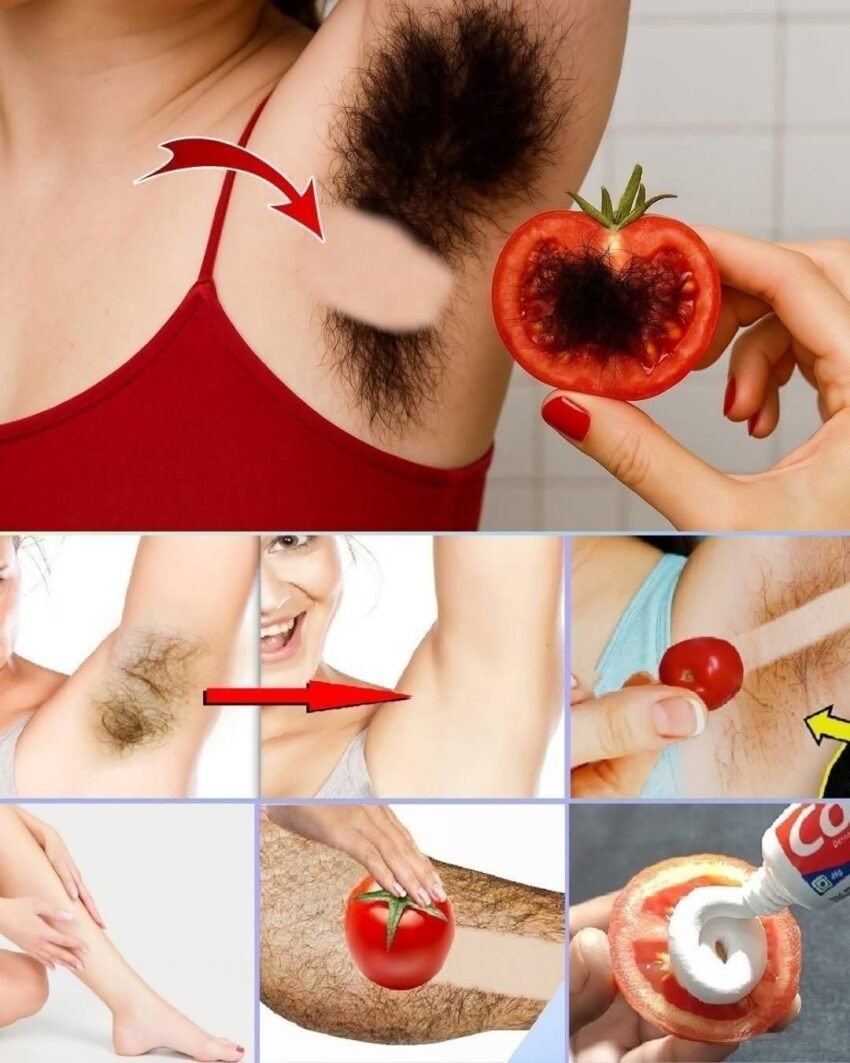
Stop Shaving the Old Way! The Truth About “Permanent” Hair Removal Tricks—and What Really Works
Tired of shaving? Learn which hair-removal methods actually reduce regrowth, which viral tricks are myths, and what results you can realistically expect.
Shaving works—but only until the hair grows back.
Then comes the familiar routine: shave, wait a few days, notice stubble, shave again. Over time, it’s easy to start searching for something better, especially when social media promises that a simple homemade trick can make unwanted hair disappear permanently.
You may have seen claims involving sugar, lemon, turmeric, baking soda, toothpaste, pumice stones, or homemade pastes.
Some promise slower growth.
Others claim to destroy the hair follicle altogether.
But there’s a basic question worth asking before putting anything on your skin:
Can a household ingredient actually destroy a hair follicle safely enough to prevent future growth?
Usually, no.
True long-term hair reduction depends on affecting the follicle—the structure responsible for producing the hair—not simply removing the visible hair above the skin.
That distinction explains why some methods last for days, some for weeks or months, and a few can provide much longer-lasting results.
Why shaving doesn’t permanently remove hair
A razor cuts the hair shaft at or near the surface of the skin.
It doesn’t remove the follicle.
That is why hair returns.
And despite a common misconception, shaving doesn’t make hair grow back thicker.
The American Academy of Dermatology Association explains that shaving does not change the thickness, color, or growth rate of hair. Hair can look thicker or darker when it first grows back because the razor creates a blunt edge rather than the naturally tapered end of an uncut hair. (aad.org)
So if you have been shaving for years and feel that your hair has become coarser, the razor probably isn’t the reason.
What actually counts as “permanent” hair removal?
This is where marketing language becomes confusing.
There is a difference between:
Temporary hair removal
and
Long-term hair reduction
and
Permanent hair removal.
Waxing, shaving, depilatory creams, and epilators can remove hair for varying lengths of time.
Laser hair removal can produce long-term hair reduction, often requiring multiple treatments and maintenance.
Electrolysis is different because it uses an electric current to destroy individual hair follicles and is recognized by the U.S. Food and Drug Administration as a method of permanent hair removal. (fda.gov)
That doesn’t mean everyone will become completely hair-free forever.
Hair biology is complicated, and hormonal changes can affect future growth.
But it explains why professional treatments work differently from homemade recipes.
The methods that really work
Let’s compare the major options.
| Method | How it works | Typical result | Long-term? |
|---|---|---|---|
| Shaving | Cuts hair at skin surface | Short-term | No |
| Depilatory cream | Chemically breaks down hair | Short-term | No |
| Waxing | Pulls hair from follicle | Longer than shaving | No |
| Epilator | Mechanically removes hairs | Longer than shaving | No |
| Laser | Uses concentrated light to damage follicles | Long-term reduction | Often, with maintenance |
| Electrolysis | Uses electrical current to destroy follicles | Permanent removal of treated hairs | Yes |
The right choice depends on your skin tone, hair color, treatment area, budget, pain tolerance, and whether your goal is simply less visible hair or genuinely long-term reduction.
Laser hair removal: the most misunderstood option
Laser hair removal is often described online as “permanent.”
That’s an oversimplification.
Laser treatment works by targeting pigment in the hair and generating heat that damages the follicle.
Because hair grows in different phases, not every follicle is equally vulnerable during every session.
That’s why multiple treatments are usually necessary.
The American Academy of Dermatology Association notes that laser hair removal can provide long-lasting results, but people may need maintenance treatments because some hair can eventually return. (aad.org)
The FDA describes approved laser hair-removal devices as producing permanent hair reduction, meaning a stable reduction in the number of hairs regrowing after a treatment regimen. (fda.gov)
That wording matters.
Reduction isn’t the same as guaranteed total elimination.
Why laser works better on some hair than others
Laser hair removal relies heavily on the contrast between hair pigment and skin.
Dark, coarse hair generally responds better because it provides more pigment for the laser to target.
Very light blond, white, gray, and some red hairs can be more difficult to treat because they contain less of the pigment that many laser systems target.
Technology has improved, and different laser wavelengths can be appropriate for different skin types.
But there isn’t one universal laser setting that is ideal for everyone.
This is one reason professional evaluation matters.
What about darker skin tones?
Laser hair removal can be performed safely on many skin tones, but choosing an appropriate device and settings is particularly important.
Some lasers can affect melanin in the skin as well as pigment in the hair.
That can increase the risk of burns or changes in skin pigmentation if treatment isn’t properly selected or performed.
The American Academy of Dermatology Association recommends seeing a board-certified dermatologist or appropriately trained professional and emphasizes the importance of experience treating people with your skin tone. (aad.org)
This is one area where “cheapest online package” isn’t necessarily the best deal.
A complication can cost far more—in money, time, and stress—than the treatment itself.
Electrolysis: the option most often associated with permanent removal
Electrolysis takes a different approach.
A very fine probe is inserted into an individual hair follicle.
An electrical current is then used to destroy the follicle’s growth tissue.
The treated hair is removed, and the process is repeated follicle by follicle.
Because each follicle is treated individually, electrolysis can take considerable time.
But it has a major advantage:
It can work on all hair colors, including hair that contains little or no pigment.
The FDA recognizes electrolysis as a method of permanent hair removal. (fda.gov)
For someone with a small number of stubborn facial hairs, that can make electrolysis particularly attractive.
For a very large body area, however, the time commitment can be substantial.
What about waxing?
Waxing removes the hair from the root rather than simply cutting it at the surface.
That’s why results generally last longer than shaving.
But waxing does not reliably destroy the follicle.
The hair eventually grows again.
Potential downsides include:
- Pain
- Redness
- Ingrown hairs
- Irritation
- Folliculitis
- Skin injury if wax is too hot
People using certain medications that make the skin more fragile may also need to avoid waxing.
If you’re unsure, ask a dermatologist.
Depilatory creams: fast, but temporary
Depilatory products use chemicals to break down the protein structure of the hair.
The hair can then be wiped or washed away.
Because the follicle remains, regrowth is expected.
The bigger concern is skin irritation.
These products contain active chemicals, and leaving them on too long or using them on sensitive or damaged skin can cause irritation or chemical burns.
Always follow the product’s directions and perform a patch test when recommended.
Never assume that because a product is sold over the counter, it can’t irritate your skin.
What about epilators?
An epilator mechanically pulls hairs out from the root.
The result can last longer than shaving because the visible hair has to regrow.
But the follicle remains.
Some people experience:
- Redness
- Pain
- Ingrown hairs
- Irritation
Epilators can be convenient for legs and other areas, but they’re not a permanent solution.
And what about those viral homemade tricks?
This is where things get interesting.
You may have seen recipes claiming that a mixture of:
- Lemon juice
- Baking soda
- Turmeric
- Sugar
- Toothpaste
- Coffee
- Salt
- Papaya
- Raw egg
- Honey
can permanently eliminate unwanted hair.
The problem is that removing or weakening visible hair isn’t the same as destroying the follicle.
A homemade paste can potentially exfoliate the skin.
It may make hair feel different.
It may temporarily remove some hair if combined with friction.
But none of those effects automatically mean the follicle has been permanently destroyed.
Why lemon juice is especially questionable
Lemon juice is acidic.
That doesn’t make it a hair-removal treatment.
Applying lemon or other citrus products to skin can cause irritation, and sunlight exposure after certain plant substances are applied to the skin can sometimes produce a reaction called phytophotodermatitis.
You don’t need to burn your skin in pursuit of slower hair growth.
If a recipe causes stinging, redness, peeling, or burning, stop using it.
“It’s working because it burns” is not a sound skincare principle.
What about turmeric?
Turmeric has a long history of culinary and traditional use, and turmeric-containing skincare products are popular.
But there is a huge difference between saying:
“Turmeric may have anti-inflammatory or antioxidant properties.”
and:
“Turmeric permanently destroys hair follicles.”
The second claim requires evidence that ordinary turmeric use does not provide.
A turmeric paste may temporarily stain the skin yellow.
It may make the skin feel smoother.
Neither outcome proves permanent hair removal.
What about papaya?
Papaya contains an enzyme called papain, which is sometimes included in traditional hair-removal recipes.
You may see claims that papain weakens hair follicles over time.
There is some research interest in plant enzymes and hair growth, but homemade papaya mixtures should not be treated as proven permanent hair-removal treatments.
Concentration, formulation, skin penetration, and actual clinical effectiveness all matter.
A fruit containing an enzyme isn’t automatically equivalent to a scientifically tested treatment.
Could exfoliation reduce hair growth?
Exfoliation can remove dead skin cells and may help reduce the chance of some ingrown hairs.
It does not normally destroy hair follicles.
That’s an important distinction.
If a product makes your skin feel smoother after hair removal, that may be useful.
But smoother skin isn’t evidence that the hair-producing follicle has been eliminated.
Why some “natural hair-removal tricks” seem to work
There’s a simple psychological trap here.
Suppose someone uses a homemade scrub.
They notice less visible hair for a few days.
They conclude:
“The recipe stopped my hair growth.”
But several other explanations are possible.
The hair may have been physically removed.
Some hairs may have broken.
Normal growth cycles may have changed what was visible.
Exfoliation may have removed dead skin and made the area look smoother.
Or the person may simply have experienced slower-looking regrowth.
Without controlled comparison, it’s difficult to know what actually happened.
A better way to choose hair removal
Start with your goal.
If you want the cheapest short-term option
Shaving is hard to beat.
If you want several days or weeks of smoothness
Waxing or epilation may work better.
If you want long-term reduction
Professional laser hair removal may be appropriate.
If you want permanent removal of individual hairs
Electrolysis is the established option.
If you’re considering a homemade recipe
Ask one question:
Is there credible evidence that it can safely affect the follicle?
If the answer is no, don’t expect permanent results.
The face requires extra caution
Facial skin can be more sensitive than skin on the legs or arms.
And facial hair can sometimes be related to hormonal changes.
For women, new or rapidly increasing coarse facial hair can occasionally be associated with hormonal conditions or medications.
If facial hair suddenly becomes much more noticeable—particularly alongside irregular periods, acne, scalp hair thinning, or other hormonal changes—it’s worth discussing with a healthcare professional rather than simply trying stronger hair-removal products.
What if hair suddenly becomes thicker?
Hair changes aren’t always just cosmetic.
Hormonal changes can influence hair growth.
Certain medications can affect hair.
Conditions involving androgen hormones can also increase unwanted facial or body hair.
If a significant change happens unexpectedly, identifying the cause may be more useful than repeatedly removing the hair.
This is especially true when new unwanted hair appears later in adulthood.
A practical long-term strategy
If shaving is becoming frustrating, you don’t necessarily need to abandon it overnight.
Start by deciding what bothers you most.
Problem: razor bumps
Consider changing shaving technique, using a clean sharp razor, shaving in the direction of hair growth, and avoiding repeated passes over the same area.
Problem: daily maintenance
Consider waxing, an epilator, or professional laser treatment depending on the area and your skin and hair characteristics.
Problem: a few stubborn facial hairs
Electrolysis may be worth discussing.
Problem: widespread unwanted hair
A dermatologist can help determine whether laser treatment, another method, or evaluation for an underlying cause makes sense.
How to shave more safely
If shaving remains your preferred method, there’s no reason to feel that you’re doing something “wrong.”
A few basic changes can make it more comfortable.
Before shaving: soften the hair with warm water.
During shaving: use shaving cream or gel and avoid excessive pressure.
Direction: shaving with the direction of hair growth can reduce irritation.
Afterward: rinse and gently moisturize.
Razor: replace dull blades regularly and don’t share razors.
The American Academy of Dermatology Association recommends several of these measures for reducing shaving-related irritation and bumps. (aad.org)
What you should never do
Don’t intentionally burn the skin to “kill” hair.
Don’t use harsh acids that aren’t formulated for hair removal.
Don’t scrape aggressively with abrasive stones.
Don’t apply household chemicals to sensitive areas.
Don’t use a product intended for the legs on the face unless its label specifically says it’s suitable.
And don’t assume severe irritation means a treatment is working.
Skin damage is not proof of follicle destruction.
A mini case scenario
Consider James, who shaves his neck every morning.
He’s tired of razor bumps and sees a social-media recipe claiming that lemon juice and baking soda will permanently remove facial hair.
He tries it.
The skin becomes red and irritated.
A few days later, some stubble is less noticeable.
James assumes the recipe is working.
But the irritation has nothing to do with destroying the follicles.
The temporary change could simply reflect broken hairs or altered visibility.
A dermatologist instead recommends a safer shaving routine and discusses laser hair reduction based on James’s hair color and skin type.
The second approach is less exciting.
It’s also based on how hair follicles actually work.
Frequently Asked Questions
What is the most permanent way to remove hair?
Electrolysis is recognized by the FDA as a method of permanent hair removal because it treats individual hair follicles. Laser hair removal can provide long-term hair reduction but generally isn’t described as guaranteed total permanent removal. (fda.gov)
Does shaving make hair grow back thicker?
No. Shaving doesn’t change the thickness, color, or growth rate of hair. Newly shaved hair can look or feel thicker because it has a blunt cut edge. (aad.org)
Can turmeric permanently remove unwanted hair?
There isn’t strong evidence that ordinary turmeric applications permanently destroy hair follicles. Turmeric can be used in various skincare traditions, but that shouldn’t be confused with proven permanent hair removal.
Can lemon juice stop hair growth?
There is no reliable evidence that applying lemon juice to the skin permanently stops hair growth. It can irritate skin and may cause problems when combined with sun exposure.
Does waxing permanently remove hair?
No. Waxing pulls hair from the root but generally does not permanently destroy the follicle. Hair eventually grows again.
How many laser hair-removal treatments are needed?
The number varies according to the treatment area, hair characteristics, skin type, device, and individual response. Multiple sessions are normally required because hair follicles cycle through different growth phases. (aad.org)
Can laser hair removal work on dark skin?
Yes, laser hair removal can be performed on many darker skin tones, but selecting the appropriate laser and settings is important because skin pigment can also absorb laser energy. Experience treating your particular skin tone matters. (aad.org)
Can home remedies remove facial hair permanently?
There isn’t strong evidence that common kitchen-based remedies can safely and permanently destroy facial hair follicles. Some may temporarily remove hair or exfoliate skin, but that isn’t permanent follicle destruction.
Is laser hair removal completely permanent?
Not necessarily. Laser treatment is generally described as permanent hair reduction rather than guaranteed complete removal. Some hair can return, and maintenance treatments may be needed. (fda.gov)
What should I do if unwanted hair suddenly increases?
Consider speaking with a dermatologist or healthcare professional, particularly if the change is sudden or accompanied by other symptoms. Hormonal changes and certain medications can sometimes contribute to increased hair growth.
Your Hair-Removal Checklist
For temporary results
- ☐ Shave carefully
- ☐ Use shaving gel or cream
- ☐ Avoid excessive pressure
- ☐ Moisturize afterward
- ☐ Consider waxing or epilation if appropriate
For long-term reduction
- ☐ Get a professional assessment
- ☐ Ask whether laser is appropriate for your skin and hair
- ☐ Understand that multiple treatments are usually needed
- ☐ Ask about maintenance
- ☐ Use a qualified practitioner
For permanent removal
- ☐ Consider electrolysis for appropriate areas
- ☐ Understand that treatment is follicle by follicle
- ☐ Choose a properly trained professional
- ☐ Follow aftercare instructions
Avoid
- ☐ Harsh homemade chemical mixtures
- ☐ Deliberately burning the skin
- ☐ Aggressive scraping
- ☐ Unverified “permanent hair removal” recipes
- ☐ Assuming irritation means a treatment is working
If you’re tired of shaving, you’re not alone—and you don’t have to believe every viral hair-removal trick that appears on your screen.
The central fact is simple:
If a method only removes the hair above or around the skin, the follicle remains capable of producing another hair.
Shaving is temporary.
Waxing and epilation last longer but aren’t reliably permanent.
Laser treatment can provide significant long-term hair reduction for appropriate candidates.
Electrolysis can permanently remove treated hairs and is the method recognized by the FDA for permanent hair removal. (fda.gov)
Homemade ingredients such as lemon, turmeric, baking soda, or papaya may sound appealing, but there’s a major difference between a traditional beauty recipe and a clinically established hair-removal treatment.
You don’t need to stop shaving because shaving is “bad.”
You only need to stop expecting a razor—or a kitchen recipe—to do the job of a treatment designed to affect the follicle.
If your goal is genuinely long-lasting hair reduction, focus on methods that have evidence behind them rather than recipes that merely make hair temporarily less visible.
General information only: Hair-removal treatments can cause burns, irritation, pigmentation changes, scarring, or other complications when used incorrectly. A dermatologist or qualified hair-removal professional can help determine which option is appropriate for your skin, hair, and treatment area.