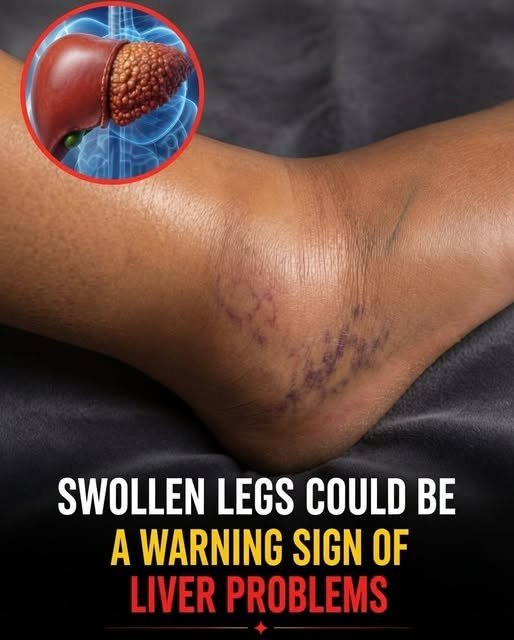
Why Swollen Legs Could Be Your Liver’s Last Warning Call Before Things Get Serious
Discover why persistent leg swelling could point to hidden liver trouble. Learn the vital signs, medical tests, and steps to protect your health today.
You notice it while pulling off your socks at the end of a long workday. That deep, indented ring left behind by the elastic band, or the way your shoes suddenly feel a half-size too tight. Most of us write it off immediately. It is easy to blame gravity after hours at a standing desk, a salty takeout meal from the night before, or just the natural fatigue of getting older. But when fluid retention in your lower extremities lingers, refusing to resolve overnight, your body might be trying to tell you something far more critical than simple exhaustion.
The legs are often the ultimate whistleblowers for systemic issues happening miles away in your core. While swollen ankles—medically known as peripheral edema—can stem from something as straightforward as poor circulation or a long flight, they can also serve as an early alarm system for declining liver function. When the liver, your body’s master filtration and chemical plant, begins to struggle under the weight of conditions like fatty liver disease, hepatitis, or cirrhosis, the delicate fluid balance of your entire circulatory system is thrown into chaos.
Ignoring this signal is a gamble you cannot afford to take. By the time fluid begins pooling in the lower body due to hepatic strain, the underlying issue has usually progressed past the silent, symptom-free stage. This guide breaks down the biological mechanics connecting your calves and ankles to your liver, how to distinguish ordinary swelling from a medical red flag, and the exact steps you need to take to protect your metabolic health.
The Hidden Connection Between Your Liver and Your Lower Legs
To understand why a failing liver makes your ankles swell, you have to look at how your circulatory and metabolic systems communicate. The liver produces a vital protein called albumin. Think of albumin as a microscopic sponge circulating in your bloodstream. Its primary job is to maintain oncotic pressure—essentially acting as an osmotic anchor that keeps fluid locked safely inside your blood vessels rather than leaking out into surrounding tissues.
When chronic inflammation, scarring, or fat accumulation damages liver tissue, albumin production plummets. Without enough albumin floating in the blood, the vascular system loses its grip on fluids. Gravity takes over, pulling that fluid downward into your lower legs, ankles, and feet.
Simultaneously, a struggling liver alters the delicate hormonal balance responsible for managing salt and water retention. Conditions like cirrhosis also create physical blockages, restricting blood flow through the hepatic portal vein. This backup increases pressure throughout the abdominal blood vessels—a phenomenon known as portal hypertension—which further forces fluid out of the vessels and into the lower extremities. It is a domino effect: liver stress leads to protein deficiency, which triggers vascular leakage, culminating in visible, heavy swelling in your legs.
Why Leg Swelling Requires Immediate Attention in the US Healthcare Landscape
In the United States, lifestyle factors have turned liver conditions into a silent epidemic. Non-alcoholic fatty liver disease (NAFLD)—recently renamed metabolic dysfunction-associated steatotic liver disease, or MASLD—now affects an estimated one-third of American adults. Driven by a diet high in ultra-processed foods, refined sugars, and sedentary desk jobs, this condition often progresses quietly for years without classic symptoms like jaundice or severe abdominal pain.
Many Americans dismiss chronic swelling as a minor cosmetic nuisance or a normal side effect of aging, turning to over-the-counter compression socks or diuretics without investigating the root cause. This delay in diagnosis allows progressive liver fibrosis to advance toward irreversible cirrhosis. In a healthcare system where preventative care is often sidelined until acute symptoms manifest, recognizing a subtle sign like pitting edema can be the crucial catalyst that prompts a life-saving medical evaluation.
Recognizing the Signs: Is Your Swelling Liver-Related?
Not all leg swelling originates in the liver. Heart failure, chronic venous insufficiency, kidney disease, and certain medications (such as calcium channel blockers or NSAIDs) can all cause fluid retention. However, hepatic edema has distinct characteristics that set it apart.
If your swelling is tied to liver dysfunction, you will likely notice specific patterns. The swelling is typically bilateral, affecting both legs equally. When you press a finger firmly into the swollen skin for five seconds and release it, an indentation remains behind for a few moments—a hallmark clinical sign known as pitting edema.
Crucially, liver-related leg swelling rarely travels alone. It is usually accompanied by a constellation of secondary symptoms that point back to the abdomen and systemic metabolism.
-
Abdominal Distension: Fluid may also pool in the peritoneal cavity, a condition called ascites, causing your abdomen to feel tight, bloated, or rapidly increase in size.
-
Unexplained Fatigue: A struggling liver cannot efficiently process nutrients or clear toxins, leading to a pervasive, bone-deep exhaustion that sleep does not cure.
-
Skin Changes: You may notice yellowish discoloration of the eyes or skin (jaundice), persistent itching caused by bile salts trapped in the bloodstream, or easy bruising and spider angiomas.
-
Digestive Shifts: Changes in stool color (pale or clay-colored) and dark, tea-colored urine are strong indicators that bilirubin processing is compromised.
Step-by-Step Actionable Guide: What to Do If You Notice Persistent Edema
Discovering unexplained swelling in your legs can trigger anxiety, but a methodical approach ensures you get the right answers without panic.
-
Step 1: Perform the Pitting Test. Press your thumb firmly against your shin or the top of your foot for five seconds. Observe how long the indentation takes to bounce back. Note whether the swelling is present in both legs and if it worsens as the day goes on.
-
Step 2: Audit Your Lifestyle and Medications. Review any prescription drugs you take, particularly blood pressure medications, hormones, or high-dose painkillers, as these are common culprits of benign edema. Reduce your sodium intake drastically for 48 hours to see if dietary salt is the primary driver.
-
Step 3: Schedule a Comprehensive Metabolic Panel. Do not guess—test. Book an appointment with your primary care physician and request a blood panel that specifically checks liver enzymes (ALT, AST, ALP), albumin levels, total bilirubin, and kidney function.
-
Step 4: Request Imaging. If blood work suggests elevated enzymes or low albumin, ask your doctor about a hepatic ultrasound or a non-invasive FibroScan, which measures liver stiffness and fat accumulation with high precision.
-
Step 5: Implement Dietary and Movement Adjustments. While waiting for medical results, support your vascular return by elevating your legs above your heart for 15 minutes several times a day, taking short walks to activate your calf muscle pump, and cutting out processed sugars and alcohol.
Real-World Scenario: The Desk Worker’s Blind Spot
Consider Mark, a 48-year-old software engineer living in Austin, Texas. Working long hours remotely, Mark spent ten hours a day sitting at his kitchen island, fueling his days with energy drinks and weekend barbecues. Over several months, he noticed his ankles swelling by evening. Assuming it was simply the result of a sedentary desk job and too much sodium, he bought compression sleeves and ignored it.
It wasn’t until he developed a subtle yellowish tint in his eyes—which his spouse pointed out during a family dinner—that he finally scheduled a physical. Blood tests revealed severely elevated liver enzymes, and an ultrasound confirmed advanced metabolic dysfunction-associated steatotic liver disease with early-stage fibrosis. Because the leg swelling prompted him to seek care before complete liver failure set in, Mark was able to completely reverse his condition through a medically supervised weight loss program, strict dietary overhaul, and eliminating alcohol. The swollen legs were his body’s final, desperate attempt to get his attention before permanent damage occurred.
Comparing Causes of Lower Leg Edema
| Condition | Primary Cause | Key Characteristics | Accompanying Symptoms |
| Liver-Related Edema | Low albumin, portal hypertension | Bilateral pitting edema, worsens with time | Ascites, jaundice, fatigue, dark urine |
| Heart Failure | Reduced pumping efficiency | Bilateral, pitting, cold skin in extremities | Shortness of breath, orthopnea, rapid weight gain |
| Venous Insufficiency | Damaged vein valves | Unilateral or bilateral, aching heaviness | Varicose veins, skin discoloration, ulcers |
| Kidney Disease | Protein loss in urine (Nephrotic syndrome) | Pitting edema, especially facial/periorbital | Foamy urine, high blood pressure, fatigue |
Common Mistakes to Avoid When Managing Leg Swelling
-
Self-Prescribing Diuretics: Popping leftover water pills without a diagnosis can dangerously drop your blood pressure and strain your kidneys, especially if the underlying cause is low albumin rather than simple fluid overload.
-
Ignoring One-Sided vs. Two-Sided Patterns: Assuming localized swelling in only one leg is a liver issue. A single swollen leg is much more frequently a sign of a deep vein thrombosis (DVT) or localized injury, requiring urgent evaluation.
-
Relying Solely on Compression Garments: While compression socks help manage the symptom of fluid pooling, they do nothing to address the metabolic or hepatic dysfunction causing the fluid leak in the first place.
-
Masking Pain with NSAIDs: Regularly taking ibuprofen or naproxen for leg discomfort can place an additional, unnecessary metabolic burden on an already stressed liver and kidneys.
Expert Insights: Beyond the Obvious Lab Markers
Standard liver panels look at ALT and AST enzymes, but clinicians specializing in metabolic health know these tests can fall within the “normal” range even when significant liver damage is present. If you suspect liver strain, insist on checking your AST-to-ALT ratio, serum albumin, and platelet count. A low platelet count combined with low albumin is often a more sensitive indicator of portal hypertension and advanced fibrosis than routine enzyme tests alone.
Furthermore, pay attention to sleep architecture. Chronic sleep apnea—increasingly recognized as an independent risk factor for aggressive fatty liver disease—co-occurs frequently with metabolic fluid retention. Addressing sleep quality can have a surprisingly direct impact on systemic inflammation and fluid management.
Future Outlook: Where Liver Diagnostics Are Heading
The landscape of liver disease management is evolving rapidly. By 2026, non-invasive diagnostic tools like point-of-care ultrasound and advanced blood-based biomarker panels are making it easier than ever to catch liver fibrosis in primary care settings without immediately requiring a painful liver biopsy. Simultaneously, novel pharmacological treatments targeting metabolic dysfunction-associated steatohepatitis (MASH) are entering the market, offering new hope for patients whose liver stress has progressed past lifestyle intervention alone. Early detection remains the single most powerful tool in altering this trajectory.
Mini Case Scenario: The Weekend Athlete
Sarah, a 36-year-old marathon runner from Chicago, prided herself on her peak physical fitness. Yet, she noticed stubborn ankle swelling after long training runs that persisted for days. Convinced it was just muscular inflammation, she iced and elevated her legs religiously. However, routine blood work for an unrelated insurance policy flagged elevated liver enzymes. Further investigation revealed a genetic predisposition to hemochromatosis—iron overload in the liver—compounded by moderate alcohol consumption. Her active lifestyle had masked her symptoms for years, but the subtle leg swelling was her body’s internal pressure relief valve signaling metabolic distress. Catching it early prevented irreversible organ scarring.
Frequently Asked Questions
-
Can fatty liver disease alone cause swollen legs? Simple fatty liver rarely causes severe leg swelling on its own. However, if simple fatty liver progresses to steatohepatitis (MASH) with inflammation or fibrosis that impacts blood flow or protein synthesis, edema becomes a distinct possibility.
-
Is liver-related leg swelling painful? The swelling itself is typically painless or feels more like a dull, heavy ache due to tissue stretching. If you experience sharp pain, redness, or heat in one leg, suspect a blood clot rather than a liver issue.
-
Does leg swelling from liver disease go away overnight? Unlike normal gravity-induced swelling that often disappears completely by morning, hepatic edema due to low albumin and portal pressure tends to persist or return rapidly upon standing.
-
What blood tests should I ask my doctor for if I have unexplained edema? Request a comprehensive metabolic panel (CMP) that specifically includes albumin, total protein, bilirubin, ALT, AST, and a complete blood count (CBC) to check platelet levels.
-
Can lifestyle changes reverse liver-related fluid retention? Yes, if caught in the early to moderate stages. Weight loss of 7% to 10% of body weight, complete elimination of alcohol, and a diet low in sodium and ultra-processed sugars can significantly reduce liver inflammation and restore fluid balance.
-
Why does a failing liver cause low albumin? The liver is the sole manufacturer of albumin. When hepatocytes (liver cells) are damaged by chronic inflammation or replaced by scar tissue, they lose their synthetic capacity, dropping albumin output.
-
Can certain supplements help reduce liver-related swelling? While supplements like milk thistle or turmeric are popular for liver health, you should never take them without medical supervision when dealing with edema, as they can interact with medications or fail to address the root vascular pressure.
-
When is leg swelling a medical emergency? Seek immediate emergency medical care if your leg swelling is accompanied by sudden shortness of breath, chest pain, coughing up blood, confusion, or a rapidly distended, painful abdomen.
Action Checklist
-
Do: Track your swelling daily, noting whether it pits, affects both legs, and persists overnight.
-
Do: Schedule a comprehensive metabolic panel with your primary care provider to check albumin and liver enzymes.
-
Do: Elevate your legs above your heart multiple times a day to assist lymphatic and venous return.
-
Do: Drastically reduce dietary sodium and eliminate alcohol to ease metabolic strain on the liver.
-
Avoid: Self-prescribing diuretics or over-the-counter water pills without a confirmed medical diagnosis.
-
Avoid: Assuming all bilateral swelling is harmless or solely caused by long hours of sitting.
-
Avoid: Relying exclusively on compression socks without investigating the root systemic cause of fluid retention.
Swollen legs are more than a minor inconvenience or a cosmetic annoyance—they are a vital mechanical alert from your body’s circulatory and metabolic systems. When your liver struggles to maintain protein production and fluid balance, your lower extremities bear the physical weight of that failure. Listening to these early warning signs and pursuing targeted medical diagnostics can mean the difference between catching a reversible condition early and facing severe, long-term health consequences.