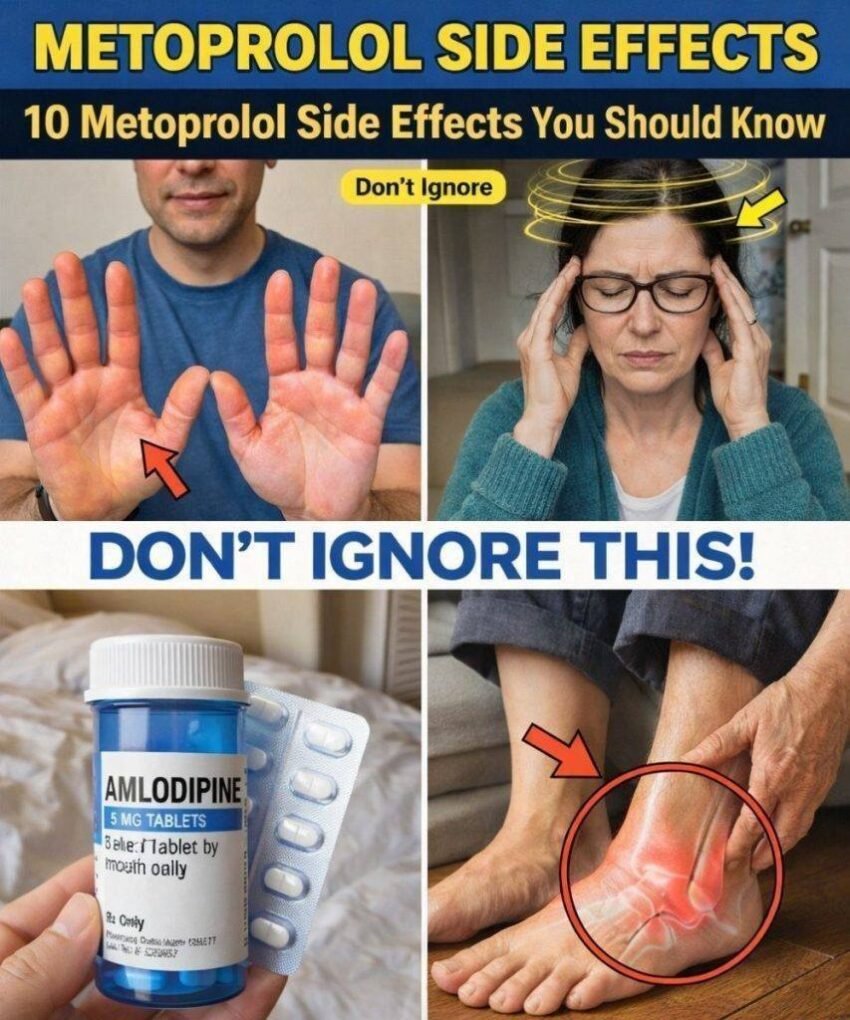
⚠️ The 10 Metoprolol Side Effects Your Doctor Wants You to Understand (Not Fear)
Metoprolol side effects explained clearly. Learn the 10 most common effects, why they happen, and when to contact your doctor safely.
Metoprolol is one of the most commonly prescribed heart medications in the world.
It’s used for conditions like:
- high blood pressure
- chest pain (angina)
- heart rhythm problems
- post-heart attack protection
For many people, it works well and improves quality of life.
But like any medication that affects the heart and nervous system, it can come with side effects—some mild, some worth paying attention to.
The internet often dramatizes these effects, but the reality is more balanced:
👉 Most side effects are predictable, manageable, and closely monitored by doctors.
Still, understanding them helps you stay informed, confident, and safe.
Let’s go through the 10 most important ones in a clear, grounded way.
🧠 First, What Metoprolol Actually Does
Metoprolol is a beta-blocker.
It works by:
- slowing heart rate
- reducing blood pressure
- lowering the heart’s workload
- blocking stress hormones like adrenaline
That’s why it helps protect the heart—but also why it can cause noticeable body changes.
⚠️ 1. Fatigue and Low Energy
This is the most common effect.
Because metoprolol slows your heart rate, your body may feel:
- more tired than usual
- less energetic during activity
- slower to recover after exertion
👉 This often improves as your body adjusts.
⚠️ 2. Slow Heart Rate (Bradycardia)
A reduced heart rate is expected—but sometimes it becomes too low.
You may notice:
- dizziness
- lightheadedness
- feeling unusually weak
Doctors monitor this closely to ensure it stays in a safe range.
⚠️ 3. Dizziness or Lightheadedness
Especially when standing up quickly.
Why it happens:
- lower blood pressure
- slower circulation response
👉 Standing slowly and staying hydrated can help reduce this.
⚠️ 4. Cold Hands and Feet
Metoprolol can reduce blood flow to extremities.
You might feel:
- cold fingers
- cold toes
- occasional numbness
This is usually harmless but uncomfortable.
⚠️ 5. Sleep Disturbances
Some people experience:
- vivid dreams
- difficulty falling asleep
- lighter sleep patterns
This happens because beta-blockers can affect melatonin production in some individuals.
⚠️ 6. Shortness of Breath (In Some Cases)
Rare, but important.
It may occur in people with:
- asthma
- COPD
- sensitive airways
Metoprolol can tighten airway response in certain cases.
👉 Always inform your doctor if breathing changes occur.
⚠️ 7. Depression or Mood Changes
Not everyone experiences this, but some report:
- low mood
- reduced motivation
- emotional dullness
The reason is still being studied but may relate to changes in stress hormone activity.
⚠️ 8. Weight Changes
Some users notice:
- slight weight gain
- reduced metabolism
- less physical activity due to fatigue
It’s usually gradual and lifestyle-related rather than direct fat gain.
⚠️ 9. Sexual Side Effects
Some individuals report:
- reduced libido
- difficulty with performance
This is linked to reduced circulation and hormone interaction.
⚠️ 10. Blood Sugar Masking (Important for Diabetics)
Metoprolol can:
- hide signs of low blood sugar (like fast heartbeat)
- make hypoglycemia harder to detect
👉 This is especially important for people with diabetes.
🧠 What Doctors Want You to Understand
Despite the list, here’s the important perspective:
👉 Most people tolerate metoprolol well
👉 Side effects are usually dose-related
👉 Benefits often outweigh risks in heart conditions
Doctors prescribe it because it significantly reduces:
- heart attack risk
- stroke risk
- blood pressure complications
⚖️ Common vs Serious Side Effects
| Common | Less Common but Important |
|---|---|
| Fatigue | Severe shortness of breath |
| Cold extremities | Fainting |
| Mild dizziness | Very slow heart rate |
| Sleep changes | Allergic reactions |
🧭 When You Should Contact a Doctor
Seek medical advice if you experience:
- fainting or near-fainting
- severe breathing issues
- extremely slow pulse
- worsening depression
- chest pain that changes pattern
Never stop medication suddenly without guidance.
💡 Expert Insight: Why Side Effects Vary So Much
Two people can take the same dose and feel completely different.
Why?
- age
- metabolism
- heart condition severity
- other medications
- lifestyle
That’s why beta-blockers are always personalized.
🌿 How People Usually Adjust Over Time
Most side effects:
- are strongest in the first 1–2 weeks
- stabilize as the body adapts
- become less noticeable over time
Doctors often adjust dosage if needed.
🧠 Real-Life Scenario
A patient starts metoprolol after high blood pressure diagnosis.
First week:
- tired
- slightly dizzy
Second week:
- body adjusts
- energy stabilizes
One month later:
- blood pressure controlled
- side effects minimal
- improved heart stability
This is a common pattern.
❓ FAQs
1. Is metoprolol dangerous?
No, it is widely used and considered safe when prescribed and monitored.
2. Do side effects go away?
Many mild side effects improve as the body adjusts.
3. Can I stop metoprolol suddenly?
No—stopping suddenly can cause serious heart issues.
4. Does metoprolol cause weight gain?
It may contribute indirectly through fatigue and reduced activity.
5. Why am I so tired on metoprolol?
It slows heart rate and reduces adrenaline activity.
6. Can I exercise while taking it?
Yes, but intensity may need adjustment.
7. Does it affect sleep?
Some people experience vivid dreams or sleep changes.
8. Should I worry about every side effect?
No—focus on persistent or severe symptoms and consult your doctor.
🧾 Action Checklist
✔ Do:
- Take medication exactly as prescribed
- Monitor heart rate and blood pressure
- Report unusual symptoms early
- Rise slowly to avoid dizziness
- Maintain regular checkups
✘ Avoid:
- Stopping suddenly
- Self-adjusting dosage
- Ignoring persistent symptoms
- Mixing with unknown medications without advice
🏁 Conclusion
Metoprolol is a powerful and widely trusted medication for heart health—but like all drugs, it interacts with your body in noticeable ways.
Understanding its side effects doesn’t mean fearing it—it means using it wisely and confidently.
Most metoprolol side effects are manageable, temporary, and far outweighed by its heart-protecting benefits when properly prescribed.
If this helped you understand your medication better, share it with someone who might be starting treatment—or keep it as a reference for informed conversations with your doctor.