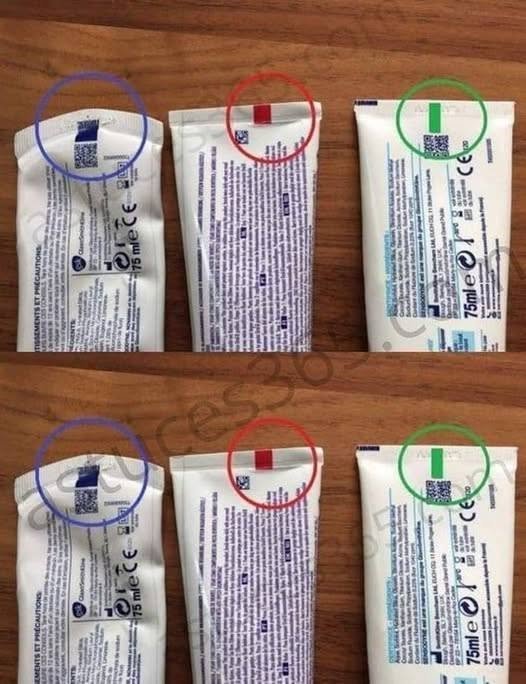
The Mystery of the Colored Line on the Toothpaste Tube: What Does It Really Mean?
Have you ever picked up a tube of toothpaste and noticed a tiny colored square or line sealed into the crimped end? You may have heard claims like:
- Green means all-natural ingredients.
- Blue means a mix of natural and medicinal ingredients.
- Red means natural plus chemicals.
- Black means the toothpaste is made entirely of chemicals.
It’s an intriguing idea—and one that has spread widely on social media for years. But is it true?
The short answer is no.
Let’s uncover the real purpose of those colored marks and separate fact from fiction.
The Viral Myth
Posts circulating online often suggest that the color on the end of a toothpaste tube reveals what’s inside. According to the myth:
| Color | Viral Claim |
|---|---|
| Green | 100% natural ingredients |
| Blue | Natural ingredients with medicine |
| Red | Natural ingredients mixed with chemicals |
| Black | Entirely chemical ingredients |
Although this explanation sounds convincing, it has no basis in how toothpaste is manufactured.
The Real Purpose of the Colored Mark
The colored square or line is known in the packaging industry as an eye mark or registration mark.
It isn’t intended for consumers at all.
Instead, it’s used by automated machines during the manufacturing process. As toothpaste tubes are produced and filled, optical sensors detect these marks to determine exactly where to:
- Cut the tube
- Fold the end
- Seal the tube correctly
Without these marks, machines couldn’t consistently seal thousands of tubes every hour with the necessary precision.
Why Are the Marks Different Colors?
The color isn’t chosen to describe the toothpaste’s ingredients.
Manufacturers select a color that provides the best contrast against the tube’s background so the machine’s optical sensor can detect it easily.
For example:
- A mostly white tube may use a black mark.
- A dark-colored tube may use a white or another contrasting mark.
- Some brands use blue, green, or red simply because those colors are easiest for the equipment to read.
The choice depends on the packaging design—not the formula inside.
How Can You Know What’s Actually in Your Toothpaste?
If you want to know whether a toothpaste contains fluoride, natural extracts, whitening agents, or other ingredients, the answer is found in one place:
The ingredient list printed on the packaging.
In many countries, manufacturers are required to list both active and inactive ingredients. This is the most reliable source of information about what’s in the product.
Why the Myth Became So Popular
The colored-mark story spread because it offers a simple explanation for something most people notice but rarely question.
Psychologists call this an “information gap.” When people see an unfamiliar detail—like a colored mark—they naturally look for an explanation. A memorable story often spreads faster than the less exciting truth.
Social media amplified the myth, with images and videos repeating the same claim until many people assumed it was factual.
Other Packaging Marks You Might Notice
Toothpaste tubes often include additional symbols that really do provide useful information, such as:
- Expiration or “best before” dates
- Recycling symbols
- Batch or lot numbers
- Manufacturer details
- Fluoride content
- Product certifications (where applicable)
Unlike the colored square, these markings are intended to help consumers.
Frequently Asked Questions
Do all toothpaste brands use colored marks?
Most laminated and plastic toothpaste tubes include registration marks, although their appearance may vary depending on the packaging design and manufacturing process.
Does a black mark mean the toothpaste contains harmful chemicals?
No. The color has nothing to do with the ingredients or safety of the toothpaste.
Can two identical toothpastes have different colored marks?
Yes. Different production facilities, packaging materials, or printing designs may require different registration mark colors.
How can I choose a healthier toothpaste?
Read the ingredient list, look for products that meet your dental needs, and consider recommendations from your dentist. The color of the mark on the tube should not influence your decision.
The colored line or square on the end of a toothpaste tube has nothing to do with the ingredients inside. It is simply a manufacturing guide used by automated packaging machines to cut and seal the tube accurately.
So, the next time someone tells you that a green mark means “all natural” or a black mark means “full of chemicals,” you’ll know the truth: it’s just a production mark—not a secret code.
Understanding small details like this helps us become more informed consumers and reminds us that checking reliable product information is always better than relying on internet myths.