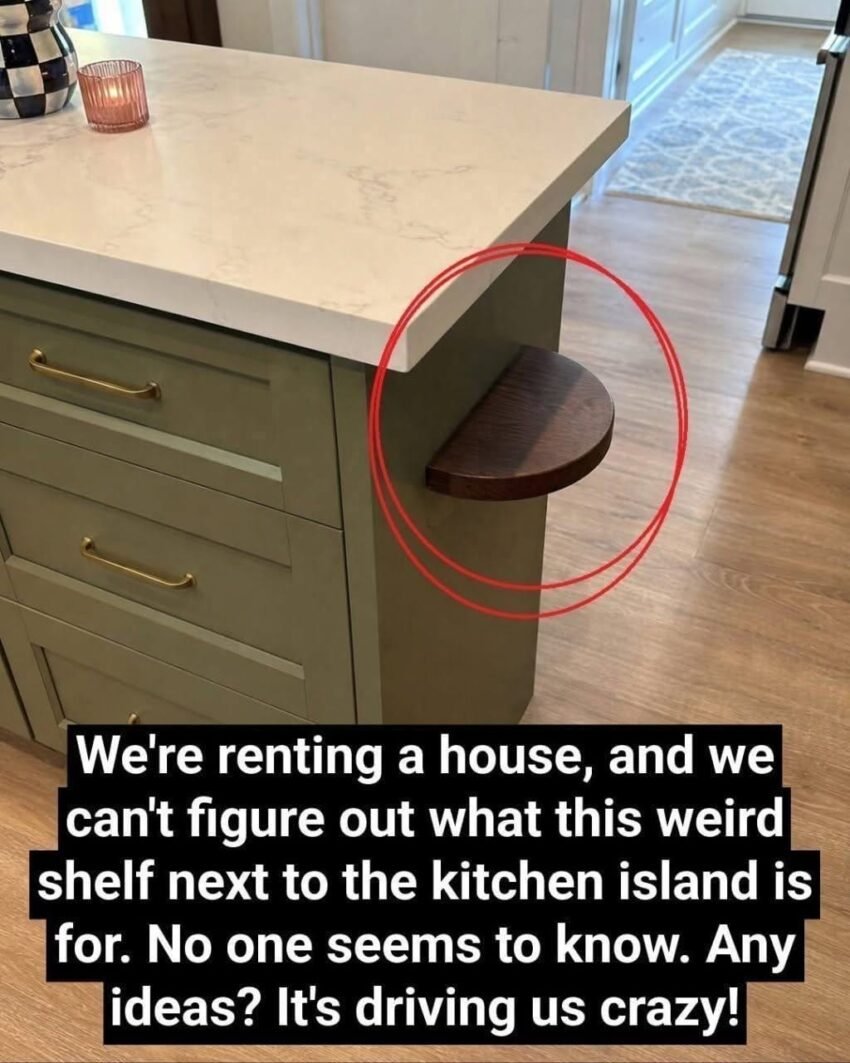
The Mystery of the Little Ledge: What That Small Kitchen Island Shelf Is Actually For (And Why You’ll Love It)
That tiny ledge on your kitchen island has a purpose. Discover how this overlooked shelf adds comfort, storage, style, and functionality to your space.
Introduction
If you have ever walked around a modern kitchen and noticed a small ledge sticking out from the side of the island, you may have wondered:
“What is that little shelf actually for?”
It looks too small to be a proper countertop.
It is not quite a table.
It does not seem large enough for storage.
Yet designers keep adding this small feature to kitchen islands—and there is a good reason.
That tiny ledge is one of those clever design details that often goes unnoticed until you start using it.
It can transform an ordinary kitchen island into a more comfortable, practical, and social space.
The secret is that this little shelf is not about size.
It is about function.
What Is the Small Kitchen Island Ledge?
The small ledge attached to a kitchen island is often called an:
- Island overhang
- Breakfast ledge
- Eating ledge
- Counter extension
- Raised bar ledge
It is usually designed as a narrow extension on one side of the island.
Unlike a full dining table or large countertop, it creates a casual area where people can sit, eat, work, or interact without taking up much space.
1. It Creates a Casual Breakfast Spot
One of the most common uses for this small ledge is creating a quick eating area.
Instead of setting up a formal dining table for every meal, families can use the island ledge for:
- Morning coffee
- Breakfast before school
- Quick lunches
- Evening snacks
It turns the kitchen into a more relaxed gathering place.
A parent preparing dinner can still talk with children sitting at the island.
Someone making coffee can chat with a partner.
The kitchen becomes more than a cooking area—it becomes the centre of the home.
2. It Gives You Extra Workspace
A small ledge can also provide valuable preparation space.
Anyone who cooks regularly knows that counter space disappears quickly.
The extra surface can be used for:
- Chopping vegetables
- Rolling dough
- Placing ingredients
- Setting down serving dishes
Even a small extension can make a kitchen feel less crowded.
3. It Creates a Comfortable Place to Work
Modern kitchens often serve multiple purposes.
The island ledge can become a temporary workspace for:
- Checking emails
- Reading
- Paying bills
- Helping children with homework
- Using a laptop
Unlike a traditional desk, it keeps you connected to the activity around you.
You can work while dinner cooks or stay involved with family conversations.
4. It Improves Kitchen Flow
Good kitchen design is not only about appearance.
It is also about movement.
A well-designed island ledge helps create separate zones:
Cooking Zone
Where food preparation happens.
Social Zone
Where people sit, talk, or relax.
Serving Zone
Where meals and drinks can be placed.
This separation can make busy kitchens feel more organised.
The Hidden Design Psychology Behind the Ledge
Small design features often influence how people use a space.
A large dining table can feel formal.
A small island ledge feels inviting.
People naturally gather where they feel comfortable.
That is why many families find themselves standing or sitting around the kitchen island—even when a dining room exists nearby.
The ledge encourages connection without requiring a major commitment of space.
Different Types of Kitchen Island Ledges
Not all ledges are designed the same way.
1. Raised Breakfast Bar
This style sits slightly higher than the main countertop.
Benefits:
- Creates visual separation
- Hides kitchen clutter
- Provides a traditional bar-style feel
2. Extended Counter Ledge
This continues from the existing countertop height.
Benefits:
- More flexible workspace
- Easier for everyday meals
- Cleaner modern appearance
3. Floating Shelf-Style Ledge
This minimalist design creates a lighter appearance.
Benefits:
- Works well in smaller kitchens
- Adds visual interest
- Creates a contemporary look
How to Make the Most of Your Kitchen Island Ledge
A small ledge becomes much more useful with the right setup.
Choose Comfortable Seating
The wrong stools can make even a beautiful island uncomfortable.
Consider:
- Proper height
- Back support
- Footrests
- Easy movement
Add Smart Lighting
Good lighting can turn the ledge into a welcoming area.
Options include:
- Pendant lights
- Under-counter lighting
- Adjustable fixtures
Keep It Clutter-Free
Because the ledge is visible, too much clutter can quickly make the kitchen feel messy.
Try:
✔ Small decorative items
✔ A simple fruit bowl
✔ Minimal accessories
Avoid:
✘ Stacks of paperwork
✘ Random appliances
✘ Too many decorations
Common Mistakes With Kitchen Island Ledges
Mistake 1: Making the Ledge Too Narrow
A ledge needs enough space to be useful.
If it is too shallow, plates, laptops, or drinks may constantly feel cramped.
Mistake 2: Choosing the Wrong Stool Height
Comfort depends on matching the stool height to the counter height.
A mismatch can make the seating awkward.
Mistake 3: Treating It Only as Decoration
Many people ignore the ledge because they think it is just a design feature.
But its real value comes from daily use.
Small Kitchen? The Ledge Can Be Even More Valuable
In smaller homes, every centimetre matters.
A kitchen island ledge can replace the need for:
- A separate breakfast table
- A small home office desk
- Extra preparation space
It allows one area to perform multiple roles.
Smart design is often about making spaces work harder.
Why Designers Love This Small Feature
Interior designers often focus on details that improve how people experience a home.
A kitchen island ledge works because it combines:
- Function
- Comfort
- Social connection
- Space efficiency
It does not demand attention, but it quietly improves everyday life.
Frequently Asked Questions
1. What is the small shelf on a kitchen island called?
It may be called an island ledge, breakfast bar, counter extension, or overhang.
2. Can you sit at a kitchen island ledge?
Yes. Many are designed specifically for stools and casual seating.
3. How deep should a kitchen island ledge be?
The ideal depth depends on use, but it should provide enough room for comfortable seating, plates, and everyday activities.
4. Is a kitchen island ledge better than a dining table?
They serve different purposes. A ledge is ideal for casual meals, while a dining table is better for larger gatherings.
5. Can you add a ledge to an existing kitchen island?
Sometimes yes, depending on the island structure and available support.
6. Does an island ledge increase home value?
A functional, well-designed kitchen can appeal to many buyers, although value depends on the entire home.
7. What stools work best for island ledges?
Choose stools based on the height, available space, and desired comfort level.
8. Are kitchen island ledges outdated?
No. They continue to be popular because they combine practicality with modern lifestyle needs.
Kitchen Island Ledge Checklist
Make it work better:
✔ Choose comfortable seating
✔ Keep the surface useful
✔ Add suitable lighting
✔ Match your kitchen style
✔ Use it regularly
Avoid:
✘ Making it too small
✘ Using uncomfortable stools
✘ Treating it as wasted space
Final Thoughts
That little ledge on your kitchen island may look like a minor design choice, but it solves several everyday problems.
It creates a place for conversations, quick meals, work, and connection.
The best home features are often not the biggest ones.
They are the ones that quietly make daily life easier.
The small kitchen island shelf is not wasted space—it is a clever design feature that turns your island into a more useful and welcoming part of your home.
Next time you see that little ledge, you may look at it differently.