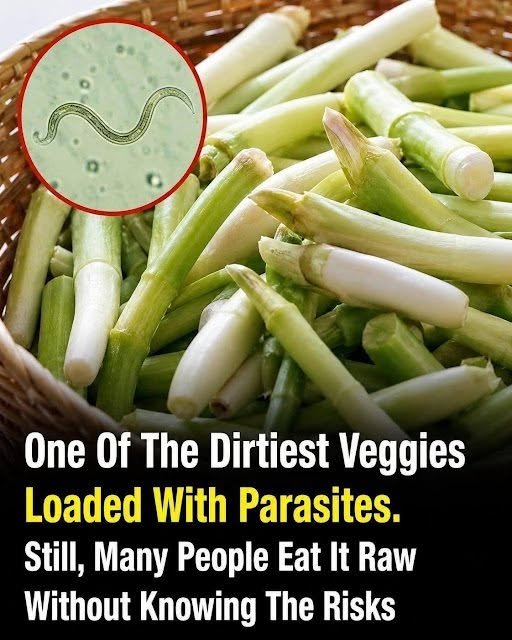
The Vegetable People Often Eat Raw That Can Carry Parasites—and How to Make It Safer
Some raw vegetables can carry parasites and other germs if contaminated. Learn which produce poses risks, how contamination happens, and how to wash it safely.
Raw vegetables can be one of the healthiest things on your plate.
They’re crisp, convenient, packed with nutrients, and often require little preparation. But there is a side of raw produce that doesn’t get much attention: fresh vegetables can sometimes become contaminated with parasites, bacteria, viruses, or other harmful microorganisms before they reach your kitchen.
One vegetable deserves particular attention in discussions about parasite exposure: watercress.
That doesn’t mean watercress is inherently unsafe. It means that when it is grown or harvested in contaminated water, it can potentially transmit parasites such as Fasciola hepatica, commonly known as the liver fluke.
And watercress isn’t the only concern.
Leafy greens, lettuce, herbs, sprouts, and other raw produce can also become contaminated with disease-causing organisms through soil, irrigation water, animals, farm workers, processing equipment, or handling.
The good news is that you don’t need to stop eating vegetables.
You need to understand where contamination comes from and how to reduce the risk.
Why Raw Vegetables Can Carry Parasites
A parasite doesn’t have to be visible to the naked eye.
Contamination can occur before produce reaches the supermarket.
For example, contaminated water used to grow or wash vegetables can introduce microorganisms onto their surfaces. Soil can also become contaminated by animal feces or other sources.
Watercress has a particularly interesting history because it can grow in or near water.
That creates a potential pathway for certain water-associated parasites.
The CDC identifies Fasciola infection as a foodborne illness that can occur when people eat raw watercress or other freshwater plants contaminated with parasite larvae. (cdc.gov)
This is why traditional dishes that use raw aquatic plants deserve special attention when the plants come from uncontrolled or contaminated water sources.
The Parasite Associated With Raw Watercress
The parasite most relevant here is Fasciola, often called the liver fluke.
Humans can become infected by eating raw freshwater plants contaminated with the parasite’s infective stage.
After ingestion, the parasite migrates through the body and eventually reaches the bile ducts, where adult flukes can live.
The infection is called fascioliasis.
According to the CDC, fascioliasis is caused by Fasciola parasites and is commonly acquired by eating raw watercress or other freshwater plants contaminated with the parasite. (cdc.gov)
That sounds alarming.
But there’s an important piece of context.
This is not a reason to panic every time you see watercress at the grocery store.
Commercial produce is subject to food-safety controls, and the risk varies dramatically according to where and how the plant was grown, harvested, handled, and prepared.
The greater concern is often raw freshwater plants from uncontrolled environments.
Why You Shouldn’t Automatically Blame the Vegetable
Here’s where sensational headlines can become misleading.
A vegetable isn’t “full of parasites” simply because parasites can sometimes contaminate it.
The same principle applies to lettuce, spinach, cilantro, parsley, and other raw produce.
The contamination usually comes from the environment—not because the plant itself somehow creates parasites.
Potential contamination routes include:
- Contaminated irrigation water
- Contaminated soil
- Animal feces
- Poor sanitation
- Unclean harvesting equipment
- Contaminated processing surfaces
- Cross-contamination during preparation
- Improper storage or handling
The FDA explains that fresh produce can become contaminated at multiple points along the farm-to-table chain. (fda.gov)
That is a much more useful way to think about food safety.
Is Lettuce Dangerous to Eat Raw?
Lettuce gets pulled into parasite discussions because raw leafy greens have been associated with foodborne outbreaks.
But the major concern isn’t necessarily parasites.
Bacteria such as E. coli, Salmonella, and Listeria can contaminate fresh produce.
The CDC recommends washing fruits and vegetables under running water before eating, cutting, or cooking them. (cdc.gov)
That means your salad isn’t something to fear.
It is something to handle properly.
What About Spinach?
Spinach can also become contaminated with microorganisms during production or handling.
Like lettuce, it is often eaten raw.
That makes proper washing, refrigeration, and prevention of cross-contamination especially important.
But don’t make the mistake of assuming that washing makes contaminated produce completely risk-free.
The FDA notes that washing can reduce bacteria on produce but cannot eliminate all contamination. (fda.gov)
Cooking is generally more effective at destroying many microorganisms.
Why Washing Matters—But Isn’t Magic
You may have heard conflicting advice about washing vegetables.
Some people rinse them for a few seconds.
Others soak them in vinegar.
Others use baking soda, salt, or specialized produce washes.
The basic recommendation from the FDA is much simpler:
Wash produce under running water.
For firm produce, rubbing the surface while rinsing can help remove dirt and some microorganisms.
The FDA does not recommend washing fruits and vegetables with soap, detergent, or commercial produce wash. (fda.gov)
That’s an important point.
You don’t need to turn your kitchen sink into a chemistry experiment.
How to Wash Raw Vegetables Properly
Start before you cut the vegetable.
Step 1: Wash your hands
Use soap and water before handling produce.
This prevents microorganisms on your hands from transferring to food.
Step 2: Inspect the vegetable
Remove visibly damaged or bruised portions.
Discard produce that is rotten or spoiled.
Step 3: Rinse under running water
Hold the vegetable under clean running water.
For firm vegetables, gently rub the surface.
Step 4: Use a clean cutting board
Don’t prepare raw vegetables on a surface contaminated with raw meat or poultry.
Step 5: Prevent cross-contamination
Keep raw produce away from uncooked meat, poultry, and seafood.
Step 6: Refrigerate appropriately
Perishable cut produce should be refrigerated promptly.
The FDA recommends refrigerating cut, peeled, or cooked fruits and vegetables within two hours. (fda.gov)
Simple habits make a meaningful difference.
Does Vinegar Kill Parasites on Vegetables?
This is one of the most common questions.
People often soak vegetables in vinegar because it feels more thorough than rinsing.
But vinegar should not be treated as a guaranteed parasite-killing solution.
Home washing methods can reduce contamination, but they aren’t a substitute for proper food production, safe sourcing, and cooking when appropriate.
If you are concerned about a particular parasite—especially one associated with raw freshwater plants—cooking the food is a much more reliable risk-reduction strategy than relying on a homemade soaking solution.
The CDC specifically advises people to avoid eating raw watercress or other freshwater plants from potentially contaminated sources in areas where fascioliasis occurs. (cdc.gov)
Who Should Be Especially Careful With Raw Produce?
Everyone benefits from good food hygiene.
But certain people have a higher risk of serious complications from foodborne illness.
This includes:
- Pregnant people
- Adults over 65
- Young children
- People with weakened immune systems
- People with certain chronic medical conditions
The CDC identifies older adults, young children, pregnant people, and people with weakened immune systems as groups more likely to experience severe foodborne illness. (cdc.gov)
That doesn’t mean these groups must avoid salads.
It means food safety becomes even more important.
What Symptoms Can Parasite Infections Cause?
Symptoms depend on the parasite.
Fascioliasis, for example, can produce symptoms such as abdominal pain, fever, gastrointestinal symptoms, and other manifestations during the acute phase.
Later infection can involve the bile ducts and cause additional symptoms.
The CDC explains that symptoms vary depending on the stage of Fasciola infection. (cdc.gov)
Other foodborne parasites can cause completely different symptoms.
That’s why trying to identify a parasite based only on stomach discomfort is unreliable.
A person with abdominal pain may have an infection—or food intolerance, gallbladder disease, an ulcer, medication side effects, or dozens of other conditions.
What If You Ate Raw Watercress?
Don’t panic.
Eating raw watercress doesn’t mean you’ve been infected.
Risk depends on where the plant came from and whether it was contaminated.
If you ate commercially produced watercress and feel well, there is generally no reason to assume you have a parasitic infection.
However, if you’ve eaten raw freshwater plants from an uncertain source and later develop persistent abdominal symptoms, fever, jaundice, unusual fatigue, or other concerning symptoms, tell your healthcare professional exactly what you ate and where it came from.
That information can be medically useful.
The Difference Between Grocery-Store Produce and Wild-Gathered Plants
This distinction is particularly important.
A packaged vegetable from a reputable grocery store is not equivalent to a plant collected from a stream.
Wild-gathered watercress can be exposed to contaminated water, livestock, wildlife, sewage, or other sources of contamination.
The CDC specifically recommends avoiding raw watercress and other freshwater plants in regions where Fasciola is found unless the plants have been adequately cooked. (cdc.gov)
If you’re not certain about the water source, don’t eat freshwater plants raw.
That is a simple rule with a very favorable risk-benefit balance.
Can Freezing Kill Parasites?
Freezing can kill some parasites under specific conditions, which is why freezing is used in certain food-safety contexts.
But the effectiveness depends on the parasite, temperature, duration, food, and other factors.
Don’t assume that putting a contaminated vegetable in your household freezer makes it safe.
For food safety, follow guidance specific to the food and organism involved.
For Fasciola, cooking freshwater plants is the more straightforward preventive strategy recommended by the CDC. (cdc.gov)
Why Cooking Changes the Risk
Heat is one of the most effective tools for reducing many foodborne hazards.
Cooking can destroy many parasites, bacteria, and viruses when the food reaches an appropriate internal temperature.
This doesn’t mean every vegetable must be cooked.
Raw vegetables can be nutritious and safe when properly produced, handled, and prepared.
It means that when you have a specific contamination concern, cooking is generally more dependable than trying to wash your way out of the problem.
A Common Mistake: Washing Produce After Cutting It
There’s a reason food-safety guidance recommends washing produce before cutting or peeling.
If the surface is contaminated, cutting through it can transfer microorganisms to the interior.
Washing first reduces that opportunity.
It also helps prevent dirt and contaminants from being pushed into the flesh by a knife.
Make washing part of your preparation routine—not an afterthought.
Another Mistake: Washing With Soap
This sounds logical:
“If soap kills germs on my hands, why not use it on vegetables?”
Because vegetables aren’t your hands.
Soap and detergent aren’t intended for consumption, and residues can remain on food.
The FDA specifically advises against washing produce with soap, detergent, or commercial produce washes. (fda.gov)
Use clean running water instead.
What About Pre-Washed Salad?
Pre-washed and ready-to-eat produce is designed to be convenient.
If the package says the greens are ready to eat, you generally don’t need to wash them again unless the package directions say otherwise.
In fact, repeatedly handling ready-to-eat produce can create additional opportunities for contamination if your hands, sink, colander, or utensils aren’t clean.
Follow the package instructions.
The Bigger Food-Safety Picture
The vegetable itself is only one piece of the story.
Food safety starts before the produce reaches your kitchen.
Farmers, processors, distributors, retailers, restaurants, and consumers all have roles.
Contamination can occur at any point.
That’s why the FDA’s produce-safety recommendations focus on the entire chain from production through preparation. (fda.gov)
At home, your job is simpler:
Wash. Separate. Refrigerate. Cook when appropriate.
Those four habits cover a remarkable amount of practical food safety.
A Simple Raw-Vegetable Safety Checklist
Before eating raw vegetables:
☐ Wash your hands with soap and water.
☐ Rinse produce under clean running water.
☐ Rub firm vegetables while rinsing.
☐ Cut away damaged or bruised areas.
☐ Use clean knives and cutting boards.
☐ Keep produce away from raw meat and seafood.
☐ Refrigerate cut produce promptly.
☐ Follow package instructions for ready-to-eat products.
☐ Avoid raw freshwater plants from uncertain or contaminated water sources.
☐ Cook watercress and other freshwater plants when parasite exposure is a concern.
When to Call a Doctor
Most people who eat raw vegetables don’t develop parasitic infections.
But persistent or severe symptoms deserve attention.
Contact a healthcare professional if you develop concerning symptoms such as persistent abdominal pain, prolonged diarrhea, unexplained fever, jaundice, significant vomiting, dehydration, or unexplained weight loss.
Tell your clinician about recent travel, raw or undercooked foods, wild plants, untreated water, and other possible exposures.
That history can help guide testing.
Don’t take antiparasitic medication simply because you suspect you’ve eaten contaminated vegetables.
Different parasites require different treatments, and some symptoms attributed to parasites have completely different causes.
Frequently Asked Questions
Which vegetable is most likely to carry parasites?
There isn’t a scientifically valid universal ranking showing that one ordinary vegetable is “most likely” to carry parasites. Risk depends heavily on growing conditions, water quality, sanitation, handling, and the specific parasite. Raw watercress is notable because contaminated freshwater plants can transmit Fasciola parasites. (cdc.gov)
Can lettuce have parasites?
Raw lettuce and other leafy greens can become contaminated with microorganisms, including some parasites, depending on growing and handling conditions. However, bacteria and viruses are also important food-safety concerns. Proper washing and safe handling reduce risk.
Does washing vegetables remove parasites?
Washing can remove dirt and some microorganisms from produce, but it does not guarantee elimination of parasites or other pathogens. For certain parasites associated with freshwater plants, cooking provides a more reliable preventive measure.
Should I wash vegetables with vinegar?
Vinegar is not a guaranteed method for eliminating parasites from produce. The FDA recommends washing fruits and vegetables under running water and specifically advises against using soap or detergent. (fda.gov)
Can I eat watercress raw?
Commercial watercress may be eaten raw, but raw freshwater plants from uncertain or potentially contaminated sources can carry Fasciola parasites. The CDC recommends avoiding raw watercress and other freshwater plants in areas where fascioliasis occurs unless appropriately cooked. (cdc.gov)
What parasite can you get from raw watercress?
Raw watercress or other freshwater plants contaminated with Fasciola larvae can transmit fascioliasis, a parasitic infection involving liver flukes. (cdc.gov)
Is packaged salad safe?
Packaged salad can be contaminated, but commercial food-safety systems are designed to reduce those risks. Follow the package instructions, keep the product refrigerated, and prevent cross-contamination during preparation.
Can cooking vegetables kill parasites?
Appropriate cooking can destroy many parasites and other foodborne pathogens. The exact temperature and time required depend on the organism and food, so follow established food-safety guidance rather than relying on a vague “heat it a little” approach.
Who is most vulnerable to foodborne illness?
Older adults, young children, pregnant people, and individuals with weakened immune systems have a greater risk of serious complications from certain foodborne infections. (cdc.gov)
Raw vegetables don’t deserve a reputation as dangerous foods.
They are an important part of a healthy diet.
But “healthy” doesn’t mean “risk-free.”
Watercress illustrates the point particularly well: when freshwater plants are grown or harvested in contaminated water, they can transmit parasites such as Fasciola. (cdc.gov)
The answer isn’t to stop eating vegetables.
It’s to make smarter choices.
Buy produce from reliable sources. Wash it under running water. Prevent cross-contamination. Keep cut produce refrigerated. And when eating freshwater plants from uncertain environments, don’t rely on washing alone—cook them.
The most useful food-safety habit is also the least dramatic:
Know where your food comes from, handle it properly, and don’t assume that something that looks clean is necessarily free of microscopic contamination.