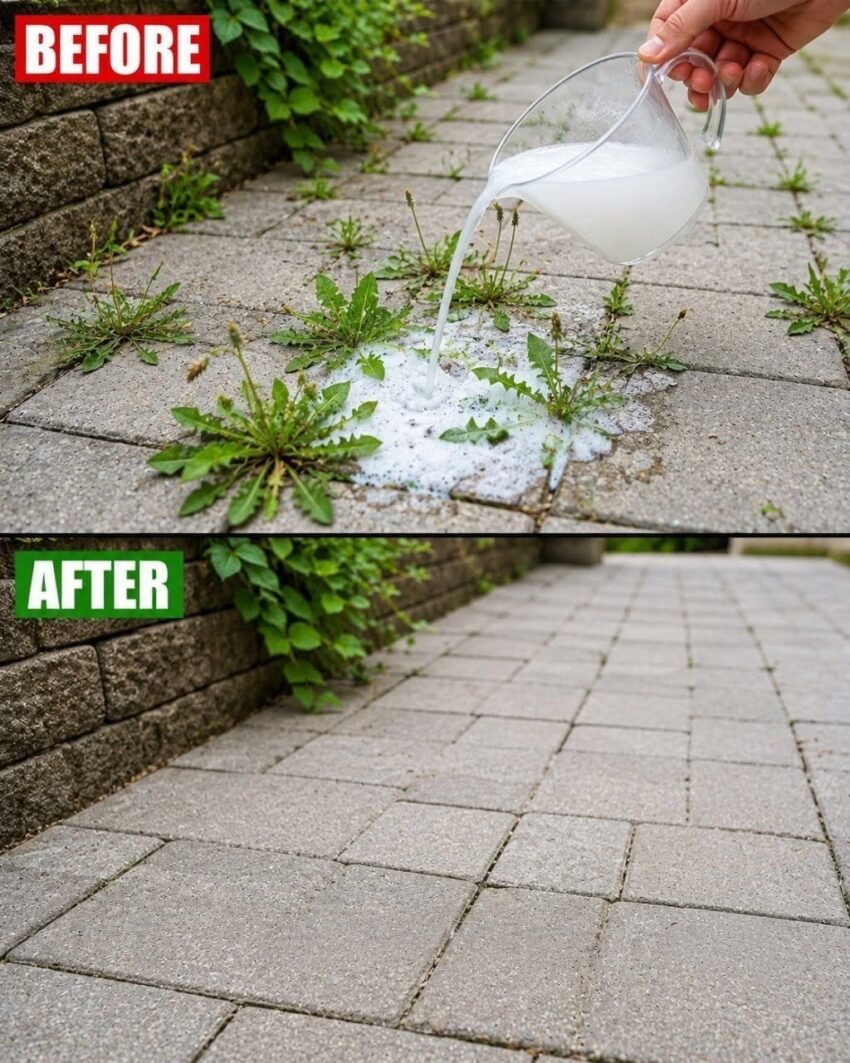
The 1-Day Weed-Killing Miracle: Fact, Fiction, and the Truth About Stopping Them Forever
Every homeowner who has spent a scorching Saturday afternoon crawling on their hands and knees to pull stubborn dandelions has fantasized about a magic potion. Social media feeds and DIY blogs frequently feature viral videos of a mysterious spray that promises to scorch weeds in a single day—and guarantee they never grow back.
It sounds like the ultimate landscaping dream. But before you mix up a batch of kitchen ingredients or buy a miracle bottle online, it pays to understand what science actually says about fast-acting weed killers and the concept of permanent eradication.
The Appeal of the 1-Day Fix
When a weed killer claims to work in 24 hours, it is usually relying on a heavy dose of a non-selective contact herbicide or a concentrated acid.
-
The Visual Satisfaction: Within hours of application, the leaves begin to curl, darken, and wither. By day one, the green foliage looks completely dead and shriveled.
-
The Catch: There is a massive structural difference between killing the leaves you can see and killing the root system buried underground. Most rapid-acting natural or commercial contact solutions burn down the top growth while leaving the root entirely intact. If the root survives, the weed simply bounces back a week or two later.
Can Weeds Truly Never Grow Again?
In the world of property maintenance, the phrase “never grow again” is almost always a marketing exaggeration. Unless you pave over an area, pour concrete, or permanently sterilize the soil, nature eventually finds a way back. Wind-blown seeds, dormant underground runners, and birds ensure that new weeds will always attempt to colonize bare earth.
However, you can achieve long-term suppression by understanding how specific formulas operate and where to apply them safely.
A Step-by-Step Practical Framework for Effective Weed Control
If you want fast results that actually last, achieving maximum impact requires more than just spraying at random.
-
Target the Peak Sunlight Hours: Apply contact sprays on a bright, hot, sunny day. Ultraviolet light and heat accelerate the dehydration process, maximizing the impact of the formula on the plant’s cell walls.
-
Use the Right Concentration: Standard grocery store vinegar (5% acetic acid) only burns the surface of stubborn weeds. For tough annuals, high-strength horticultural vinegar (ranging from 20% to 30% or higher) is required to deliver a heavy-hitting blow.
-
Include a Surfactant: Always add a few drops of liquid dish soap to homemade mixtures. Soap breaks the surface tension of the plant’s waxy leaves, ensuring the liquid sticks and penetrates instead of beading up and rolling off.
-
Understand Soil Sterilization for Permanent Zones: If you want an area to truly stay bare—such as gravel pathways, driveway cracks, or patio pavers—adding sodium chloride (salt) to a mixture creates a hostile environment that suppresses new growth for a long time.
-
Follow Up on Perennials: Deep-rooted perennial weeds (like thistles or dandelions) usually require two or three targeted applications spaced a week apart to completely exhaust the energy stored in their root systems.
Real-World Scenarios: Driveways Versus Flower Beds
Consider Tom, who mixed a potent batch of high-strength vinegar, salt, and dish soap to clear out the stubborn weeds invading his gravel driveway. Because he didn’t care if anything ever grew in those cracks again, the salt locked into the soil, keeping the driveway pristine and weed-free for an entire season.
Now consider Lisa, who used that exact same salt-and-vinegar mixture along the edge of her prized flower garden. While the weeds turned brown within 24 hours, the salt runoff seeped into her flower bed, poisoning the soil and killing her favorite perennials. Location is everything when choosing a weed management strategy.
Comparison of Weed Control Methods
| Method | Speed of Results | Impact on Roots | Best Used For | Environmental Trade-off |
| Contact Sprays (Vinegar/Soap) | 24 to 48 hours | Low (surface only) | Driveways, patios, paving cracks | Safe for pets/kids once dry, but non-selective |
| Salt-Infused Formulas | 1 to 3 days | Medium-High (via soil toxicity) | Permanent no-grow zones only | Sterilizes soil; prevents future planting |
| Flame Weeding | Immediate (wilts within hours) | Low-Medium | Gravel paths, rock gardens | Requires care around dry brush and fire hazards |
| Manual Hand-Pulling | Immediate | High (if root is removed) | Garden beds, lawns | Labor-intensive; leaves soil intact |
Common Mistakes When Trying to Eradicate Weeds
-
Using salt near garden beds: Applying salt-based home remedies near turfgrass or flower beds, permanently ruining the soil structure for future plants.
-
Expecting a one-time miracle: Believing that a single spray will permanently banish all weeds forever without accounting for wind-borne seeds and resilient root networks.
-
Skipping the soap: Spraying pure vinegar without a surfactant, causing the liquid to slide right off the leaves without breaking down the plant’s defenses.
Expert Insights: The Reality of Integrated Pest Management
Horticulturalists and landscaping experts stress that long-term weed control is a management process, not a one-time event. While a fast-acting spray can clear a patio in 24 hours, maintaining a pristine landscape relies on preventing seeds from germinating in the first place. Utilizing thick layers of organic mulch in flower beds, pre-emergent barriers, and prompt spot-treatment keeps unwanted growth under control without resorting to destructive chemical overkill.
Frequently Asked Questions
Does boiling water kill weeds permanently?
Boiling water is exceptional at scalding surface weeds in driveway cracks, but it rarely penetrates deep taproots, meaning resilient weeds may resprout.
Will household vinegar kill large weeds?
Standard 5% grocery store vinegar will only turn the leaves brown on very young, delicate weeds; established weeds will easily bounce back from their roots.
Is salt water safe to use on lawn weeds?
No. Salt will kill grass just as effectively as weeds and will leave barren, dead patches in your lawn where nothing will grow for months or years.
Why do weeds come back after spraying?
If a spray only destroys the foliage (contact action) and leaves the underground root system intact, the plant will simply push out new growth.
Can I use homemade weed killers around vegetables?
Vinegar and salt sprays are non-selective, meaning they will burn and destroy any vegetable plant or crop they touch, and salt will ruin the garden soil.
How do professionals handle persistent weeds?
Professionals use targeted systemic herbicides that travel down through the plant’s vascular system to kill the root entirely, combined with pre-emergent barriers.
Are there eco-friendly ways to stop weeds from returning?
Yes. Applying thick layers of cardboard and mulch (sheet mulching) in garden beds blocks sunlight entirely and stops weed seeds from germinating.
What is the best way to clear weeds between pavers?
A high-concentration vinegar spray mixed with a touch of salt and dish soap is ideal for pavers because you don’t have to worry about soil health in those sterile cracks.
Action Checklist for Fast Weed Control
-
Do: Apply fast-acting contact sprays during the hottest, sunniest part of the day.
-
Do: Reserve salt-based formulas exclusively for hard surfaces like gravel and driveways where you want zero growth.
-
Do: Add dish soap to mixtures to ensure the liquid sticks to waxy leaves.
-
Avoid: Using salt or high-acid sprays anywhere near your lawn or flower gardens.
-
Avoid: Falling for absolute guarantees that any spray will make weeds “never grow again” naturally.
While a 1-day burn-down spray delivers instant visual satisfaction, true mastery over weeds requires matching the right tool to the right location—saving the heavy-duty sterilizers for your driveway and protecting your living soil elsewhere.
While certain harsh formulas can scorch weed foliage in a single day, achieving permanent eradication is a myth—unless you target the root systems or permanently sterilize the soil in non-planting zones.