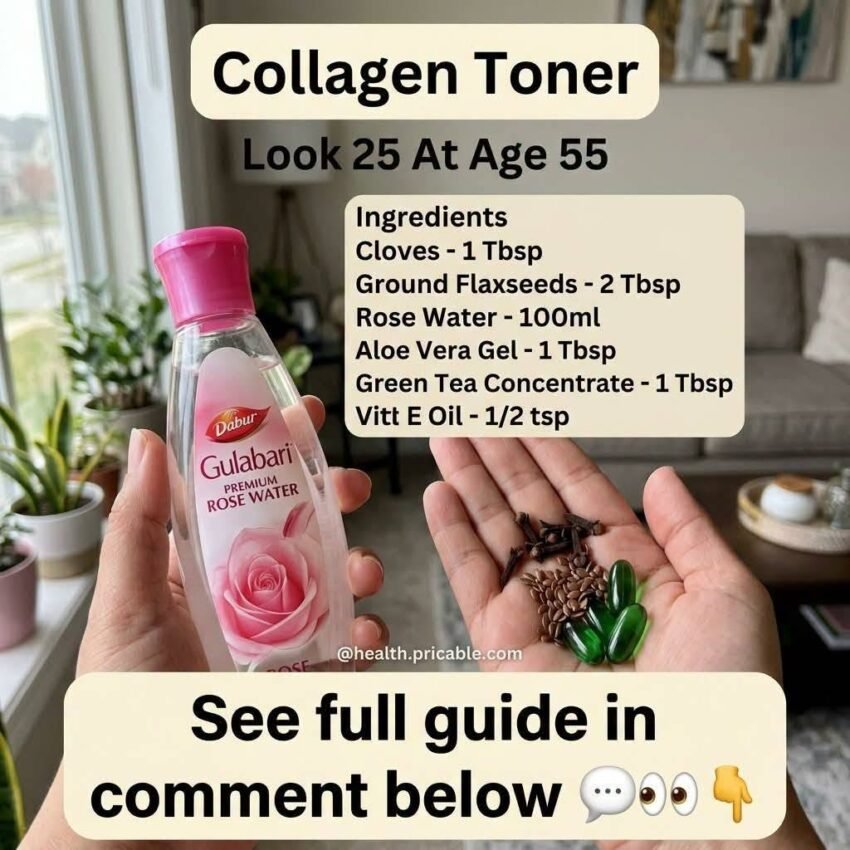
This Homemade Collagen Toner Uses Rose Water, Cloves, Flaxseeds, Aloe Vera, Green Tea, and Vitamin E Oil—Here’s What You Should Know
Discover this homemade collagen-inspired toner recipe with rose water, flaxseeds, aloe vera, green tea, cloves, and vitamin E oil, plus safe skincare tips.
Healthy-looking skin has always been connected with simple routines.
For generations, people have used botanical ingredients like rose water, aloe vera, and green tea as part of their beauty rituals. Today, homemade skincare recipes are becoming popular again because many people want affordable alternatives to complicated product shelves filled with dozens of bottles.
One recipe gaining attention combines several well-known ingredients:
- Rose water
- Cloves
- Flaxseeds
- Aloe vera
- Green tea
- Vitamin E oil
It is often called a “collagen toner” online because of claims that it can help improve firmness, smoothness, and youthful appearance.
But what can this type of toner realistically do?
While a homemade toner cannot replace the collagen your body naturally produces or reverse aging overnight, these ingredients may offer skin-supporting properties such as hydration, soothing effects, and antioxidant benefits.
Let’s explore how each ingredient works and how to use this type of DIY toner safely.
Understanding Collagen and Skin Aging
Collagen is a protein naturally produced by the body.
It provides structure and support to skin, bones, tendons, and other tissues.
As people age, collagen production gradually decreases. This is one reason skin may become less firm and fine lines may become more noticeable over time.
Many factors influence skin appearance, including:
- Sun exposure
- Genetics
- Nutrition
- Sleep habits
- Stress
- Skincare routine
A topical toner cannot directly rebuild collagen deep inside the skin. However, a good skincare routine can help maintain healthy-looking skin by supporting hydration and protecting the skin barrier.
The Ingredients Behind This Homemade Toner
Rose Water: A Traditional Skin Care Favorite
Rose water has been used in beauty routines for centuries.
It is popular because of its:
- Lightweight feel
- Pleasant scent
- Hydrating properties
Many commercial skincare products include rose water as a soothing ingredient.
For some people, it can provide a refreshing feeling after cleansing.
However, people with sensitive skin should be cautious because fragranced botanical ingredients may cause irritation in some individuals.
Cloves: A Powerful Spice With Antioxidant Compounds
Cloves contain plant compounds, including antioxidants.
Antioxidants help protect ingredients and skin from environmental stress when used appropriately.
However, cloves are also very concentrated.
Applying strong clove preparations directly to the skin may cause irritation, especially for sensitive skin types.
If included in a homemade toner, it should be used carefully and in small amounts.
Flaxseeds: The Gel-Like Ingredient
Flaxseeds are often added to homemade skincare recipes because when soaked in water, they release a gel-like substance called mucilage.
This texture can create a smooth, hydrating feel on the skin.
Flaxseeds also contain:
- Plant-based omega-3 fatty acids
- Lignans
- Antioxidant compounds
However, the benefits of eating flaxseeds are better established than the benefits of applying homemade flaxseed gel to skin.
Aloe Vera: A Soothing Classic
Aloe vera is one of the most recognized natural skincare ingredients.
The clear gel inside aloe leaves has been traditionally used for its cooling and moisturizing feel.
Many people enjoy aloe-based products after sun exposure because of their soothing sensation.
As with any skincare ingredient, individual reactions vary.
Green Tea: Skin-Friendly Antioxidants
Green tea contains polyphenols, including a compound called EGCG.
These plant compounds have antioxidant properties.
Green tea extracts are commonly found in skincare products designed to support healthy-looking skin.
A homemade green tea toner may feel refreshing, but its effects will depend on concentration, storage, and individual skin response.
Vitamin E Oil: Moisture Support
Vitamin E is commonly used in skincare products.
It acts as an antioxidant and is often included in moisturizers and oils.
For some people, vitamin E oil can feel nourishing.
For others, especially those prone to clogged pores, heavier oils may not be ideal.
How to Make a Simple Homemade Version
A gentle version can be made with simple steps.
Ingredients:
- 1 cup rose water
- 1 teaspoon flaxseeds
- 1 small cup brewed green tea (cooled)
- A small amount of aloe vera gel
- A few drops of vitamin E oil
- A small amount of clove-infused water (optional)
Instructions:
- Brew green tea and allow it to cool completely.
- Soak flaxseeds in warm water until a light gel forms.
- Strain the mixture carefully.
- Combine rose water, cooled green tea, aloe vera gel, and the flaxseed gel.
- Add a few drops of vitamin E oil.
- Store in a clean container.
Because homemade skincare lacks commercial preservatives, it should be stored carefully and discarded if the smell, texture, or appearance changes.
How to Use the Toner
A simple routine:
- Cleanse your face gently.
- Apply a small amount of toner with clean hands or a cotton pad.
- Allow it to absorb.
- Follow with moisturizer if needed.
Start by using it a few times per week rather than daily.
This helps you see how your skin reacts.
Who Should Be Careful?
Natural does not always mean risk-free.
Avoid or modify this recipe if you:
- Have very sensitive skin
- Have eczema or rosacea
- Are allergic to any ingredient
- Experience burning, itching, or redness
Always perform a patch test before applying homemade products to your face.
Common DIY Skincare Mistakes
Using Too Many Ingredients
More ingredients do not always mean better results.
Complex formulas increase the chance of irritation.
Skipping a Patch Test
Even familiar ingredients can cause unexpected reactions.
Keeping Homemade Products Too Long
Water-based DIY skincare can develop bacteria without proper preservation.
Make small batches and store them safely.
Expecting Instant Anti-Aging Results
Healthy skin usually comes from consistent habits:
- Daily sun protection
- Gentle cleansing
- Moisturizing
- Balanced nutrition
- Adequate sleep
Homemade Toner vs. Store-Bought Toner
| Feature | Homemade Toner | Store-Bought Toner |
|---|---|---|
| Cost | Usually inexpensive | Varies |
| Ingredients | Fully controlled | Professionally formulated |
| Preservation | Limited | Usually tested |
| Customization | High | Depends on product |
| Convenience | Requires preparation | Ready to use |
Both options can have a place in a skincare routine.
Frequently Asked Questions
Does this toner actually rebuild collagen?
No. A topical toner cannot rebuild collagen inside the skin. It may help support a hydrated, healthy-looking appearance.
How long does homemade toner last?
Because homemade products usually lack preservatives, they often have a shorter shelf life than commercial products. Store carefully and make small amounts.
Can I use this toner every day?
Some people may tolerate it daily, but beginners should start slowly and watch for irritation.
Is aloe vera good for wrinkles?
Aloe vera can help hydrate and soothe skin, which may improve the appearance of dryness. It does not erase wrinkles.
Can vitamin E oil cause breakouts?
For some people, heavier oils may contribute to clogged pores. Skin type matters.
Final Thoughts
The combination of rose water, cloves, flaxseeds, aloe vera, green tea, and vitamin E oil creates an interesting homemade skincare recipe inspired by traditional beauty practices.
Its appeal is easy to understand: the ingredients are affordable, familiar, and easy to find.
But the real secret to healthy-looking skin is not one miracle toner.
It’s consistency.
A gentle skincare routine, sun protection, hydration, good nutrition, and products that suit your skin type will always matter more than a single homemade recipe.
This homemade toner may provide hydration and a refreshing skincare experience, but it should be viewed as a supportive beauty routine—not a replacement for proven skincare treatments or professional advice.
If you try this recipe, share your experience, tell us your favorite natural skincare ingredients, and explore more simple beauty routines for healthier-looking skin.