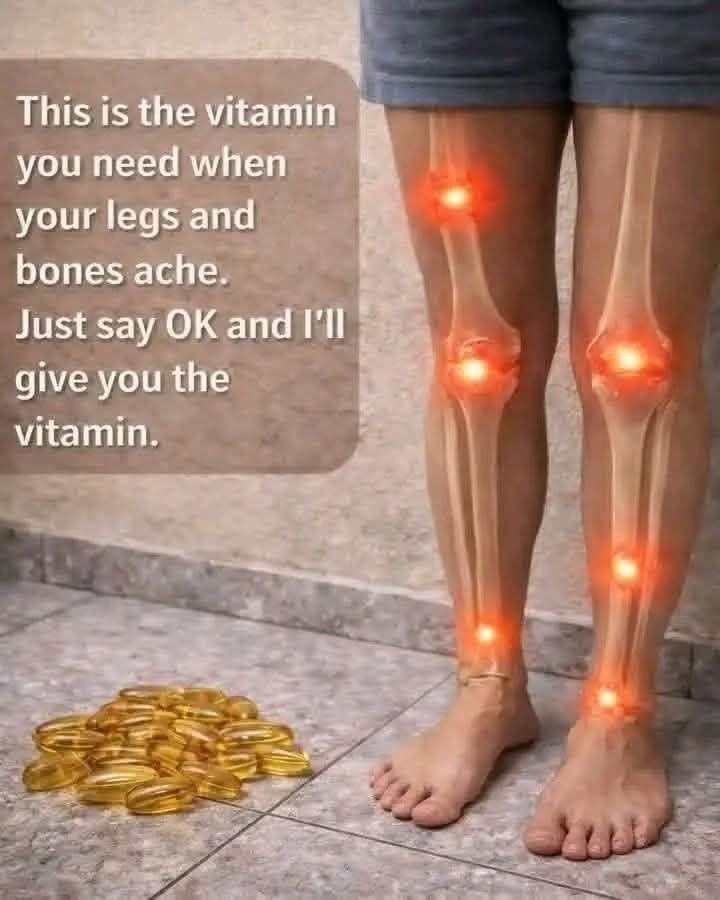
This Is the Vitamin Your Body May Be Missing When Your Legs and Bones Hurt
Leg and bone pain can have many causes. Learn how vitamin deficiencies, especially vitamin D, may affect bone health and what signs to watch for.
This Is the Vitamin Your Body May Be Missing When Your Legs and Bones Hurt
Aching legs. Heavy-feeling bones. Muscle discomfort that seems to appear for no obvious reason.
Many people experience these symptoms and immediately blame aging, overuse, or a long day on their feet.
Sometimes, those explanations are correct.
But there is another possibility that often gets overlooked:
Your body may not be getting enough of certain nutrients needed to support healthy bones and muscles.
One nutrient that receives a lot of attention in this area is vitamin D.
Known as the “sunshine vitamin,” vitamin D plays an important role in helping the body absorb calcium and maintain strong bones. When levels are too low, some people may experience symptoms such as bone discomfort, muscle weakness, or generalized aches.
But vitamin D is only one piece of the puzzle.
Let’s look at what the science says, what symptoms may appear, and what you can do to support healthier bones and legs.
Why Vitamin D Matters for Your Bones
Your bones are living tissues.
They are constantly being broken down and rebuilt through a natural process called bone remodeling.
Vitamin D helps regulate this process by supporting:
- Calcium absorption
- Phosphorus balance
- Normal muscle function
- Bone strength
Without enough vitamin D, the body may struggle to maintain proper calcium levels, which can affect bone health over time.
This is why vitamin D deficiency has been linked with conditions involving weaker bones, including osteomalacia in adults.
Signs Your Body May Not Be Getting Enough Vitamin D
A vitamin D deficiency does not always cause obvious symptoms.
When symptoms do occur, they may include:
1. Bone Discomfort
Some people with low vitamin D levels report deep aches in:
- Legs
- Hips
- Lower back
- Ribs
Bone-related discomfort often feels different from normal muscle soreness.
2. Muscle Weakness
Vitamin D also plays a role in muscle function.
Low levels may contribute to:
- Weakness
- Difficulty climbing stairs
- Trouble getting up from a chair
- Feeling less steady while walking
3. Frequent Fatigue
Low vitamin D levels have been associated with tiredness in some people.
However, fatigue can have many causes, including:
- Poor sleep
- Stress
- Thyroid problems
- Anemia
- Other medical conditions
4. Increased Risk of Bone Problems
Long-term vitamin D deficiency can contribute to reduced bone mineralization, making bones softer and more vulnerable.
Why Vitamin D Deficiency Is Common
Despite being easy to get from sunlight, vitamin D deficiency is common in many parts of the world.
Several factors can affect vitamin D levels:
Limited Sun Exposure
The skin produces vitamin D when exposed to sunlight.
People who spend most of their time indoors may produce less.
Age
As people age, the skin becomes less efficient at producing vitamin D.
Skin Protection
Sunscreen is important for protecting against harmful UV rays, but it can also reduce vitamin D production when used extensively.
Dietary Intake
Only a limited number of foods naturally contain significant amounts of vitamin D.
Foods That Contain Vitamin D
Good dietary sources include:
- Fatty fish such as salmon and sardines
- Egg yolks
- Fortified milk
- Fortified plant-based drinks
- Fortified cereals
Egg yolks, for example, contain vitamin D along with other nutrients, although the amount varies.
Vitamin D Is Not the Only Nutrient Important for Bones
Healthy bones depend on several nutrients working together.
Calcium
Calcium is a major mineral in bone structure.
Sources include:
- Dairy products
- Leafy greens
- Calcium-fortified foods
Magnesium
Magnesium contributes to normal muscle and bone function.
Sources include:
- Nuts
- Seeds
- Whole grains
- Beans
Vitamin K
Vitamin K is involved in normal bone metabolism.
Sources include:
- Leafy green vegetables
- Broccoli
- Brussels sprouts
Other Reasons Your Legs and Bones May Hurt
It is important not to assume every ache is caused by a vitamin deficiency.
Leg and bone discomfort can also come from:
- Muscle strain
- Arthritis
- Nerve problems
- Circulation issues
- Injuries
- Overuse
- Inflammation
The location, timing, and type of pain matter.
For example:
- Pain after exercise may suggest muscle strain.
- Burning or tingling may involve nerves.
- Swelling and redness may require medical evaluation.
Simple Ways to Support Bone and Leg Health
1. Get Regular Movement
Bones respond to activity.
Helpful options include:
- Walking
- Strength training
- Balance exercises
- Low-impact activities
Exercise supports:
- Muscle strength
- Balance
- Bone maintenance
2. Eat a Balanced Diet
A bone-supporting diet includes:
- Adequate protein
- Calcium-rich foods
- Fruits and vegetables
- Healthy fats
3. Spend Safe Time Outdoors
Sunlight exposure can help the body produce vitamin D.
However, balance is important—protect your skin from excessive UV exposure.
4. Consider Testing If You Have Risk Factors
A healthcare professional can order a blood test to check vitamin D levels if deficiency is suspected.
Testing may be especially useful for people with risk factors such as:
- Limited sun exposure
- Older age
- Certain digestive conditions
- Conditions affecting bone health
Common Mistakes People Make About Vitamin D
Mistake 1: Taking High Doses Without Testing
More is not always better.
Excessive vitamin D supplementation can cause health problems.
Mistake 2: Assuming Every Leg Ache Is a Deficiency
Pain is a symptom, not a diagnosis.
The cause should be considered carefully.
Mistake 3: Ignoring Strength Training
Many people focus only on vitamins while forgetting that muscles support bones.
Vitamin D Supplements: What to Know
Supplements may help people who have low vitamin D levels.
However:
- Dosage depends on individual needs.
- Some people require medical guidance.
- Supplements should not replace a healthy diet and lifestyle.
If you take medications or have medical conditions, discuss supplements with a healthcare professional.
Frequently Asked Questions
Can vitamin D deficiency cause leg pain?
Low vitamin D levels may contribute to bone discomfort and muscle weakness in some people, but leg pain has many possible causes.
How do I know if I need more vitamin D?
A blood test can measure vitamin D levels and help determine whether supplementation is needed.
Can sunlight fix vitamin D deficiency?
Sun exposure can help the body produce vitamin D, but the amount produced depends on factors such as location, season, skin type, and exposure time.
What foods increase vitamin D?
Fatty fish, fortified foods, and egg yolks are among the dietary sources of vitamin D.
Does vitamin D help with joint pain?
Vitamin D supports bone and muscle health, but joint pain can have many causes.
How long does it take to improve vitamin D levels?
The timeline varies depending on starting levels, dosage, and individual factors.
Can children have vitamin D deficiency?
Yes. Vitamin D is important for healthy growth and bone development at all ages.
Should everyone take vitamin D supplements?
Not necessarily. Some people need supplements, while others can maintain healthy levels through diet, sunlight, and lifestyle.
Bone and Leg Health Checklist
✔️ Do
- Eat vitamin D and calcium-rich foods.
- Stay physically active.
- Build muscle strength.
- Get appropriate sunlight exposure.
- Talk with a healthcare professional if pain persists.
❌ Avoid
- Taking very high supplement doses without advice.
- Ignoring ongoing bone pain.
- Assuming every ache is caused by vitamins.
- Replacing medical evaluation with internet remedies.
Conclusion
When your legs and bones hurt, your body may be sending a message—but that message does not always have one simple answer.
Vitamin D is an important nutrient for bone strength, calcium absorption, and muscle function, and low levels can contribute to discomfort in some people.
But healthy bones depend on a combination of nutrition, movement, and overall care.
Vitamin D is one important nutrient to consider when dealing with bone and muscle discomfort, but persistent pain deserves a closer look. Supporting your body with balanced nutrition, regular movement, and proper medical guidance is the best path toward stronger, healthier legs and bones.