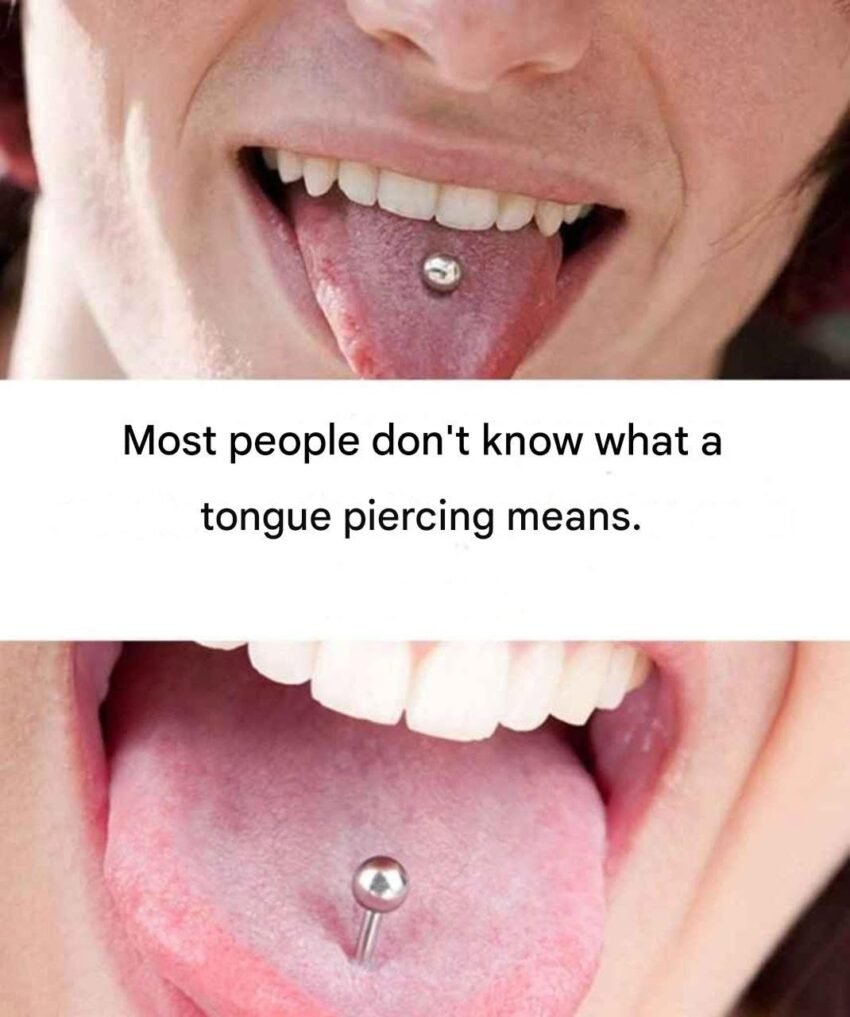
Tongue Piercing Meaning and Origin: The Little-Known Symbol Behind One of History’s Most Misunderstood Body Modifications
Discover the true meaning and fascinating origin of tongue piercing, from ancient rituals to modern self-expression. Explore its hidden symbolism, history, myths, and cultural significance.
Tongue Piercing Meaning and Origin: More Than Just a Fashion Statement
For decades, tongue piercings have sparked curiosity, admiration, and plenty of misconceptions. Some people see them as a bold fashion choice. Others associate them with rebellion, while many assume they carry a single, provocative meaning.
The truth is far more fascinating.
Long before tongue piercings appeared in modern tattoo and piercing studios across the United States, they held deep spiritual, cultural, and ceremonial significance. Ancient civilizations practiced tongue piercing for reasons that had little to do with appearance and everything to do with communication, devotion, and connecting with something greater than themselves.
Today, the meaning of a tongue piercing varies from person to person. For some, it’s an act of self-expression. For others, it’s a reminder of personal growth, resilience, or independence. And behind it all lies a little-known history that most people have never heard.
In this guide, you’ll discover where tongue piercing really came from, what it has symbolized throughout history, why so many myths continue to surround it, and what it means in today’s culture.
The Ancient Origins of Tongue Piercing
Although body piercing itself dates back thousands of years, tongue piercing occupies a unique place in human history.
Archaeological evidence and historical accounts suggest that several Mesoamerican civilizations—including the Maya and Aztec—performed ritual tongue piercings during sacred ceremonies. These were not cosmetic procedures. Instead, they were considered acts of devotion.
Religious leaders and rulers pierced their tongues using sharp objects such as stingray spines, obsidian blades, or carved bone. The blood drawn from the ritual was believed to serve as an offering to the gods.
In these cultures, blood represented life itself. Offering it symbolized humility, sacrifice, and respect for divine forces.
Rather than drawing attention to oneself, the ritual reflected surrender to something greater.
A Sacred Form of Communication
One of the lesser-known beliefs surrounding tongue piercing involved communication.
The tongue has always symbolized speech, truth, promises, and wisdom. Ancient spiritual traditions often viewed spoken words as powerful forces capable of creating harmony—or destruction.
Piercing the tongue became a symbolic reminder that words carried responsibility.
In some interpretations, temporarily enduring pain while piercing the tongue represented controlling one’s speech, practicing discipline, and speaking only with intention.
This symbolic connection still resonates today, even if many people aren’t aware of its historical roots.
The Little-Known Symbol Most People Miss
Many people believe tongue piercings originated as symbols of rebellion.
History tells a different story.
One of the oldest symbolic meanings associated with tongue piercing is the sacrifice of the ego.
During ceremonial rituals, participants willingly accepted physical discomfort as proof that spiritual growth often requires personal sacrifice.
Rather than saying, “Look at me,” the act often communicated something closer to:
“I am willing to endure discomfort in pursuit of wisdom, purpose, or transformation.”
This forgotten symbolism has largely disappeared from mainstream conversations but remains one of the most meaningful historical interpretations.
How Tongue Piercing Evolved Over Time
As civilizations changed, so did the purpose of body modification.
During much of European history, visible piercings became less common due to changing religious and social attitudes. For centuries, tongue piercing was rarely seen in Western culture.
The modern revival began in the late twentieth century, largely thanks to professional body piercing pioneers who emphasized safe techniques, proper jewelry, and hygienic practices.
By the 1990s, tongue piercings had entered mainstream fashion in the United States.
Celebrities, musicians, and alternative culture helped popularize the trend, turning what had once been a sacred ritual into a form of personal style.
Even then, many people chose the piercing for deeply personal reasons rather than simply following fashion.
What Does a Tongue Piercing Mean Today?
Unlike ancient ceremonies, there is no universal meaning attached to a tongue piercing anymore.
Instead, its symbolism depends entirely on the individual.
Some of the most common meanings include:
Self-Expression
For many people, a tongue piercing reflects individuality.
It represents making a personal choice without seeking approval from others.
Confidence
Choosing a visible—or sometimes hidden—body modification often marks a willingness to embrace one’s identity.
Many people describe the experience as empowering.
Personal Transformation
Major life events sometimes inspire people to change their appearance.
A tongue piercing may serve as a reminder of overcoming hardship, beginning a new chapter, or reclaiming confidence after a difficult period.
Independence
Some individuals see body modifications as symbols of autonomy.
The decision itself becomes more meaningful than the jewelry.
Why Tongue Piercings Are Often Misunderstood
Few body modifications have attracted as many assumptions.
Over the years, movies, television, and internet rumors have linked tongue piercings to stereotypes that rarely reflect reality.
Some assume they always signal rebellion.
Others believe they reveal someone’s personality or lifestyle.
In reality, research on body modification consistently suggests that motivations vary widely. People choose piercings for artistic expression, aesthetics, cultural identity, personal milestones, or simply because they enjoy the look.
Just as a tattoo doesn’t tell someone’s entire life story, neither does a tongue piercing.
Cultural Meanings Around the World
Although tongue piercing is widely recognized today, its meaning changes across cultures.
| Culture | Traditional Meaning | Modern Interpretation |
|---|---|---|
| Ancient Maya | Spiritual offering | Historical significance |
| Aztec Civilization | Religious ritual | Cultural heritage |
| Modern United States | Individual expression | Fashion, identity, confidence |
| Alternative Communities | Creativity | Self-expression |
| Contemporary Global Culture | Personal symbolism | Highly individualized |
One important takeaway is that there has never been one universal meaning.
The symbolism has always evolved alongside society.
Why People Choose Tongue Piercings Today
Ask ten people why they got a tongue piercing, and you’ll likely hear ten different answers.
Some common reasons include:
- Celebrating a personal milestone.
- Expressing creativity.
- Feeling more confident.
- Appreciating body art.
- Marking recovery after a difficult chapter.
- Exploring personal identity.
- Enjoying unique jewelry styles.
Each reason is valid because personal symbolism often matters more than public perception.
Fact vs. Fiction
Tongue piercings have accumulated countless myths over the years.
Let’s separate fact from fiction.
| Myth | Reality |
|---|---|
| Everyone gets one for the same reason. | Meanings are highly personal. |
| Tongue piercings are a modern invention. | They date back centuries to ancient civilizations. |
| They always symbolize rebellion. | Historically, many represented spirituality and devotion. |
| They never have cultural significance. | Many ancient societies viewed them as sacred rituals. |
| Everyone regrets getting one. | Satisfaction depends on personal expectations, healing, and proper aftercare. |
Why Symbolism Matters More Than Ever
Modern society places enormous value on personal identity.
People increasingly choose tattoos, piercings, hairstyles, and clothing as reflections of who they are—not simply what is fashionable.
A tongue piercing often becomes part of someone’s story rather than a statement aimed at strangers.
That’s one reason these piercings continue to remain popular decades after entering mainstream culture.
They allow individuals to assign their own meaning while also connecting—knowingly or unknowingly—to traditions that stretch back hundreds of years.
Why Tongue Piercings Still Capture Attention
Few forms of body jewelry are as subtle yet as talked about as a tongue piercing. Unlike earrings or nose rings, it’s usually hidden until someone speaks, laughs, or smiles. That element of surprise naturally sparks curiosity.
For some people, that mystery is part of the appeal. For others, it’s simply a private form of self-expression that isn’t constantly on display.
The interesting part is that the same piercing can represent completely different things depending on the person wearing it. Someone may get one to celebrate graduating college, while another chooses it after overcoming a difficult period in life. The jewelry looks similar, but the story behind it couldn’t be more different.
The Psychology Behind Body Modification
Psychologists generally agree that appearance plays an important role in how people express identity. Clothing, hairstyles, tattoos, and piercings can all become ways of communicating personality without saying a word.
That doesn’t mean every choice has deep symbolic meaning. Sometimes people simply like the aesthetic.
However, researchers have found that body modifications often coincide with major life transitions, including:
- Starting a new career
- Ending a relationship
- Recovering from illness
- Celebrating a personal achievement
- Marking adulthood
- Exploring a new sense of identity
In these cases, the piercing serves as a personal milestone rather than a fashion accessory.
A Step-by-Step Guide Before Getting a Tongue Piercing
If you’re considering a tongue piercing, preparation matters just as much as the procedure itself.
1. Research the Piercing Studio
Choose a licensed studio with experienced piercers who follow strict sterilization practices. Don’t hesitate to ask questions about their training, equipment, and hygiene standards.
2. Schedule a Consultation
A professional piercer will examine your tongue anatomy to determine whether you’re a good candidate. Not everyone has the same anatomy, and in some cases a tongue piercing may not be recommended.
3. Understand the Healing Process
Most tongue piercings heal faster than many people expect, but healing still requires patience and proper care.
Swelling is common during the first few days. Following your piercer’s aftercare instructions is essential to reduce the risk of complications.
4. Choose Appropriate Jewelry
High-quality materials such as implant-grade titanium or surgical steel are commonly recommended because they are less likely to cause irritation.
5. Commit to Aftercare
Healing doesn’t end when you leave the studio.
Good oral hygiene, avoiding unnecessary irritation, and attending follow-up appointments all contribute to successful healing.
Common Mistakes First-Timers Make
Even people who do plenty of research can make avoidable mistakes.
Choosing Price Over Quality
A bargain isn’t a bargain if it compromises safety. Professional expertise and sterile equipment are worth paying for.
Changing Jewelry Too Soon
Many people become excited to switch styles before the piercing has fully healed. Doing so can delay healing or cause irritation.
Ignoring Oral Hygiene
Keeping your mouth clean supports healing. Your piercer may recommend a gentle, alcohol-free mouth rinse and other aftercare practices.
Playing With the Jewelry
It can be tempting to click the jewelry against your teeth or move it around with your tongue, but doing so increases the chance of irritation and may contribute to dental wear over time.
Pros and Cons of Tongue Piercings
| Pros | Cons |
|---|---|
| Unique and discreet form of self-expression | Initial swelling and discomfort |
| Rich historical and cultural background | Requires consistent aftercare |
| Can boost confidence for some individuals | Potential dental or gum irritation if jewelry is poorly fitted |
| Wide variety of jewelry styles | Temporary dietary adjustments during healing |
| Often heals relatively quickly with proper care | Requires regular checkups and maintenance |
Mini Case Scenario: Emily’s Story
Emily, a 28-year-old graphic designer from Seattle, had wanted a tongue piercing for years but hesitated because of the stereotypes she heard growing up.
Friends warned her that people would judge her. Family members assumed it was a rebellious decision.
Instead of rushing into it, Emily spent several months researching reputable piercing studios, learning about aftercare, and reading about the history of tongue piercings.
What surprised her most was discovering their ancient ceremonial origins.
For Emily, the piercing became a reminder to speak honestly and confidently—a personal symbol inspired by history rather than public opinion.
Months later, she says most people don’t even notice the piercing. The few who ask often lead to meaningful conversations about its history instead of assumptions.
Her experience highlights an important point: the meaning of a tongue piercing is often defined by the wearer, not by outside opinions.
Expert Insights You Won’t Hear Often
Symbolism Evolves
Symbols are never frozen in time. What represented spirituality centuries ago may now represent individuality or resilience. Neither interpretation is “wrong.” Cultural meanings naturally change as societies evolve.
Intent Matters More Than Appearance
Two people can have identical jewelry and completely different reasons for wearing it. Looking at a piercing tells you very little about the person’s story.
Quality Jewelry Makes a Difference
Professional piercers consistently emphasize the importance of properly fitted jewelry. Jewelry that’s too long or too short can increase irritation and affect comfort.
Healing Is Highly Individual
While general healing timelines exist, everyone’s body responds differently. Following personalized aftercare advice from your piercer is more valuable than comparing your experience with someone else’s.
Tongue Piercing Trends in 2026
Tongue piercings continue to evolve beyond the classic silver barbell. Some of the most noticeable trends include:
- Minimalist titanium jewelry with smaller ends.
- Gold-tone finishes for a more refined look.
- Internally threaded and threadless jewelry for greater comfort.
- Ethically sourced, hypoallergenic materials.
- Customized jewelry designed around individual anatomy.
There’s also a growing appreciation for the history behind body modifications. More people are researching the cultural origins of piercings before deciding to get one, reflecting a broader interest in making informed and meaningful choices.
Looking Ahead: The Future of Tongue Piercings
As body art becomes increasingly accepted in workplaces and everyday life, tongue piercings are likely to remain a popular form of self-expression.
At the same time, the conversation is shifting. Instead of asking, “Why would someone get a tongue piercing?” people are becoming more interested in the personal stories behind the decision.
That shift—from judgment to curiosity—mirrors a broader cultural trend toward understanding individuality rather than making assumptions based on appearance.
Frequently Asked Questions
1. What does a tongue piercing symbolize today?
For most people, it symbolizes personal expression, confidence, individuality, or a meaningful life milestone. There is no single universal meaning.
2. Did ancient civilizations really pierce their tongues?
Yes. Historical evidence indicates that certain Mesoamerican cultures practiced ritual tongue piercing during religious ceremonies as an act of devotion and sacrifice.
3. Does a tongue piercing always have a hidden meaning?
No. Some people choose one simply because they like the appearance, while others attach deep personal significance to it.
4. Is it true that tongue piercings originated as a fashion trend?
No. Their documented history stretches back centuries and is rooted in ceremonial practices rather than modern fashion.
5. How long does a tongue piercing usually take to heal?
Healing varies from person to person, but many heal within several weeks with proper aftercare. Always follow the guidance of a qualified piercer and seek medical advice if you experience unusual symptoms.
6. Can a tongue piercing affect teeth?
Poorly fitted jewelry or habits such as constantly clicking the jewelry against teeth may contribute to dental wear. Choosing quality jewelry and avoiding unnecessary contact can reduce the risk.
7. Are tongue piercings becoming more socially accepted?
In many communities, yes. While opinions differ, body modifications have become increasingly common across a wide range of professions and age groups.
8. Is everyone suitable for a tongue piercing?
No. Individual anatomy varies, and a professional consultation is important to determine whether the piercing is appropriate.
9. Can I eat normally after getting a tongue piercing?
Most people temporarily adjust their diet while swelling decreases. Your piercer will provide specific aftercare recommendations.
10. What’s the biggest misconception about tongue piercings?
The biggest misconception is that they all mean the same thing. In reality, their significance is deeply personal and often unrelated to common stereotypes.
Action Checklist
✔ Do
- Research the history before making assumptions.
- Choose a licensed, experienced piercer.
- Follow all aftercare instructions.
- Invest in high-quality jewelry.
- Respect that every person’s reason is different.
- Learn about the cultural origins behind the practice.
✘ Avoid
- Believing stereotypes without evidence.
- Choosing a studio based solely on price.
- Changing jewelry before the piercing has healed.
- Ignoring signs of irritation or infection.
- Assuming someone’s personality based on their piercing.
Conclusion
Tongue piercings have traveled an extraordinary path through history. What began as a sacred ritual among ancient civilizations has evolved into one of the world’s most recognizable forms of body modification. Along the way, its meaning has shifted from spiritual devotion to personal expression, confidence, resilience, and individuality.
Perhaps the most overlooked aspect of tongue piercings is that there has never been just one story behind them. Ancient priests, modern artists, students, professionals, and everyday people have all chosen this piercing for different reasons. The jewelry may be small, but the meaning behind it is often deeply personal.
Whether you’re considering a tongue piercing yourself or simply wanted to understand its origins, one thing becomes clear: appearances rarely tell the whole story. Behind every piercing is a choice, and behind every choice is a unique journey.
If you found this guide helpful, share it with someone who’s curious about the history and symbolism of body piercings. Have a personal experience or perspective to add? Leave a comment and join the conversation—your story might help someone else see this centuries-old tradition in a whole new light.
A tongue piercing isn’t defined by myths or stereotypes. Its true meaning comes from a rich history—and from the personal significance the wearer chooses to give it.