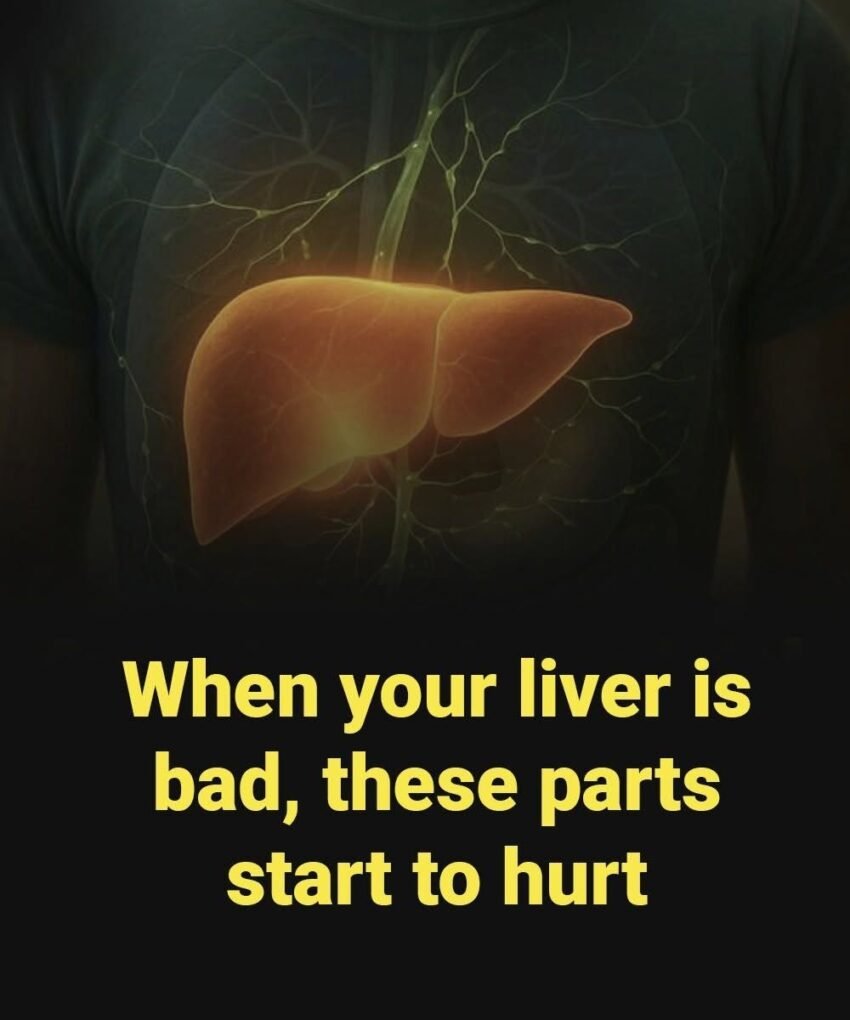
The Silent Alarms: The Specific Places That Hurt When Your Liver Is Struggling
The liver is the body’s ultimate workhorse. Operating quietly behind the scenes, it filters toxins, metabolizes fats, regulates blood sugar, and produces essential proteins. Because it lacks pain receptors within its actual tissue, it can endure significant stress, fatty accumulation, or inflammation without sending up immediate warning flares.
When liver distress finally reaches a point where it begins to make itself known, the pain or discomfort rarely appears directly where you might expect. Understanding the subtle body language of a struggling liver can mean the difference between simple lifestyle adjustments and a medical emergency.
The Anatomy of Liver Pain: Why It’s Often Misunderstood
To understand why your body hurts when your liver is in trouble, you have to look at its physical location and neurological setup.
Your liver sits in the upper right quadrant of your abdomen, tucked snugly beneath your ribcage. Because the liver tissue itself (the parenchyma) has no pain receptors, you won’t feel a direct ache inside the organ. Instead, pain occurs when conditions like fatty liver disease, hepatitis, or congestion cause the liver to swell. This swelling stretches the glissonian capsule—the sensitive, fibrous sheath encasing the liver. That stretching triggers referred pain patterns that signal distress to surrounding nerves.
The Primary Locations Where Liver Trouble Manifests
When the liver capsule stretches or nearby structures become inflamed, discomfort typically radiates to a few distinct areas of the body.
-
The Upper Right Abdomen (The Primary Zone): This is the most direct physical location. You may feel a dull, persistent ache, a feeling of fullness, or a heavy pressure just beneath your right ribcage. Sharp or stabbing pain is less common unless there is acute inflammation or gallbladder involvement.
-
The Right Shoulder Blade and Upper Back: This is a classic example of referred pain. Because the phrenic nerve runs from the diaphragm down near the liver and shares neurological pathways with the shoulder and upper back, a swollen liver can irritate this nerve. The result is a persistent, nagging ache trapped right beneath your right shoulder blade.
-
Generalized Abdominal Swelling and Tenderness: As liver function declines significantly (such as in advanced fibrosis or cirrhosis), fluid can accumulate in the abdominal cavity—a condition called ascites. This causes widespread tightness, bloating, and generalized abdominal discomfort rather than a localized spot.
Companion Red Flags: Beyond Just Pain
Liver distress rarely announces itself through pain alone. If you notice discomfort in the upper right abdomen or right shoulder paired with any of these systemic signs, it is a clear indicator that your liver needs immediate medical evaluation:
-
Jaundice: A yellowing of the skin and the whites of the eyes caused by a buildup of bilirubin, a waste product the liver normally processes and excretes.
-
Unexplained Chronic Fatigue: Feeling completely drained day after day because the liver is struggling to regulate energy storage and metabolic output.
-
Changes in Waste Color: Dark, tea-colored urine accompanied by pale, clay-colored stools, signaling a blockage or failure in bile processing.
-
Easy Bruising and Swelling: Swelling in the lower legs, ankles, and feet, alongside a tendency to bruise easily due to a lack of blood-clotting proteins produced by the liver.
A Step-by-Step Practical Framework for Liver Care
If you are experiencing mild, non-emergency discomfort or want to proactively protect your liver health, a targeted lifestyle audit is essential.
-
Eliminate Metabolic Stressors: Cut back drastically on refined sugars, high-fructose corn syrup, and excessive alcohol consumption, which are the primary drivers of non-alcoholic fatty liver disease (NAFLD) and cellular scarring.
-
Audit Your Medication and Supplement Intake: The liver processes everything you swallow. Avoid overusing non-steroidal anti-inflammatory drugs (NSAIDs) like acetaminophen or unverified herbal supplements that can overburden hepatic pathways.
-
Prioritize Cruciferous Vegetables: Incorporate broccoli, Brussels sprouts, kale, and garlic into your meals. These foods are rich in sulfur compounds that naturally support Phase 1 and Phase 2 liver detoxification pathways.
-
Stay Hydrated and Active: Regular movement helps reduce visceral fat accumulation around the liver, while proper hydration ensures optimal blood filtration and bile flow.
-
Get Tested Regularly: If you have risk factors like metabolic syndrome, diabetes, or a family history of liver disease, request a comprehensive metabolic panel (CMP) and a liver ultrasound or FibroScan from your doctor.
Real-World Scenarios: Listening to the Body
Consider Mark, a 45-year-old corporate executive who frequently ignored a dull, heavy pressure under his right ribs, attributing it to a bad office chair or poor posture. When a persistent ache under his right shoulder blade started waking him up at night, he finally scheduled a checkup. Blood work and an ultrasound revealed early-stage non-alcoholic fatty liver disease driven by a sedentary lifestyle and poor diet. Catching it early allowed Mark to reverse the condition entirely through dietary changes and regular exercise.
On the other hand, ignored symptoms can lead to severe crises. Waiting until yellowing of the skin (jaundice) or severe abdominal ascites sets in means the liver has suffered extensive, sometimes irreversible damage.
Comparison of Liver Stress Indicators
| Sign / Symptom | Where It Appears | Potential Meaning | Action Required |
| Dull Ache | Upper right abdomen under ribs | Liver swelling stretching the outer capsule | Dietary overhaul, medical checkup |
| Nagging Pain | Right shoulder blade / upper back | Referred nerve pain via the phrenic nerve | Professional evaluation and imaging |
| Yellow Skin/Eyes | Jaundice (face, eyes, skin) | Advanced bilirubin processing failure | Immediate emergency medical care |
| Fluid Bloating | Entire abdominal cavity (Ascites) | Severe hepatic dysfunction / Cirrhosis | Urgent specialist intervention |
Common Mistakes When Interpreting Liver Discomfort
-
Assuming all right-side pain is muscular: Blaming an upper-right abdominal ache purely on a strained muscle or bad workout without considering internal organ health.
-
Relying on “liver detox” teas: Buying aggressive, unverified commercial cleanse products online that can actually cause acute chemical injury to a struggling liver.
-
Ignoring mild, persistent fatigue: Writing off chronic exhaustion as a busy schedule when it is often the first systemic symptom of metabolic strain.
Expert Insights: The Modern Hepatology Perspective
Hepatologists and gastroenterologists emphasize that non-alcoholic fatty liver disease (NAFLD)—now frequently termed metabolic dysfunction-associated steatotic liver disease (MASLD)—is currently one of the fastest-growing chronic conditions globally, driven largely by modern diets and sedentary habits. Because the liver possesses a remarkable capacity to regenerate itself when given the right environment, early lifestyle intervention can halt and even reverse damage before it progresses to permanent scarring.
Frequently Asked Questions
Can stress cause liver pain?
Stress does not directly cause liver disease, but chronic stress elevates cortisol and blood sugar, which accelerates fat accumulation in the liver and worsens systemic inflammation.
Does fatty liver disease hurt?
In its early stages, fatty liver is entirely silent. However, as fat builds up and causes the liver to enlarge and inflame, it can produce a dull, aching sensation in the upper right abdomen.
What does an inflamed liver feel like?
Most people describe it as a dull ache, a feeling of fullness, or a tight pressure beneath the right ribcage, sometimes accompanied by a persistent knot in the right shoulder blade.
How do doctors diagnose liver problems?
Doctors use a combination of blood tests (liver enzymes like ALT and AST), imaging studies (ultrasound, CT, or FibroScan), and occasionally a liver biopsy to check for inflammation and scarring.
Are painkillers hard on the liver?
Yes. Medications like acetaminophen are processed directly by the liver, and exceeding recommended doses can cause acute, severe liver damage.
Can a damaged liver heal itself?
Yes. The liver is the only internal organ in the human body with the extraordinary ability to regenerate new tissue, provided the underlying cause of damage is removed early enough.
When should I go to the ER for liver pain?
Seek emergency medical care immediately if upper right abdominal pain is accompanied by yellowing skin, severe confusion, vomiting blood, or dark, bloody stools.
Action Checklist for Liver Protection
-
Do: Schedule routine blood work to check your liver enzyme levels (ALT, AST, GGT).
-
Do: Limit alcohol intake and reduce your consumption of processed sugars and seed oils.
-
Do: Eat antioxidant-rich foods like leafy greens, berries, and cruciferous vegetables daily.
-
Avoid: Taking excessive over-the-counter painkillers without medical guidance.
-
Avoid: Ignoring persistent, dull aches in your upper right abdomen or right shoulder blade.
Listening to the subtle physical cues your body gives you can prevent minor metabolic strain from escalating into a major health crisis.
Because the liver has no pain receptors inside its tissue, discomfort usually manifests as a dull ache under the right ribs or a referred pain in the right shoulder blade—serving as a vital warning sign to clean up your diet and consult a doctor.