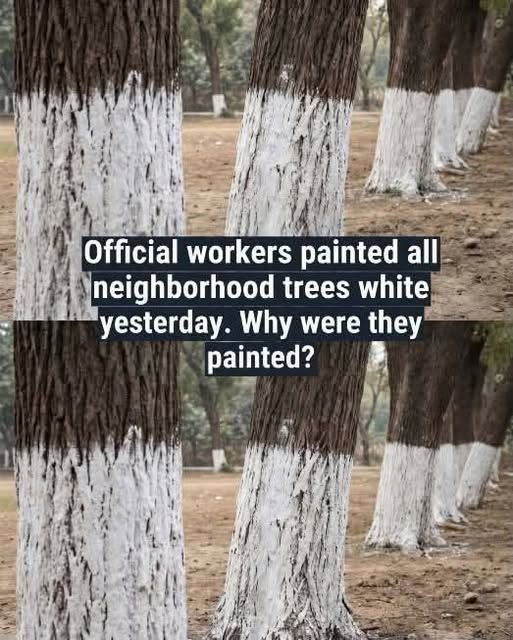
Why Are Some Trees Painted White? The Surprising Reason Behind Orchard Trunks
Driving through a rural countryside or past a manicured suburban orchard, you might occasionally spot something bizarre: neat rows of fruit trees with their lower trunks painted a stark, brilliant white. It looks like an artistic landscaping choice or a strange form of garden decor, but veteran orchardists and arborists aren’t painting trees for aesthetics.
That ghostly white coating is actually a vital protective measure known as tree whitewash, and it serves as a critical shield against environmental stress, extreme temperatures, and destructive pests.
The Science of Sunscald (Why Trees Need Sunscreen)
To understand why trees are painted, you have to look at how bark reacts to extreme weather. During the dead of winter or early spring, a young tree with thin, dark bark absorbs intense sunlight during the day, especially when rays reflect off snow-covered ground.
-
The Cellular Trap: This intense solar absorption tricks the tree’s cambium layer (its living inner tissue) into thinking spring has arrived prematurely, waking up its sap cells.
-
The Freeze Fracture: When the sun dips below the horizon and temperatures plunge below freezing at night, that active, warm sap freezes instantly, expanding and rupturing the bark.
-
The Result: This phenomenon is called sunscald or south-west injury. It leaves massive, gaping vertical splits in the bark, creating an open wound that invites deadly fungi, diseases, and wood-boring insects.
Painting the trunk white acts as a reflective shield. Just like white clothing keeps you cooler by reflecting solar radiation, the white paint deflects harsh winter sunlight, keeping the tree’s internal temperature stable until true spring arrives.
Other Hidden Benefits of Whitewashing
-
Pest and Borer Protection: Many traditional whitewash recipes incorporate natural deterrents like agricultural lime or mild organic compounds. This creates an inhospitable barrier that prevents wood-boring insects from burrowing into the bark to lay eggs.
-
Fungal and Bacterial Shield: The alkaline nature of lime-based whitewash creates a hostile micro-environment for spores, fungi, and moss that try to colonize cracks in young bark.
-
Rodent Deterrent: While not foolproof, the texture and taste of a treated trunk can discourage mice, voles, and rabbits from gnawing on tender bark during harsh winter months.
What Is Actually in Tree Whitewash?
If you think orchardists are cracking open a can of leftover latex wall paint from Home Depot, think again. Using standard interior or exterior architectural paint can trap moisture against the bark and suffocate the tree.
True agricultural whitewash is typically made from:
-
Agricultural Lime (Calcium Hydroxide): The primary base that provides the bright white color and alkaline protective qualities.
-
Salt or Milk: Traditional additives used to help the mixture stick tightly to rough tree bark through heavy winter rains.
-
Diluted Interior Latex (Modern Alternative): If modern gardeners use water-based latex paint, it must be diluted 1:1 with water to remain porous, allowing the tree to breathe while still reflecting sunlight.
Step-by-Step Guide: How to Whitewash Young Trees
If you have delicate fruit trees (like apples, pears, or citrus) in a climate prone to wild winter temperature swings, whitewashing is a straightforward DIY project.
-
Timing is Everything: Apply the whitewash in late fall or early winter, just after the tree has dropped its leaves and entered dormancy.
-
Clean the Trunk: Gently brush away loose outer bark, dirt, or webbing, but avoid scraping so hard that you damage the live tissue underneath.
-
Mix Your Solution: Combine equal parts white, interior water-based latex paint and water, or mix agricultural hydrated lime with water until it reaches the consistency of thin pancake batter.
-
Paint the Lower Trunk: Using a wide brush, coat the trunk from the soil line all the way up to the first set of lower scaffold branches (where the main canopy begins). Do not paint the upper canopy branches.
Common Pitfalls to Avoid
-
Using Undiluted House Paint: Sealing a tree in 100% thick architectural paint suffocates the bark, trapping moisture and encouraging rot. Always dilute water-based paint 50/50.
-
Ignoring Mature Trees: Thick, deeply furrowed bark on old, established trees naturally insulates them against sunscald. Whitewashing is primarily necessary for young, thin-barked trees that haven’t developed a thick protective armor yet.
-
Skipping the Root Flare: Make sure you paint right down to the soil line, as insects and winter frost damage often target the vulnerable base of the trunk.
Essential Action Checklist
-
Do: Target young, thin-barked fruit trees that are exposed to intense winter sun and snow glare.
-
Do: Use a breathable mixture (diluted water-based paint or agricultural lime) so the tree can still exchange gases.
-
Avoid: Applying whitewash during freezing weather, as it will not cure properly before ice crystals form.
-
Avoid: Mistakenly believing the paint is a permanent fix; you will need to reapply it annually as the tree grows and expands its girth.
That strange white paint isn’t a gardening quirk—it’s a time-tested, science-backed survival suit that helps orchards weather the brutal transition from winter freeze to spring thaw.