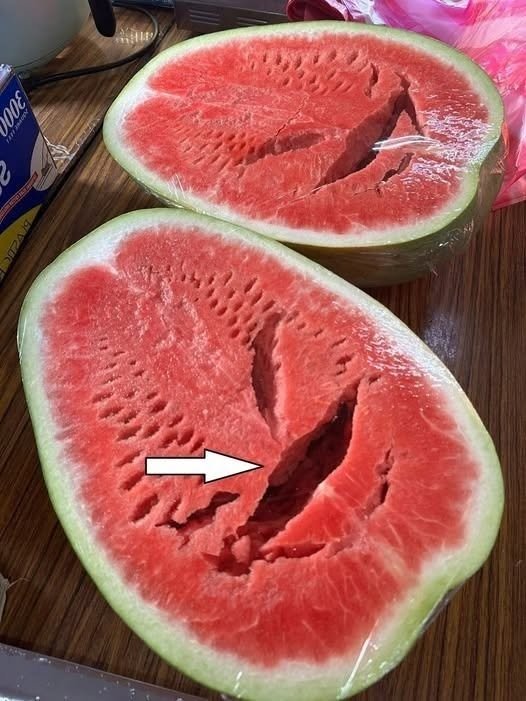
Warning! You Just Cut Open a Watermelon and Found Cracks Inside? Stop Eating It Immediately Until You Read This!
Disclaimer: The following information is for educational purposes only. Always inspect fresh produce thoroughly and discard any food item that shows signs of deep decay, foul odors, or abnormal structural collapse.
The Deceptive Trap of the Summer Fruit Center
There is almost nothing quite as satisfying on a blistering summer afternoon as slicing open a massive, heavy watermelon. You slide the chef’s knife through the rind, anticipating that crisp snap, the release of sweet juices, and a vibrant, ruby-red interior ready to refresh your palate.
Instead, you pull the halves apart and freeze.
Running through the pinkish-red flesh are strange, jagged cracks, hollow cavities, or a bizarre, mealy texture that looks nothing like the solid fruit you paid for. Many people shrug, cut around the weird parts, and serve it up anyway. After all, it’s just fruit, right?
Before you take a bite, you need to understand what those internal fissures actually mean. While some fruit irregularities are harmless, internal cracking in watermelons can signal a spectrum of issues ranging from harmless agricultural quirks to accelerated bacterial contamination that you definitely do not want to invite into your digestive tract.
The Science Behind the Splits: Why Watermelons Crack Internally
To understand why a watermelon splits from the inside out, we have to look at how these massive fruits grow and mature. Watermelons are roughly 92% water, relying on a delicate, high-pressure hydraulic system to expand rapidly during their growing cycle.
When things go wrong in the field or during transit, the structural integrity of the fruit’s flesh fails. The primary culprit behind internal fracturing is a phenomenon known agriculturally as “hollow heart.”
Hollow heart occurs when pollination is incomplete or disrupted during the early flowering stage. If the flower isn’t fully pollinated, the outer rind continues to expand normally because it receives hormonal signals from the plant, but the internal placental tissue fails to develop at the same pace. The result? The inside literally tears itself apart as the fruit grows, leaving gaping holes, splits, and cracks right down the middle.
Beyond hollow heart, extreme environmental inconsistencies—such as a severe drought followed by a sudden, massive deluge of rain or heavy irrigation—cause the fruit to absorb water too quickly. The internal cells swell at an uncontrolled rate, bursting the tissue matrix and creating internal fissures.
Is a Cracked Watermelon Safe to Eat? (The Critical Distinction)
This is the question every kitchen detective wants answered: Can I still eat it? The short answer is: It depends entirely on what caused the cracks and how long the melon has been sitting.
1. The Harmless Variety: Early-Stage Hollow Heart
If you slice open a firm, crisp watermelon and find a clean, dry cavity or simple structural cracks caused by incomplete pollination (hollow heart), the fruit is generally safe to consume. The flesh around the split might be a bit mealy, dry, or less sweet because the sugars didn’t distribute evenly, but it won’t make you sick. It hasn’t been compromised by pathogens; it’s simply an aesthetic and textural defect.
2. The Dangerous Variety: Fermentation and Bacterial Rot
The real danger arises when internal cracks combine with time, heat, and structural compromise. When a watermelon develops deep internal fissures and sits in warm grocery store displays or kitchen counters, those hollow chambers become breeding grounds.
Because the interior is exposed to air and trapped moisture, opportunistic fungi, molds, and bacteria rush in. If the cracks are accompanied by:
-
A sour, fermented, or alcoholic smell
-
A slimy, mushy, or water-soaked texture
-
Discolored white, brown, or gray patches inside the fissures
-
A fizzy or carbonated sensation when the juice hits your tongue
…you are no longer dealing with simple hollow heart. You are looking at a decomposing piece of produce teeming with microbes. Eating spoiled watermelon can trigger acute food poisoning, severe stomach cramps, nausea, and vomiting.
Real-World Scenarios: The Hidden Risks of Compromised Fruit
Consider a common scenario: A family purchases a large watermelon on a humid Saturday, places it in the trunk of a hot car for an hour, and then leaves it sitting on the kitchen counter for three days before finally cutting into it. Inside, the heat has accelerated internal expansion, causing hidden micro-cracks. Moisture pools in these micro-cavities, and wild yeasts begin a fermentation process.
When the father cuts it open, he notices a slight chemical or wine-like scent. Brushing it off as “just how watermelons smell sometimes,” he feeds slices to his young children. Within a few hours, multiple family members experience acute gastrointestinal distress.
The lesson? Compromised internal structures lose their natural protective barrier. Once the inner flesh splits open, the fruit’s natural defense system collapses, allowing external contaminants to migrate deep into the core where washing the outside of the rind can no longer protect you.
Step-by-Step Action Plan: How to Inspect and Handle Your Watermelon
Protecting your household from spoiled or structurally compromised produce requires a systematic approach from the moment you shop to the moment you slice.
1. Inspect the Exterior Before Buying
Before a watermelon ever enters your shopping cart, give it a rigorous physical check:
-
The Weight Test: Lift two melons of the same size. The heavier one contains more water and denser, more uniform flesh. A suspiciously light melon often indicates an advanced hollow heart or internal drying out.
-
The Ground Spot: Look for the creamy yellow field spot where the melon rested on the dirt. If it’s bright yellow or buttery, it’s ripe. If it’s white or missing entirely, the melon was picked too early, drastically increasing the risk of internal defects.
-
The Sound Test: Give it a firm tap with your knuckles. A healthy, dense melon should produce a deep, hollow thump. A dull thud usually means the fruit is overripe, bruised, or internally cracked.
2. Evaluate the Slicing Moment
The absolute moment of truth happens on your cutting board. Use this quick checklist as your blade hits the center:
-
Is the flesh crisp and uniformly red? Proceed and enjoy.
-
Are there dry, clean cracks with no off-odors? Taste a tiny piece near the center. If the flavor is bland or mealy, discard it for quality reasons, though it isn’t toxic.
-
Are there wet, oozing fissures, soft spots, or a sour/fermented odor? Stop immediately. Do not taste it. Wrap the entire melon securely and toss it straight into the outdoor garbage bin.
3. Practice Safe Post-Cut Storage
If your watermelon is healthy and completely free of suspicious cracks, store cut portions properly to prevent bacterial growth. Never leave cut watermelon at room temperature for more than two hours. Cover the cut surfaces tightly with plastic wrap or transfer cubes into an airtight container, and store them in the coldest part of your refrigerator for no more than 3 to 4 days.
Comparing Watermelon Internal Defects
| Defect Type | Visual Appearance | Smell / Texture | Is It Safe to Eat? |
| Hollow Heart | Clean, dry internal gaps and structural tears | Normal fresh scent; slightly mealy near the cracks | Yes (though texture/flavor may be poor) |
| Overripeness | Dark red, stringy flesh separating from seeds | Soft, watery texture; slightly sweet-sour aroma | Use caution; texture is usually unpleasant |
| Bacterial Fermentation | Discolored cavities, wet fissures, fuzzy spots | Sour, alcoholic, chemical, or putrid odor | NO. Discard immediately to prevent food poisoning |
Pros and Cons of Inspecting Produce Closely
-
Pros of Rigorous Inspection:
-
Eliminates the risk of foodborne illness from contaminated or spoiled fruit.
-
Saves you from eating unpalatable, dry, or tasteless produce.
-
Trains you to become a smarter, more discerning grocery shopper.
-
-
Cons and Challenges:
-
You cannot see internal cracks until you actually cut the fruit open, making pre-purchase detection imperfect.
-
Discarding a flawed melon can feel like a waste of money (though a minor financial loss beats a major hospital bill).
-
Common Mistakes to Avoid (And How to Fix Them)
-
Mistake 1: Relying Solely on the “Sniff Test” from the Outside
-
The Danger: Assuming a melon is fine because the thick outer rind smells neutral or clean, ignoring that the interior is rotting.
-
The Fix: Always evaluate the internal visual structure and aroma the exact second your knife opens the fruit.
-
-
Mistake 2: Eating Around the Bad Parts
-
The Danger: Cutting out a slimy or sour section of a cracked melon and eating the rest of the red flesh.
-
The Fix: If fermentation or bacterial rot has compromised one part of the interior matrix, invisible microbial metabolites and fluids have likely permeated the surrounding tissue. When in doubt, throw it out.
-
-
Mistake 3: Leaving Cut Watermelon in the Temperature Danger Zone
-
The Danger: Leaving a bowl of sliced melon sitting outdoors at a summer barbecue for 4 or 5 hours.
-
The Fix: Keep sliced fruit on ice or refrigerate it promptly. Bacteria multiply exponentially in warm, sugar-rich environments.
-
Expert-Level Insights: The 2026 Produce Safety Standard
Food safety authorities increasingly emphasize that minimal processing and home cutting introduce unique microbial vulnerabilities. Modern agricultural technologies are helping farmers minimize hollow heart through precision pollination monitoring and controlled-environment drip irrigation. However, supply chain transit delays and temperature fluctuations during summer heatwaves mean that structural stress on heavy fruits remains a common issue. Consumer awareness is your final and most effective line of defense.
Frequently Asked Questions
Can eating a cracked watermelon actually send me to the hospital?
If the cracks are merely due to hollow heart and the fruit is fresh, no. However, if the cracks allowed bacteria or fungi to enter and multiply—causing spoilage and fermentation—consuming it can result in severe food poisoning, characterized by vomiting, diarrhea, and intense abdominal pain.
What does it mean if my watermelon makes a hollow, echoing sound when I tap it?
A hollow sound can mean two different things depending on pitch. A deep, resonant thump usually indicates a ripe, healthy melon packed with juice. A hollow, drum-like echo combined with a very light weight often points to an advanced hollow heart or an overripe melon whose interior has dried out and cracked.
Why do some watermelons have white or yellow lines running through them?
Those lines are often vascular bundles or areas where the sugar distribution failed during rapid growth spurts. While not necessarily dangerous, they indicate that the fruit grew under irregular conditions, resulting in a woody or tasteless texture.
Can I use a cracked, mealy watermelon to make smoothies or juice?
If the melon simply suffered from harmless hollow heart and smells fresh, you can blend it into a smoothie, though the flavor may be watery. If there is any sign of sourness, off-odors, or discoloration, do not use it for cooking, juicing, or anything else.
How long does a whole watermelon last on the counter?
An intact, undamaged watermelon can last anywhere from 7 to 10 days at room temperature, and up to 2 to 3 weeks if stored in a cool, dark place like a basement or pantry. Once cut, it must go into the refrigerator immediately.
Are genetically modified watermelons more prone to internal cracks?
No. Most commercial watermelons with hollow heart are traditional hybrids bred for size and yield rather than GMOs. The defect is primarily driven by weather inconsistencies, poor pollination, and rapid watering schedules rather than genetic modification.
Is it safe to eat watermelon that has white seeds inside a seedless variety?
Yes. Those soft, undeveloped white seeds in “seedless” watermelons are completely harmless. They are simply empty seed coats that failed to mature due to the triploid nature of seedless varieties.
What should I do if the grocery store sold me a rotten, internally cracked watermelon?
Most reputable grocery stores and supermarkets have a strict freshness guarantee. Take a photo of the inside of the melon and your receipt, and bring it back to customer service for a full refund or replacement.
Action Checklist
-
Do: Inspect the weight, skin texture, and field spot of a watermelon before buying it.
-
Do: Wash the outside of the rind thoroughly before cutting into it to prevent surface bacteria from transferring to the blade.
-
Do: Check the internal flesh immediately for unusual cracks, hollow chambers, or off-odors.
-
Do: Refrigerate cut watermelon within two hours of slicing.
-
Avoid: Consuming any fruit that smells sour, fermented, or chemically altered.
-
Avoid: Leaving sliced fruit sitting out in warm summer temperatures.
-
Avoid: Eating from a melon with slimy, discolored internal fissures.
Finding cracks inside your watermelon doesn’t always spell disaster, but it demands an immediate safety check. If it’s just dry hollow heart and smells fresh, you can salvage what you can. But the moment you detect strange odors, mushy textures, or bacterial spoilage, put down the fork and walk away. Your digestive system will thank you.
Did you find this safety guide helpful? Drop a comment below, share this article with your family and friends to keep them safe, and explore our site for more essential food intelligence.