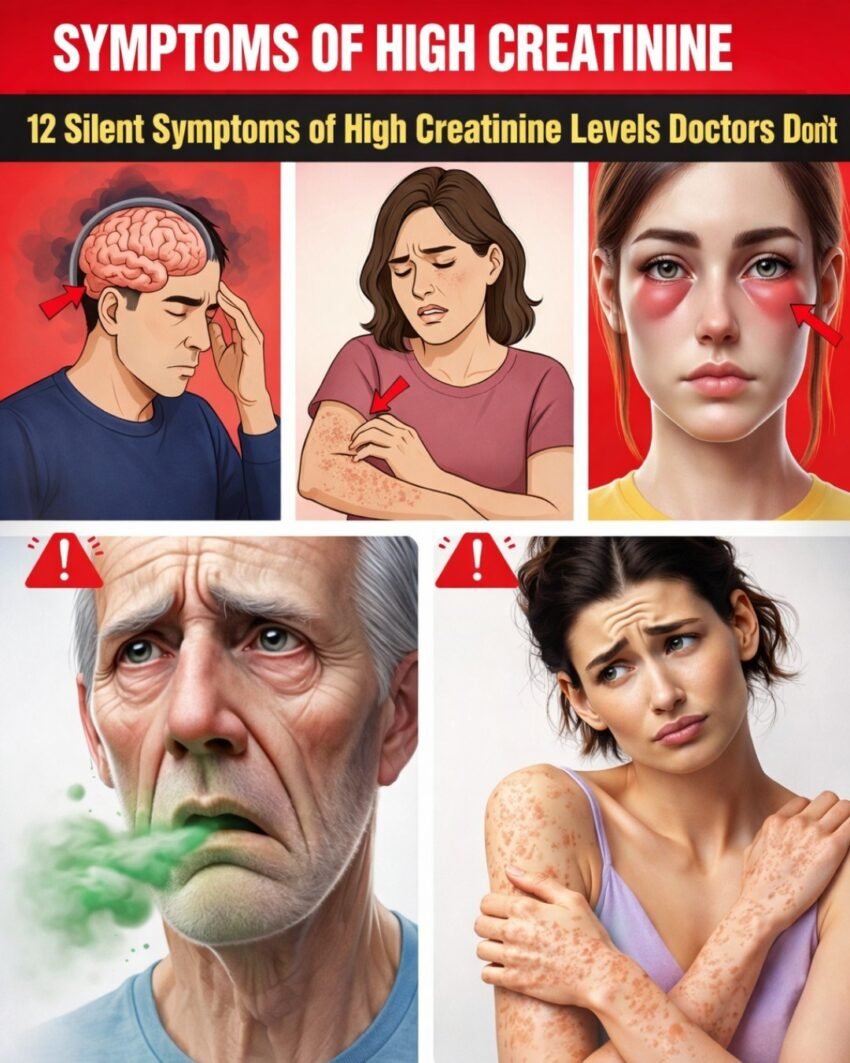
12 Silent Symptoms of High Creatinine Your Doctor Might Miss Until It’s Serious
High creatinine levels can signal declining kidney function long before obvious symptoms appear. Learn the 12 silent signs you should never ignore and when to seek medical help.
If Your Creatinine Is Rising, Your Body Is Trying to Tell You Something
Your kidneys work quietly every second of every day—filtering waste, balancing electrolytes, and keeping your fluid levels in check.
But when kidney function starts to decline, waste products like creatinine build up in the bloodstream. High creatinine often goes unnoticed until the damage is advanced.
That’s why recognizing silent warning signs can make a life‑changing difference.
This article reveals 12 subtle symptoms of high creatinine your doctor might overlook and explains what they mean.
What High Creatinine Really Means
Creatinine is a waste product from normal muscle metabolism. Healthy kidneys filter it out efficiently. When creatinine rises, it often indicates reduced filtration ability—an early sign of impaired kidney function.
Doctors typically catch this with lab tests, but symptoms may be subtle at first.
Understanding these early warning signs empowers you to act sooner.
1. Persistent Fatigue That Won’t Quit
Feeling tired is common, but with high creatinine levels you may experience unusual exhaustion that doesn’t improve with rest or sleep.
Why it happens:
- Waste buildup disrupts energy metabolism
- Electrolyte imbalances strain muscle and nerve function
Listen to your body—chronic fatigue deserves evaluation, especially if paired with other signs.
2. Trouble Sleeping or Insomnia
Healthy kidneys help regulate hormones that maintain your sleep‑wake rhythm. When they falter, sleep disturbances often follow.
Signs to watch:
- Difficulty falling asleep
- Waking up frequently
- Unexplained restless sleep
This isn’t just stress—your body may be struggling with more than meets the eye.
3. Nausea, Indigestion, or Loss of Appetite
High creatinine affects your digestive system. You might notice:
- Frequent nausea
- Early fullness
- Loss of appetite
- Occasional vomiting
These digestive issues can be misattributed to stress or diet—don’t let them slip by unnoticed.
4. Swelling in Ankles, Feet, or Face
Fluid retention is a hallmark of declining kidney function. When the kidneys can’t remove excess fluid, it often collects in the lower extremities.
Swelling to watch:
- Puffy ankles after sitting
- Noticeable facial puffiness
- Tight shoes or rings
This subtle swelling can be mistaken for weight gain or inflammation.
5. Frequent Urination, Especially at Night
Changes in urination patterns—especially waking up to urinate frequently—can indicate changes in kidney filtration.
Be alert if you notice:
- Increased nighttime urination
- Smaller or larger volumes than usual
- Foamy or frothy urine
Your bladder might be compensating for filtration issues.
6. Muscle Cramps and Twitches
Creatinine buildup can disturb your electrolyte balance, particularly calcium and potassium—essential for muscle function.
Signs include:
- Sudden cramps
- Involuntary twitches
- Leg discomfort at night
These are subtle but important signals when combined with other symptoms.
7. Itchy, Dry Skin That Won’t Improve
When kidneys fail to remove toxins, waste can deposit beneath the skin, causing persistent itchiness or dryness.
Although often overlooked, this can be an early sign of metabolic imbalance.
8. Changes in Urine Color or Smell
Your urine can reveal a lot:
- Darker than usual
- Cloudy or frothy
- Stronger odor
These changes may signal increased protein or waste products—common in declining kidney function.
9. Shortness of Breath with Mild Activity
Fluid buildup in the body can affect the lungs when it collects around lung tissue.
Signs include:
- Mild exertion feels harder than usual
- Difficulty catching your breath while walking upstairs
- Waking up short of breath
This isn’t normal fatigue.
10. Trouble Focusing or Brain Fog
Toxin buildup in the bloodstream can affect cognitive function.
You might notice:
- Difficulty concentrating
- Memory lapses
- Feeling “cloudy” during the day
These cognitive symptoms are easy to dismiss but shouldn’t be ignored.
11. High Blood Pressure That’s Hard to Control
Healthy kidneys help regulate blood pressure. When they falter, blood pressure often rises or becomes harder to control.
Tell‑tale signs:
- Morning readings consistently above normal
- Blood pressure fluctuates without lifestyle changes
- Medications seem less effective
High blood pressure and kidney function are deeply connected.
12. Metallic Taste or Bad Breath
Toxin buildup can alter saliva and taste receptors, leading to:
- Persistent metallic taste
- Bad breath not improved with brushing
- Loss of food enjoyment
This may feel strange, but it’s a known sign of elevated waste buildup.
Why These Symptoms Are Often Missed
Doctors rely on lab tests like serum creatinine, eGFR, or urinalysis to detect kidney issues. But early symptoms are often subtle and resemble other conditions, like:
- Stress
- Aging
- Dietary changes
- Hormonal fluctuations
The result? Early warning signs go unrecognized until more serious damage occurs.
When You Should Seek Medical Care
Talk to your doctor if you notice any combination of these symptoms:
- Persistent fatigue
- Swelling
- Sleep disturbances
- Changes in urine
- Unusual shortness of breath
Don’t wait for pain or “obvious” signs.
Tests That Help Confirm High Creatinine
Your doctor may recommend:
- Serum creatinine test
- Estimated Glomerular Filtration Rate (eGFR)
- Urinalysis
- Kidney ultrasound
- Blood urea nitrogen (BUN)
Early detection leads to early intervention.
Lifestyle Strategies That Support Kidney Health
Although only a healthcare provider can diagnose and treat kidney disease, you can support kidney health with:
- Hydration: Adequate water intake
- Balanced diet: Limit sodium and processed foods
- Blood pressure control: Regular monitoring
- Sugar management: Keep glucose in check
- Weight management: Healthy body weight supports kidney function
A Real‑Life Scenario
A 62‑year‑old man from Texas noticed fatigue, swelling in his ankles, and frequent nighttime urination. He assumed it was aging and stress.
Routine bloodwork finally showed elevated creatinine and reduced eGFR. Early lifestyle changes, medication adjustments, and monitoring helped slow progression.
His message?
“Don’t ignore the signs — early action made all the difference.”
FAQs (People Also Ask)
1. What is creatinine?
Creatinine is a waste product from muscle metabolism filtered by the kidneys.
2. What creatinine level is considered high?
Levels vary by age, sex, and muscle mass. Your provider interprets results in context.
3. Can high creatinine be reversible?
In early stages, lifestyle changes and managing underlying conditions can help.
4. Does high creatinine always mean kidney disease?
Often, but other factors like dehydration or medications can elevate levels temporarily.
5. Should I stop coffee to help creatinine?
Moderation is fine — hydration and kidney support are more important.
6. Can supplements lower creatinine?
Discuss with your doctor — some affect kidney metabolism or interfere with lab values.
7. Is creatinine testing painful?
No — it’s a simple blood draw and urine test.
8. How often should I check kidney function?
Annually for most; more often if you have risk factors.
9. Can high blood pressure cause high creatinine?
Yes — blood pressure and kidney function are closely linked.
10. Does age affect creatinine levels?
Yes — older adults may have naturally lower kidney function, but changes should be monitored.
Action Checklist
- Notice and track any subtle symptoms
- Schedule lab tests if symptoms persist
- Monitor blood pressure regularly
- Stay hydrated and eat a kidney‑friendly diet
- Discuss medications with your provider
Early signs of high creatinine can be silent and subtle, but they matter. Recognizing these 12 symptoms early gives you a head start on protecting kidney health before serious complications develop.
Final Thoughts
Your kidneys don’t shout — they whisper.
If your body is signaling fatigue, swelling, or unusual urination patterns, listen. Early awareness and action can change outcomes.
Have you experienced any of these signs? Share your story — your insight could help someone else catch early warning signs of high creatinine.