❤️ 7 Warning Signs in Your Arms and Legs That Could Signal a Heart Attack (What Your Body Might Be Trying to Tell You)
Arm and leg symptoms can sometimes signal heart problems. Learn 7 warning signs linked to heart attacks and when to seek urgent care.
Most people imagine a heart attack as something dramatic—sharp chest pain, sudden collapse, clutching the chest like in movies.
But in real life, the body is often quieter.
It sends signals first. Subtle ones. Easy to dismiss.
And surprisingly, some of the earliest warning signs don’t even start in the chest—they can show up in your arms and legs.
That’s what makes them dangerous. They’re easy to ignore until it’s too late.
Let’s break down what your body might be trying to tell you, what’s normal vs. concerning, and when to act fast.
🫀 Why Heart Problems Show Symptoms in Arms and Legs
Your heart is connected to the rest of your body through a vast network of blood vessels and nerves.
When blood flow is restricted—especially during a heart attack or peripheral artery disease—your extremities (arms and legs) can show early warning signs.
Conditions like those described by the myocardial infarction don’t always start in the chest. Sometimes, the first clues appear elsewhere.
🚨 1. Sudden Pain or Discomfort in the Left Arm
This is one of the most well-known warning signs.
It may feel like:
- Pressure
- Tightness
- Aching
- Heaviness
Why it happens:
Heart-related pain can “radiate” along shared nerve pathways, especially into the left arm.
Important note:
Not all arm pain is heart-related—but sudden, unexplained discomfort should never be ignored.
⚡ 2. Numbness or Tingling in Arms or Legs
A pins-and-needles sensation without an obvious cause can be concerning when paired with other symptoms.
Possible causes:
- Reduced blood circulation
- Nerve signaling changes due to oxygen shortage
- Early cardiovascular stress
If it appears suddenly or alongside chest discomfort, it needs attention.
🦵 3. Cold or Pale Extremities
If your hands or feet suddenly feel unusually cold—even in a warm environment—it could indicate poor circulation.
Why this matters:
Reduced blood flow can be an early sign of arterial narrowing or blockage.
🫀 4. Weakness in One Arm or Leg
A sudden feeling of weakness—like your limb is “giving out”—is not something to ignore.
It may indicate:
- Reduced oxygen supply
- Circulatory compromise
- Neurological involvement linked to cardiovascular strain
This symptom is especially concerning if it appears suddenly.
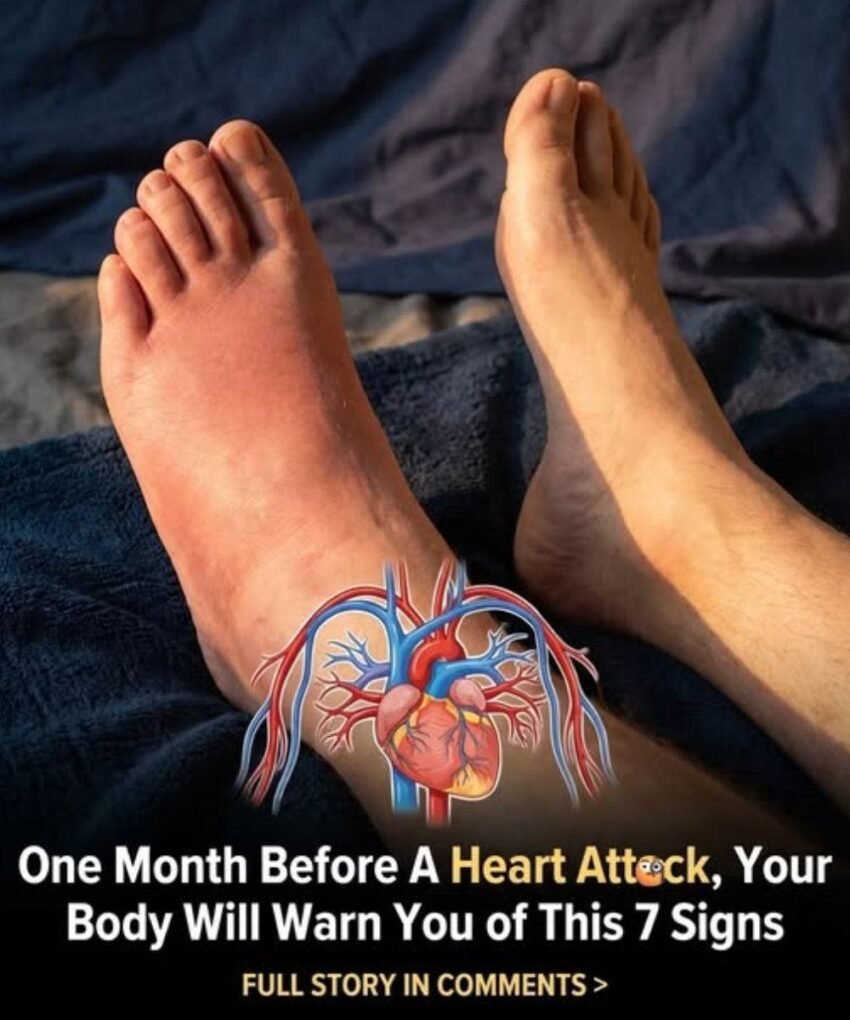
🦶 5. Swelling in Legs or Ankles
Swelling (edema) can sometimes be linked to heart issues.
Why it happens:
When the heart struggles to pump efficiently, fluid can build up in lower extremities.
This is often associated with long-term cardiovascular strain, but can worsen during acute episodes.
💢 6. Pain That Spreads From Chest to Arms or Legs
Pain that starts in the chest and moves outward is a classic red flag.
It may feel:
- Crushing
- Burning
- Spreading to shoulders, arms, neck, or back
This pattern is strongly associated with myocardial infarction.
🫁 7. Unexplained Fatigue in Limbs
Feeling unusually tired arms or legs during simple activities—like walking, climbing stairs, or holding objects—can indicate reduced blood flow.
Why it matters:
Your muscles rely on oxygen-rich blood. When circulation is compromised, fatigue appears earlier than expected.
⚠️ Important Reality Check
These symptoms do not automatically mean a heart attack.
They can also be caused by:
- Nerve compression
- Vitamin deficiencies
- Muscle strain
- Poor posture
- Anxiety
But the risk is in ignoring patterns—especially multiple symptoms together.
🧠 When It Becomes an Emergency
Seek immediate medical help if you experience:
- Arm pain + chest pressure
- Sudden weakness + dizziness
- Shortness of breath + limb discomfort
- Cold sweat + radiating pain
The American Heart Association emphasizes that early treatment dramatically improves survival outcomes in heart attacks.
🧍 Real-Life Scenario
A 54-year-old man in Ohio notices occasional left arm heaviness while walking.
He assumes it’s a muscle strain.
Weeks later, the symptoms return—this time with chest tightness and shortness of breath.
He goes to the hospital and is diagnosed with early-stage coronary blockage.
The warning signs were there. Just subtle.
🧠 Pros & Cons of Recognizing Early Symptoms
✅ Pros
- Faster emergency response
- Reduced heart damage risk
- Better treatment outcomes
- Increased awareness of body signals
❌ Cons
- Can cause anxiety if misinterpreted
- Symptoms overlap with non-serious conditions
- Risk of overthinking normal sensations
🚫 Common Mistakes People Make
Mistake #1: Assuming chest pain is required
Heart issues can start elsewhere.
Mistake #2: Waiting for “stronger symptoms”
Early signs are often mild but meaningful.
Mistake #3: Self-diagnosing online
Symptoms need clinical evaluation.
🧠 Expert Insight: Why Arm Pain Is So Misleading
The brain sometimes misinterprets heart pain as arm pain due to shared nerve pathways (referred pain).
That’s why heart-related discomfort doesn’t always feel like “heart pain.”
It can feel like:
- Arm strain
- Shoulder ache
- Jaw discomfort
- Back pain
🌍 2026 Health Awareness Trend
Modern cardiology focuses more on:
- Early detection
- Non-chest symptoms
- Preventive screening
- Lifestyle-based risk reduction
The goal is simple: catch problems before they become emergencies.
🧾 Action Checklist
✅ What To Do
- Pay attention to unusual limb pain
- Monitor patterns, not one-time symptoms
- Seek medical help if symptoms are sudden or severe
- Maintain heart-healthy habits
- Get regular checkups if at risk
❌ What To Avoid
- Ignoring recurring arm or leg discomfort
- Assuming only chest pain matters
- Self-diagnosing serious conditions
- Delaying emergency care
- Panicking over isolated mild symptoms
🏁 Conclusion
Your arms and legs can sometimes speak before your heart fully cries out for help.
Not every ache is dangerous—but some patterns deserve attention, especially when they appear suddenly or alongside other symptoms.
Understanding these signals isn’t about fear—it’s about awareness.
Heart problems don’t always start in the chest. Sometimes, your arms and legs notice first.
If this helped you better understand your body, share it with someone you care about—and stay aware of the subtle signals your health may be sending.