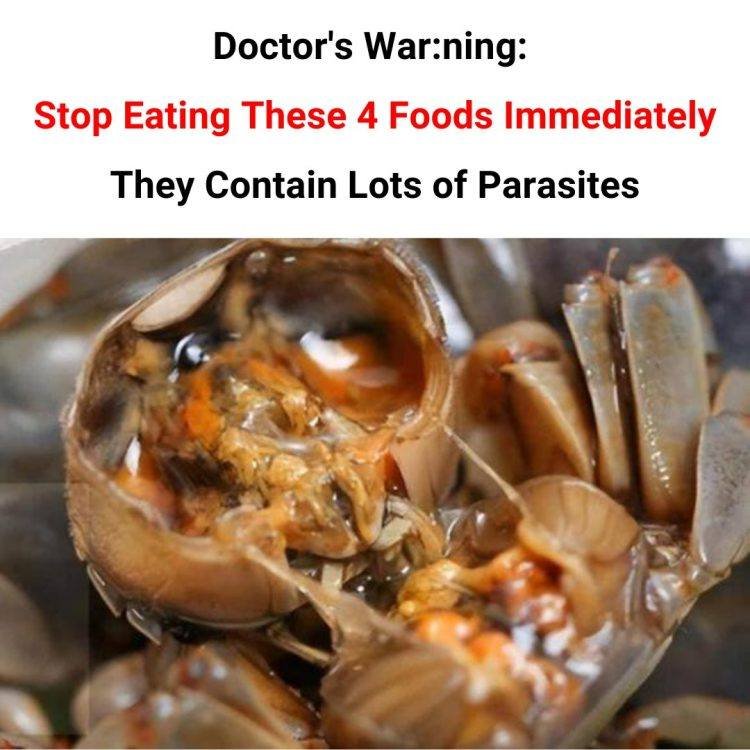
“Doctors warn: Limit eating these 4 foods immediately — they contain a lot of parasites” — Is it true?
There is a lot of this kind of message going around online, especially on social platforms where scary-sounding claims spread quickly. But medicine and public health experts don’t say “stop eating these foods or they’re full of parasites.” Instead, they explain which foods are more commonly associated with parasite risk and — more importantly — how to handle them safely so you don’t get sick.
Here’s a clear, evidence‑based look at the foods people worry about — and what science actually says.
🦠 What Are Food‑Borne Parasites?
Parasites are organisms (like protozoa or worms) that can live in or on animals and humans. Some can cause illness when ingested through contaminated food or water. Common examples include Giardia, Cryptosporidium, Cyclospora, tapeworms like Taenia, and roundworms like Trichinella.
Important point: parasites don’t just “live” in foods naturally — contamination usually happens when —
-
food is raw or undercooked,
-
hygiene is poor, or
-
food is washed with contaminated water.
🚫 Foods Often Cited in Online Warnings (And the Real Risk)
1. Raw or Undercooked Pork
Parasites like Trichinella spiralis (causing trichinosis) and pork tapeworm (Taenia solium) can occur in undercooked pork and wild game if not cooked properly.
✔️ Safety tip: Cook pork to the recommended internal temperature to kill parasites.
2. Raw Fish (Sushi, Sashimi, Ceviche)
Wild fish can carry worms like Anisakis or fish tapeworms, which can cause infection if eaten raw.
✔️ Safe practice: Commercial sushi‑grade fish is usually frozen beforehand to kill parasites. This is why restaurants follow strict freezing protocols.
3. Raw Produce (Leafy Greens, Herbs)
Parasites such as Cyclospora have been linked to contaminated fresh produce (lettuce, herbs, berries) because water or soil at the farm level can contain parasite eggs.
✔️ Safety tip: Wash fresh fruits and vegetables thoroughly under clean running water.
4. Undercooked Beef and Game Meats
Beef can carry tapeworm larvae (Taenia saginata) if undercooked, and wild game may carry various parasites if not prepared safely.
✔️ Safety practice: Cook all meats to proper temperatures and avoid eating wild game raw.
🧄 What Experts Actually Recommend
Instead of fear‑mongering headlines like “these foods contain a lot of parasites,” health authorities focus on prevention:
✅ Cook Foods Thoroughly
Proper cooking kills parasites and other pathogens.
✅ Wash Produce Well
Contaminated irrigation water can leave parasite eggs on lettuce, herbs, and vegetables unless cleaned.
✅ Practice Kitchen Hygiene
Wash hands, wash cutting boards and utensils, and avoid cross‑contamination.
✅ Safe Water & Dairy Practices
Unpasteurized milk and untreated water can carry parasites — choose treated sources.
— These are the kinds of practical, evidence‑based recommendations from food safety and public health agencies, not single‑food shutdowns.
📌 The Bottom Line
❗ Are “doctors warning that certain foods are full of parasites”?
Not in the dramatic way social media sometimes claims. The real risk comes from how food is handled, cooked, and cleaned, not the inherent nature of the food itself. Proper food safety dramatically reduces the likelihood of parasite infection.
🆗 Safe Eating Is About Hygiene, Not Fear
Even foods that can carry parasites — like fish or leafy greens — can be enjoyed safely with correct preparation and handling.
Quick Safety Checklist
✅ Cook meats & fish thoroughly
✅ Wash fresh produce under running water
✅ Use treated drinking water
✅ Avoid raw/unpasteurized dairy
✅ Follow safe food handling practices