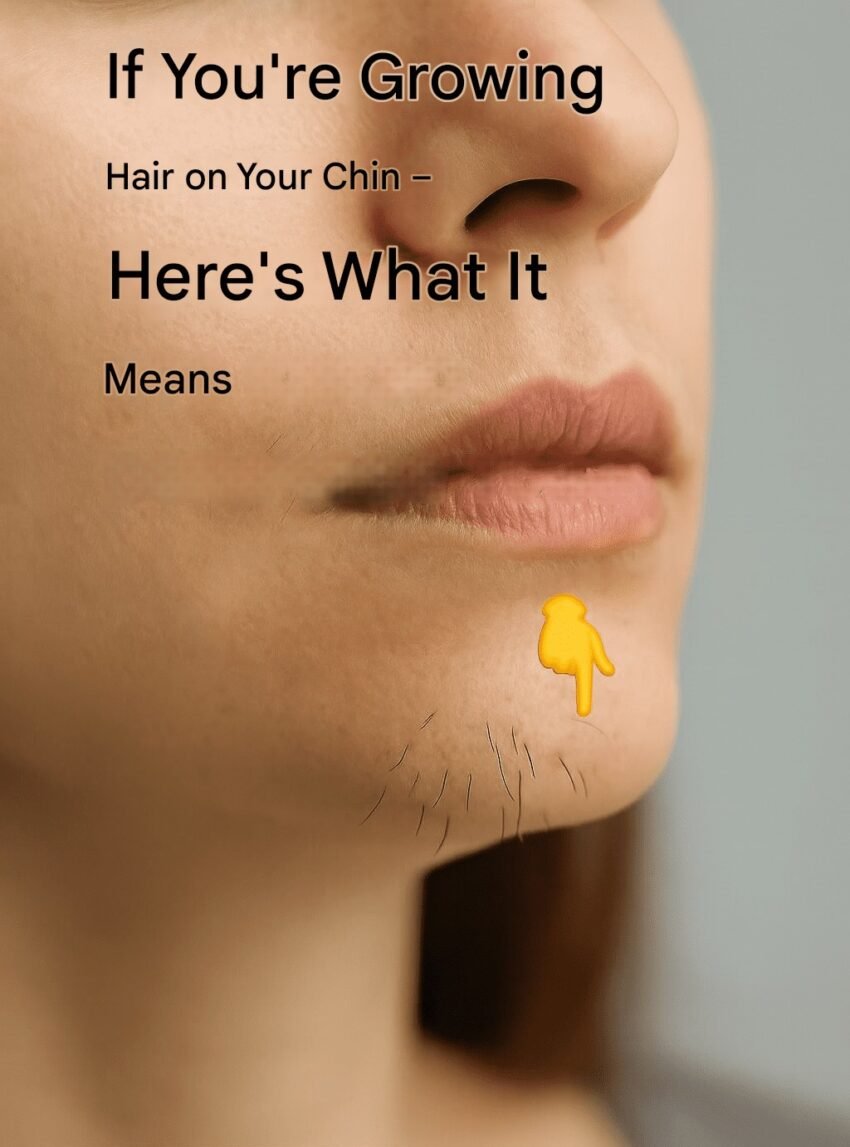
If Dark Hairs Appear on Your Chin, This May Be a Sign That You Are Experiencing These Common Changes
Noticing dark chin hairs? Learn what causes them, when they’re normal, and when they might signal hormonal changes or health conditions.
Introduction
You’re looking in the mirror one morning and suddenly notice something unexpected — a dark, coarse hair growing from your chin.
For many women, this can feel surprising, frustrating, or even embarrassing. The immediate question that comes to mind is usually:
“Why is this happening?”
The truth is that occasional dark chin hairs are extremely common and often harmless. In many cases, they simply reflect natural hormonal shifts, genetics, or aging.
However, in some situations, new or excessive facial hair may signal underlying hormonal changes or medical conditions worth understanding.
In this guide, we’ll explore why dark chin hairs appear, what they might indicate about your body, when they’re completely normal, and when it might be worth speaking with a doctor.
Understanding Why Chin Hair Happens
Everyone — both men and women — has hair follicles across the face. Most of these hairs are vellus hairs, which are thin, light, and barely noticeable.
However, certain hormones can cause some follicles to produce terminal hairs, which are:
-
Thicker
-
Darker
-
Coarser
-
More noticeable
The main hormones responsible for this change are androgens, a group of hormones that includes testosterone.
Even though androgens are often associated with men, women naturally produce them too, just in smaller amounts.
When androgen levels rise or hair follicles become more sensitive to them, facial hair growth can increase.
1. Natural Hormonal Changes
One of the most common reasons for dark chin hairs is normal hormonal fluctuation.
Hormone levels change throughout life due to factors such as:
-
Aging
-
Menstrual cycle shifts
-
Pregnancy
-
Menopause
During menopause especially, estrogen levels drop while androgen effects become more noticeable. This imbalance can cause new facial hairs to appear.
The North American Menopause Society notes that many women experience changes in hair growth patterns during midlife.
These hairs are usually harmless and appear slowly over time.
2. Genetics and Family Traits
Sometimes, chin hair is simply genetic.
If women in your family have facial hair growth, there’s a higher chance you may experience it too.
Certain ethnic backgrounds also tend to have thicker or darker facial hair, including individuals with Mediterranean, Middle Eastern, or South Asian heritage.
In these cases, chin hair is not a health concern — it’s simply part of your natural biology.
3. A Possible Sign of Hormonal Imbalance
If chin hairs suddenly appear in larger numbers or grow quickly, it may be related to hormonal imbalance.
One condition associated with increased facial hair is Polycystic Ovary Syndrome, commonly called PCOS.
PCOS can cause:
-
Increased androgen levels
-
Irregular menstrual cycles
-
Acne
-
Facial or body hair growth
According to the National Institutes of Health, PCOS affects an estimated 6–12% of women of reproductive age in the United States.
However, chin hair alone does not automatically mean PCOS. Doctors usually look for multiple symptoms before diagnosing the condition.
4. Certain Medications
Some medications may influence hair growth patterns.
Examples can include:
-
Hormonal medications
-
Certain steroids
-
Some treatments for endometriosis
If you recently started a new medication and noticed increased facial hair, it may be worth discussing with your healthcare provider.
5. Aging and Hair Follicle Sensitivity
As people age, hair follicles sometimes become more sensitive to androgens.
This sensitivity can cause previously invisible hair to grow thicker or darker.
This is why many women notice their first chin hair in their 30s, 40s, or 50s.
While it may feel unexpected, it is a normal biological change.
When Chin Hair Might Be Worth Discussing With a Doctor
Most of the time, occasional chin hairs are harmless.
However, consider consulting a healthcare professional if you notice:
-
Rapid facial hair growth
-
Hair appearing on chest or abdomen
-
Severe acne
-
Irregular menstrual cycles
-
Voice deepening
-
Sudden hair growth along with hair loss on the scalp
These symptoms together may indicate a hormonal condition that could benefit from medical evaluation.
Safe Ways to Manage Chin Hair
If chin hairs bother you cosmetically, there are several safe options.
Temporary Solutions
-
Tweezing
-
Waxing
-
Threading
-
Facial razors
These methods remove hair but do not stop future growth.
Longer-Term Options
-
Laser hair removal
-
Electrolysis
Electrolysis is considered a permanent hair removal method because it destroys individual hair follicles.
Common Myths About Chin Hair
Myth: Plucking makes hair grow back thicker
This is a common misconception. Plucking removes the hair from the follicle but does not change its thickness or growth rate.
Myth: Only older women get chin hair
While more common with age, chin hairs can appear at any stage of adulthood.
Myth: Facial hair always means a health problem
Most of the time, it does not indicate a medical condition.
Quick Self-Check Guide
If you notice a chin hair, ask yourself:
-
Is it just one or two hairs?
-
Did it appear gradually?
-
Are there other symptoms?
If the answer is yes to the first two and no to the third, it’s likely normal.
FAQs
Is it normal for women to have chin hair?
Yes. Many women develop occasional chin hairs due to normal hormone levels and genetics.
Why do chin hairs feel thicker?
Terminal hairs are naturally coarser than fine facial hairs.
Can stress cause chin hair?
Stress can influence hormone levels slightly, but it is rarely the sole cause of facial hair growth.
Should I remove chin hairs?
That’s entirely a personal choice. Many women remove them for cosmetic reasons.
How common is facial hair in women?
Mild facial hair growth is extremely common and affects many adult women.
When should I see a doctor?
If facial hair appears suddenly, grows rapidly, or comes with other symptoms like irregular periods.
Do hormones control hair growth?
Yes. Hormones such as androgens influence hair thickness and growth patterns.
Is laser hair removal safe?
When performed by trained professionals, it is generally considered safe.
Conclusion
Finding a dark hair on your chin can feel surprising, but in most cases, it’s simply part of normal hormonal changes, genetics, or aging.
Our bodies evolve throughout life, and hair growth patterns are no exception.
Understanding the reasons behind these changes can help remove the worry and allow you to make informed decisions about how you manage them.
If dark hairs appear on your chin, it may simply be a sign that:
-
Your hormones are changing naturally
-
Your genetics influence hair growth
-
Your hair follicles are becoming more sensitive with age
Occasionally, it could also reflect a hormonal condition, especially if other symptoms appear.
When in doubt, a quick conversation with a healthcare professional can provide clarity and peace of mind.
If you found this article helpful, consider sharing it with someone who might have wondered about the same thing. Conversations about everyday health changes help normalize experiences that many people quietly go through.