Body Types Explained: Are You an Ectomorph, Mesomorph, or Endomorph? (And What It Means for Your Fitness, Diet, and Health)
Discover whether you’re an ectomorph, mesomorph, or endomorph—and learn how your body type affects fitness, diet, and metabolism.
Why Your Body Type Matters More Than You Think
Walk into any gym in America and you’ll notice something interesting.
Some people seem to build muscle almost effortlessly. Others can eat large meals without gaining a pound. And then there are those who feel like every extra calorie goes straight to their waistline.
If you’ve ever wondered “Why does my body respond differently to exercise and food than someone else’s?”, you’re not alone.
Many trainers, nutritionists, and health professionals explain these differences using a concept called somatotypes, commonly known as body types.
The three classic body types are:
-
Ectomorph
-
Mesomorph
-
Endomorph
Understanding which category you lean toward can help you:
-
Train more efficiently
-
Eat smarter
-
Set realistic fitness expectations
-
Avoid frustration with ineffective routines
But there’s an important twist most people don’t realize: very few people are purely one body type.
In this guide, we’ll break down exactly what these body types mean, how to identify yours, and how to tailor your diet, workouts, and lifestyle around your natural physiology.
What Are Body Types? A Simple Overview
The concept of body types was introduced in the 1940s by psychologist William H. Sheldon, who proposed that human physiques generally fall into three categories based on physical traits.
These categories—ectomorph, mesomorph, and endomorph—describe patterns in:
-
Bone structure
-
Fat distribution
-
Muscle growth
-
Metabolic tendencies
While modern science recognizes that genetics, lifestyle, hormones, and environment all play major roles, the somatotype model still offers a useful framework for understanding body differences.
Think of body types less as strict labels and more like starting points for understanding your metabolism and physique tendencies.
The Three Primary Body Types
Ectomorph: The Naturally Lean Frame
Ectomorphs are often described as naturally slim with fast metabolisms.
Common traits include:
-
Narrow shoulders and hips
-
Lean muscle mass
-
Long limbs
-
Small joints and bone structure
-
Difficulty gaining weight or muscle
You’ve probably seen this body type in distance runners, cyclists, or tall basketball players.
Typical Strengths
Ectomorphs often benefit from:
-
Faster metabolism
-
Lower body fat levels
-
Ease with endurance activities
For many Americans struggling with weight gain concerns, this may sound ideal. But ectomorphs face their own challenges.
Common Challenges
-
Difficulty gaining muscle
-
Struggles with bulking despite high calorie intake
-
Fatigue during intense strength training
Best Training Approach for Ectomorphs
If you identify with this body type, your fitness strategy should focus on:
Strength training over excessive cardio.
Key recommendations include:
-
Compound lifts (squats, deadlifts, bench press)
-
Lower cardio volume
-
Higher calorie intake
-
Adequate protein
Many fitness coaches recommend 3–4 strength sessions per week with rest days for recovery.
Mesomorph: The Naturally Athletic Build
Mesomorphs tend to have the classic athletic physique.
Traits often include:
-
Broad shoulders
-
Narrow waist
-
Naturally muscular frame
-
Efficient metabolism
-
Ease gaining muscle
This body type is commonly seen in athletes such as sprinters, swimmers, and football players.
Typical Strengths
Mesomorphs usually benefit from:
-
Rapid muscle growth
-
Strong strength response
-
Balanced fat distribution
For many Americans pursuing fitness goals, mesomorphs often find it easier to achieve visible results.
Potential Challenges
Despite the advantages, mesomorphs may experience:
-
Faster fat gain if inactive
-
Overtraining due to rapid progress
-
Plateau without structured programs
Best Training Strategy
Mesomorphs generally thrive with balanced routines, including:
-
Strength training
-
Moderate cardio
-
Functional training
-
High-intensity interval workouts
Many personal trainers recommend 4–5 varied workouts per week for optimal results.
Endomorph: The Naturally Stockier Body
Endomorphs typically have rounder builds and slower metabolisms.
Characteristics often include:
-
Wider hips
-
Higher body fat percentage
-
Thicker limbs
-
Larger bone structure
-
Easier weight gain
This body type is extremely common in the United States, where sedentary lifestyles and calorie-dense diets are widespread.
Strengths of Endomorphs
Endomorphs often have surprising advantages:
-
Strong natural strength
-
High muscle potential under fat tissue
-
Excellent power output
Many elite powerlifters and strength athletes share endomorphic traits.
Common Challenges
Endomorphs may struggle with:
-
Weight gain
-
Slower fat loss
-
Insulin sensitivity issues
However, the right lifestyle approach can dramatically improve outcomes.
Best Training Strategy
Successful routines often include:
-
Resistance training 3–5 days weekly
-
Higher daily movement
-
Cardio sessions such as brisk walking, cycling, or HIIT
-
Structured nutrition plans
Consistency tends to matter more than intensity for long-term success.
Why Body Types Matter for Americans Today
In the United States, lifestyle factors heavily influence body composition.
According to research from the Centers for Disease Control and Prevention (CDC), over 40% of American adults are classified as obese.
However, body type influences how weight is gained, stored, and lost.
Understanding your somatotype can help prevent common frustrations such as:
-
Following the wrong diet trend
-
Overtraining or undertraining
-
Comparing your progress unfairly with others
For example:
-
An ectomorph trying to follow an extreme calorie deficit diet may feel exhausted.
-
An endomorph copying a high-carb endurance athlete diet might struggle with fat loss.
Fitness success often comes from alignment with your natural physiology, not fighting against it.
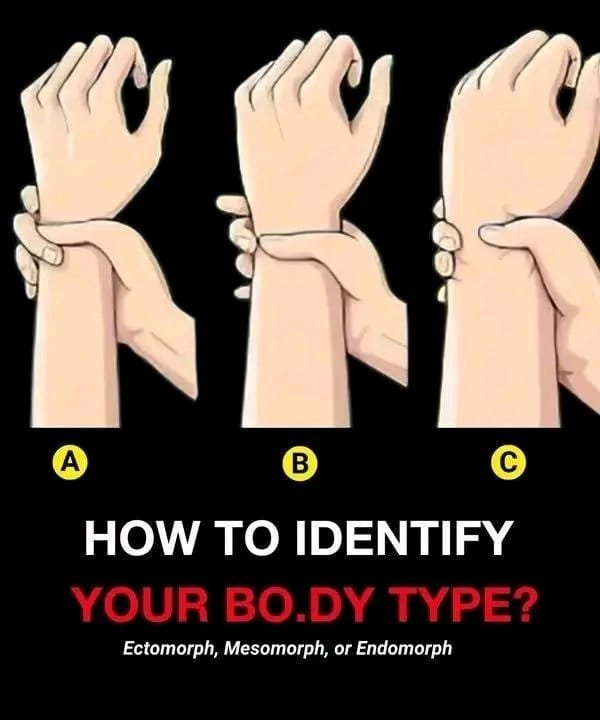
How to Identify Your Body Type
Most people are a combination of two body types.
You can start identifying yours by evaluating several factors.
1. Look at Your Bone Structure
Check:
-
Wrist circumference
-
Shoulder width
-
Hip structure
Smaller frames lean toward ectomorph traits, while larger frames lean endomorphic.
2. Evaluate Your Weight History
Ask yourself:
-
Do you gain weight easily?
-
Do you struggle to gain muscle?
-
Do you lose weight quickly?
Your answers reveal metabolic tendencies.
3. Assess Muscle Response to Training
After consistent workouts, notice:
-
How quickly muscle develops
-
How easily fat accumulates
Mesomorphic traits often appear through rapid muscle response.
4. Observe Fat Distribution
Different body types store fat differently:
-
Ectomorph: minimal fat
-
Mesomorph: balanced distribution
-
Endomorph: hips, abdomen, thighs
Comparison Table: The Three Body Types
| Feature | Ectomorph | Mesomorph | Endomorph |
|---|---|---|---|
| Metabolism | Fast | Moderate | Slower |
| Muscle Gain | Difficult | Easy | Moderate |
| Fat Gain | Rare | Moderate | Easy |
| Frame | Small | Medium | Larger |
| Best Training | Strength focus | Mixed training | Strength + cardio |
Real-World Example: Two People, Same Gym Plan
Consider this common scenario.
Jake and Marcus both start the same workout routine.
-
Jake has ectomorphic traits.
-
Marcus has endomorphic traits.
After two months:
Jake gains minimal muscle despite intense workouts.
Marcus builds strength quickly but struggles with fat loss.
Neither program is “wrong.”
It’s simply not optimized for their physiology.
Once Jake increases calories and reduces cardio, his muscle growth improves.
Marcus adds more daily movement and adjusts carb intake—his fat loss accelerates.
This illustrates why personalized fitness strategies outperform generic plans.
Common Mistakes People Make About Body Types
1. Believing Body Type Determines Everything
Your somatotype influences tendencies—not destiny.
Lifestyle choices still matter far more.
2. Trying to Train Like Someone Else
Social media often promotes one-size-fits-all fitness advice.
But what works for a mesomorph influencer may not work for you.
3. Ignoring Nutrition
Training alone rarely changes body composition dramatically without dietary adjustments.
4. Expecting Instant Transformation
Body recomposition takes months or years—not weeks.
Expert Tips Most People Don’t Know
Body Types Can Change Over Time
While bone structure remains constant, body composition evolves through:
-
Age
-
Hormonal shifts
-
Lifestyle habits
Someone who was once ectomorphic may develop endomorphic traits later in life.
Sleep Plays a Bigger Role Than Most People Realize
Poor sleep disrupts hormones related to:
-
Appetite
-
Fat storage
-
Muscle recovery
Many trainers consider sleep one of the most underrated body composition factors.
Strength Training Benefits Every Body Type
Regardless of your somatotype, resistance training:
-
Preserves muscle
-
Improves metabolism
-
Supports long-term health
Emerging Fitness Trends in 2025
Several trends are shaping how Americans approach body types today.
Personalized Fitness Apps
Technology now uses:
-
AI body scans
-
Wearable data
-
Metabolic tracking
These tools tailor workouts to individual physiology.
Metabolic Health Focus
Instead of weight alone, experts increasingly emphasize:
-
Insulin sensitivity
-
Muscle mass
-
visceral fat levels
Hybrid Training Programs
Programs combining:
-
Strength
-
Mobility
-
Conditioning
are gaining popularity for balanced body development.
Pros and Cons of Using the Body Type Model
Pros
-
Simplifies fitness understanding
-
Helps personalize training
-
Reduces unrealistic expectations
-
Encourages smarter diet strategies
Cons
-
Oversimplifies human biology
-
Doesn’t account for lifestyle variables
-
Can create limiting beliefs
Experts recommend using body types as guidelines, not rigid categories.
Practical Action Plan: Use Your Body Type to Your Advantage
If you want to apply this knowledge immediately, start here.
Step 1: Identify Your Dominant Traits
Determine which body type you most resemble.
Step 2: Adjust Your Workout Structure
Align training volume and intensity with your metabolism.
Step 3: Personalize Nutrition
Consider:
-
Calorie intake
-
Macronutrient balance
-
Meal frequency
Step 4: Track Progress
Monitor changes over 8–12 weeks, not days.
Frequently Asked Questions
Can someone be a mix of two body types?
Yes. Most people are combinations such as:
-
Ecto-mesomorph
-
Meso-endomorph
Pure somatotypes are rare.
Can an endomorph become lean?
Absolutely. With consistent training and nutrition adjustments, body composition can change significantly.
Are body types scientifically proven?
Modern science views somatotypes as descriptive frameworks, not strict biological classifications.
Do body types affect metabolism?
They can influence metabolic tendencies, but factors like diet, activity, and hormones play major roles.
Is cardio necessary for all body types?
Yes, but the amount varies. Endomorphs may benefit from more cardiovascular activity than ectomorphs.
Do genetics determine body type?
Genetics strongly influence body structure and metabolism, but lifestyle still shapes outcomes.
Can diet change body type?
Diet won’t change bone structure but can dramatically alter body composition.
Is strength training safe for beginners?
Yes, when performed with proper technique and gradual progression.
How long does it take to change body composition?
Most people begin noticing changes within 8–12 weeks of consistent training and nutrition.
Quick Action Checklist
If you want to apply what you learned today:
-
Identify your dominant body type traits
-
Align your workout with your metabolism
-
Adjust your calorie intake accordingly
-
Track your progress over several months
-
Prioritize sleep and recovery
-
Avoid comparing your body to others
Final Thoughts
Understanding whether you lean toward ectomorph, mesomorph, or endomorph traits can be a powerful tool.
Not because it limits you—but because it helps you work with your body instead of against it.
The most successful fitness journeys come from recognizing your natural tendencies and building a strategy around them.
Your body type isn’t a barrier.
It’s simply a starting blueprint.
Body types provide a helpful framework for understanding how different bodies respond to diet and exercise.
When you tailor your fitness plan to your natural physiology, you’re far more likely to see consistent progress, avoid frustration, and maintain results long term.
If this guide helped you better understand your body, consider sharing it with a friend or leaving a comment about your experience. Your story might help someone else start their own fitness journey.