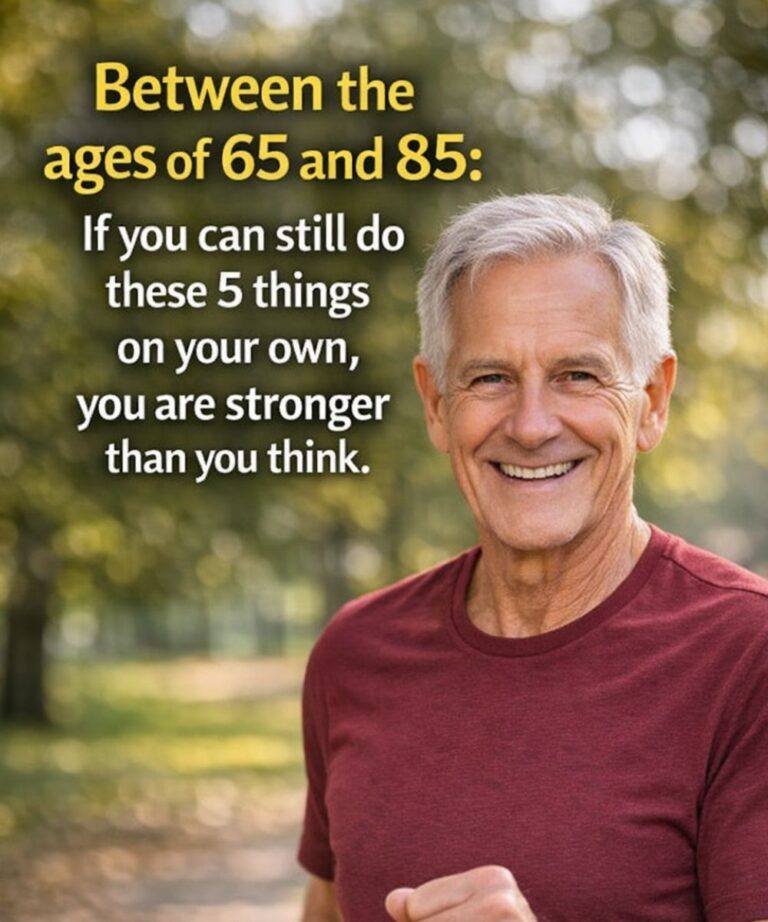
Between 65 and 85: 5 Daily Abilities That Prove You’re Stronger Than You Think
Ages 65–85? If you can do these 5 everyday tasks independently, your strength and independence are remarkable. Learn what they reveal about your health.
Why Everyday Abilities Reveal True Strength in Later Life
Strength in your 60s, 70s, and even 80s isn’t just about lifting weights or running marathons. It’s about independence, balance, and functional ability.
Doctors and geriatric specialists often say that how well you perform daily activities can tell more about your health than age alone.
If you can still manage certain tasks on your own between ages 65 and 85, it’s not just convenience—it’s a sign that your body and mind are resilient.
Here are 5 abilities that prove you’re stronger than you think.
1. Climbing Stairs Without Assistance
Being able to climb stairs is more than a simple movement—it reflects:
-
Leg strength
-
Joint flexibility
-
Cardiovascular endurance
-
Balance and coordination
If you can do this without holding onto a railing for support, it’s a sign your lower-body strength and balance remain excellent.
Tip: Stair climbing can also double as a low-impact exercise to maintain strength and heart health.
2. Carrying Groceries or Everyday Items
Carrying a grocery bag, a laundry basket, or even a small package indicates:
-
Functional upper-body strength
-
Grip strength
-
Core stability
These abilities are linked to independence. According to studies, loss of grip strength is a predictor of frailty, so maintaining it matters well into your 80s.
Tip: Simple home exercises like lifting soup cans or resistance bands can preserve functional strength.
3. Getting Up From a Chair Without Using Your Hands
Rising from a seated position without pushing off your arms shows:
-
Lower-body muscle strength
-
Balance
-
Joint mobility
-
Core stability
This is often called the “sit-to-stand test” in geriatric assessments. Passing this test correlates with a lower risk of falls and higher overall mobility.
Tip: Practice gentle squats at home to maintain this strength.
4. Walking a Mile (Or About 20 Minutes) Without Assistance
Walking independently reflects:
-
Cardiovascular health
-
Leg and core strength
-
Endurance and energy levels
-
Joint health
Even a moderate pace matters. Women and men who maintain walking routines into their 70s and 80s show lower risks of chronic disease and cognitive decline.
Tip: Walking outdoors also boosts mood, reduces stress, and supports bone health.
5. Managing Daily Personal Care Independently
Being able to dress, bathe, and groom yourself without assistance is a major marker of functional independence.
It demonstrates:
-
Upper- and lower-body strength
-
Flexibility
-
Cognitive function
-
Coordination
Maintaining these abilities into older age significantly improves quality of life and reduces dependency on caregivers.
Tip: Gentle stretching, yoga, and balance exercises help preserve independence in daily tasks.
Why These 5 Abilities Matter
These abilities aren’t just about physical strength—they’re markers of overall resilience, independence, and quality of life.
Medical professionals emphasize that preserving these functions can reduce risk of falls, chronic illness, and hospitalization.
How to Maintain or Improve Strength After 65
-
Strength Training Twice a Week – Focus on legs, arms, and core
-
Balance Exercises – Tai chi, yoga, or simple standing on one leg
-
Walking and Low-Impact Cardio – Keeps joints healthy and improves endurance
-
Functional Exercises – Lifting groceries, climbing stairs, carrying light weights
-
Flexibility Routines – Stretch daily to maintain range of motion
Even small, consistent efforts can make a difference in mobility and independence.
Real-Life Example
Margaret, 78, walks two miles every morning and climbs stairs without assistance. She carries her own groceries and can get up from any chair without help.
Doctors highlight her as an example of functional strength beyond her age, demonstrating how consistent activity and self-care habits preserve independence.
Quick Checklist: Are You Stronger Than You Think?
-
✅ Climb stairs without holding on
-
✅ Carry groceries or household items
-
✅ Stand up from a chair without using hands
-
✅ Walk a mile or 20 minutes unaided
-
✅ Complete personal care independently
If you can do all five, you’re in excellent functional shape for your age.
Strength after 65 isn’t about aesthetics—it’s about resilience, independence, and quality of life.
Being able to perform these five daily tasks proves your body and mind are capable and enduring.
Takeaway: Celebrate your abilities, keep moving, and focus on exercises that maintain strength, balance, and mobility.
Have you noticed improvements or challenges in these areas? Share your experience in the comments to inspire others staying strong in their golden years.