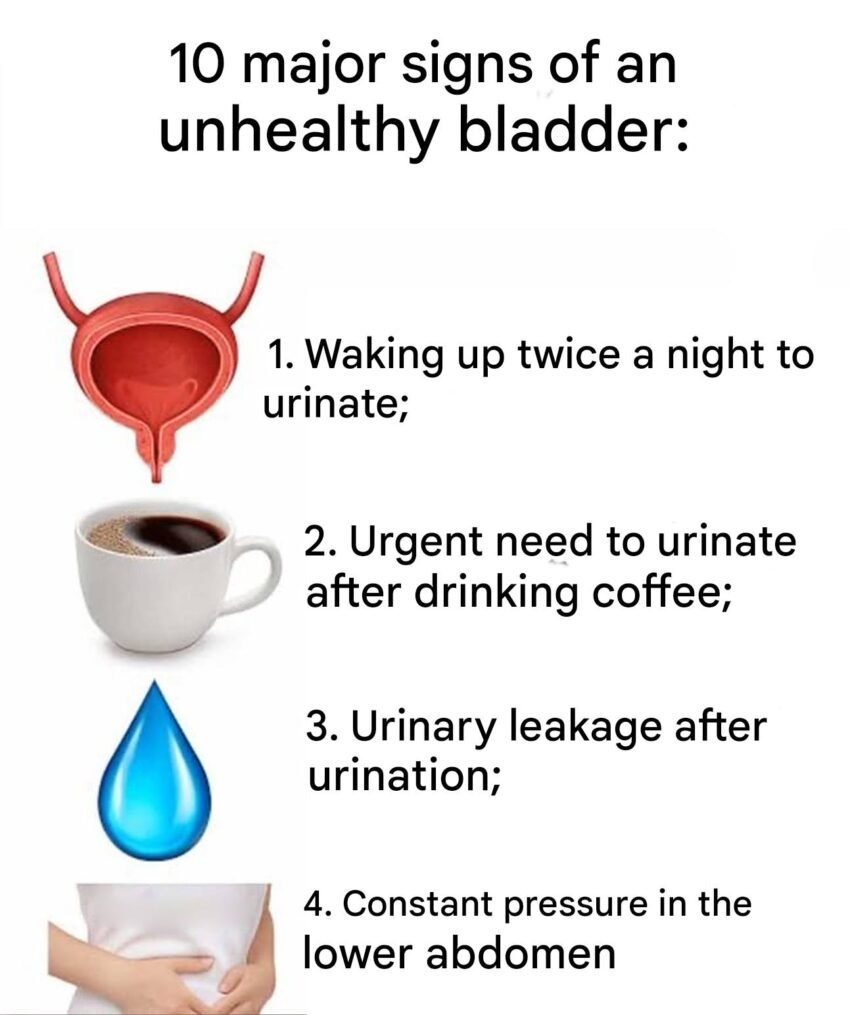
10 Major Signs of an Unhealthy Bladder (And What Your Body Might Be Trying to Tell You)
Frequent urination, pain, or leaks could signal bladder problems. Discover 10 warning signs of an unhealthy bladder and when to seek medical advice.
When Your Bladder Starts Sending Warning Signals
Most people don’t think much about their bladder—until something feels wrong.
Maybe you’ve noticed you’re running to the bathroom more often. Perhaps there’s a sudden urge to urinate that’s hard to control, or discomfort that wasn’t there before.
While occasional bladder issues can happen to anyone, persistent or unusual symptoms may be your body’s way of signaling that something isn’t right.
The bladder plays a vital role in the urinary system. Its job is simple but essential: store urine until it’s time for the body to eliminate waste. When the bladder isn’t functioning properly, it can disrupt daily life and sometimes indicate an underlying health concern.
In this guide, you’ll learn:
-
The 10 most common warning signs of an unhealthy bladder
-
Possible causes behind these symptoms
-
Practical steps to improve bladder health
-
When it’s important to consult a healthcare professional
Understanding these signals early can help you protect your urinary health and avoid complications.
What a Healthy Bladder Normally Feels Like
Before discussing warning signs, it helps to understand what typical bladder function looks like.
For most adults:
-
Urinating 6–8 times per day is considered normal
-
There is little to no pain during urination
-
The urge to urinate is gradual and controllable
-
Nighttime bathroom visits are minimal
If these patterns change consistently, your bladder may be signaling a problem.
1. Frequent Urination
One of the most common signs of bladder problems is needing to urinate far more often than usual.
This may involve:
-
Visiting the bathroom every hour or two
-
Feeling the urge shortly after urinating
-
Producing only small amounts of urine each time
Possible causes include:
-
Urinary tract infections
-
Overactive bladder
-
Diabetes
-
Excess caffeine or alcohol
Frequent urination can disrupt sleep, work, and daily routines.
2. Sudden Urgency to Urinate
Bladder urgency occurs when the need to urinate appears suddenly and intensely.
People experiencing urgency may feel:
-
A strong urge that comes on quickly
-
Difficulty delaying bathroom trips
-
Anxiety about finding restrooms
This symptom often appears in conditions like overactive bladder syndrome.
3. Pain or Burning During Urination
Discomfort while urinating should never be ignored.
Common sensations include:
-
Burning
-
Stinging
-
Sharp pain
These symptoms often occur with urinary tract infections (UTIs) but may also be linked to irritation or inflammation of the bladder.
4. Blood in the Urine
Blood in urine—known medically as hematuria—can appear as:
-
Pink or red urine
-
Brownish discoloration
-
Tiny blood traces detected during testing
Possible causes include:
-
Infections
-
Kidney stones
-
Bladder irritation
-
More serious medical conditions
Any appearance of blood in urine should be evaluated by a healthcare professional.
5. Difficulty Emptying the Bladder
Some people feel like their bladder never fully empties.
Symptoms may include:
-
Weak urine stream
-
Stopping and starting during urination
-
Feeling the need to go again soon after finishing
This issue may occur due to nerve problems, muscle weakness, or obstruction in the urinary tract.
6. Urine Leakage (Incontinence)
Loss of bladder control can occur occasionally, especially with:
-
Sneezing
-
Laughing
-
Coughing
-
Physical activity
However, frequent leakage may signal a form of urinary incontinence, which affects millions of adults.
Common types include:
-
Stress incontinence
-
Urge incontinence
-
Overflow incontinence
Though common, it is not an inevitable part of aging and can often be treated.
7. Cloudy or Strong-Smelling Urine
Healthy urine is typically pale yellow and relatively mild in odor.
Changes such as:
-
Cloudiness
-
Strong or foul smell
-
Unusual color
may indicate infection, dehydration, or dietary changes.
If these changes persist, medical advice may be necessary.
8. Lower Abdominal or Pelvic Pain
Pain or pressure in the lower abdomen can sometimes originate from the bladder.
Symptoms may include:
-
Persistent discomfort above the pelvic bone
-
Pain that worsens as the bladder fills
-
Relief after urinating
These sensations may occur in conditions such as bladder inflammation or infection.
9. Waking Up Frequently at Night to Urinate
Occasional nighttime bathroom visits are normal.
However, waking up multiple times every night to urinate—known as nocturia—may signal bladder or metabolic issues.
Possible contributors include:
-
Overactive bladder
-
Sleep disorders
-
Certain medications
-
High fluid intake before bedtime
Frequent nocturia can significantly disrupt sleep quality.
10. Sudden Changes in Urination Patterns
Any sudden change in your usual bathroom habits deserves attention.
Examples include:
-
Urinating much more or less than usual
-
Difficulty starting urination
-
New discomfort or pressure
Even if symptoms appear mild, persistent changes may indicate underlying health issues.
Why Bladder Health Matters
The bladder is part of a complex system that includes:
-
Kidneys
-
Ureters
-
Urethra
-
Pelvic floor muscles
When bladder problems develop, they can affect overall urinary function and quality of life.
According to health organizations such as the National Institute of Diabetes and Digestive and Kidney Diseases (NIDDK), millions of Americans experience bladder conditions that often go untreated due to embarrassment or lack of awareness.
Recognizing symptoms early helps prevent complications.
Simple Habits That Support Bladder Health
Maintaining a healthy bladder often comes down to daily habits.
Stay Properly Hydrated
Drinking enough water helps flush bacteria from the urinary tract.
Limit Bladder Irritants
Some substances may irritate the bladder, including:
-
Caffeine
-
Alcohol
-
Carbonated beverages
-
Artificial sweeteners
Practice Pelvic Floor Exercises
Strengthening pelvic muscles can improve bladder control.
Avoid Holding Urine Too Long
Regular bathroom breaks help prevent bladder overstretching.
Maintain Good Hygiene
Proper hygiene reduces infection risk.
Common Mistakes That Can Harm Bladder Health
Many people unknowingly adopt habits that stress the bladder.
Avoid these common mistakes:
-
Drinking large amounts of caffeine
-
Ignoring persistent urinary symptoms
-
Waiting too long before using the bathroom
-
Excessive consumption of sugary beverages
-
Poor hydration
Making small adjustments can significantly improve bladder health.
When to See a Healthcare Professional
While occasional bladder issues are common, certain symptoms require medical evaluation.
Seek medical advice if you experience:
-
Blood in urine
-
Severe pain during urination
-
Persistent leakage
-
Fever with urinary symptoms
-
Symptoms lasting more than a few days
Early evaluation helps identify and treat potential problems before they worsen.
Frequently Asked Questions
How often should a healthy adult urinate?
Most adults urinate between six and eight times per day, though this varies depending on fluid intake.
Is waking up once at night to urinate normal?
Yes. Occasional nighttime urination is common, especially with increased fluid intake.
Can dehydration cause bladder problems?
Yes. Dehydration can irritate the bladder and increase the risk of urinary infections.
Does caffeine affect the bladder?
Caffeine can act as a bladder stimulant and may increase urgency or frequency.
Are bladder problems common with age?
Some bladder changes occur with aging, but persistent symptoms should still be evaluated.
Can stress affect bladder function?
Stress can contribute to urgency and bladder sensitivity in some individuals.
Do certain foods irritate the bladder?
Spicy foods, citrus fruits, and artificial sweeteners may irritate sensitive bladders.
Can exercise improve bladder health?
Yes. Pelvic floor exercises can strengthen muscles that control urination.
Quick Bladder Health Checklist
Use this simple checklist to support healthy bladder function:
✔ Drink adequate water daily
✔ Limit caffeine and alcohol
✔ Empty your bladder regularly
✔ Practice pelvic floor exercises
✔ Pay attention to unusual symptoms
✔ Seek medical advice when necessary
Your bladder is an essential part of your body’s waste management system, yet its health is often overlooked.
Symptoms like frequent urination, urgency, pain, or leakage may seem minor at first, but they can sometimes signal underlying issues that deserve attention.
The good news is that many bladder problems can be managed or treated—especially when recognized early.
Final Thought
Listening to your body is one of the simplest ways to protect your health.
If your bladder habits have changed or something feels unusual, don’t ignore it. Paying attention now can help you maintain comfort, confidence, and long-term urinary health.
If you found this guide helpful, consider sharing it with others or saving it for future reference—awareness is often the first step toward better health.