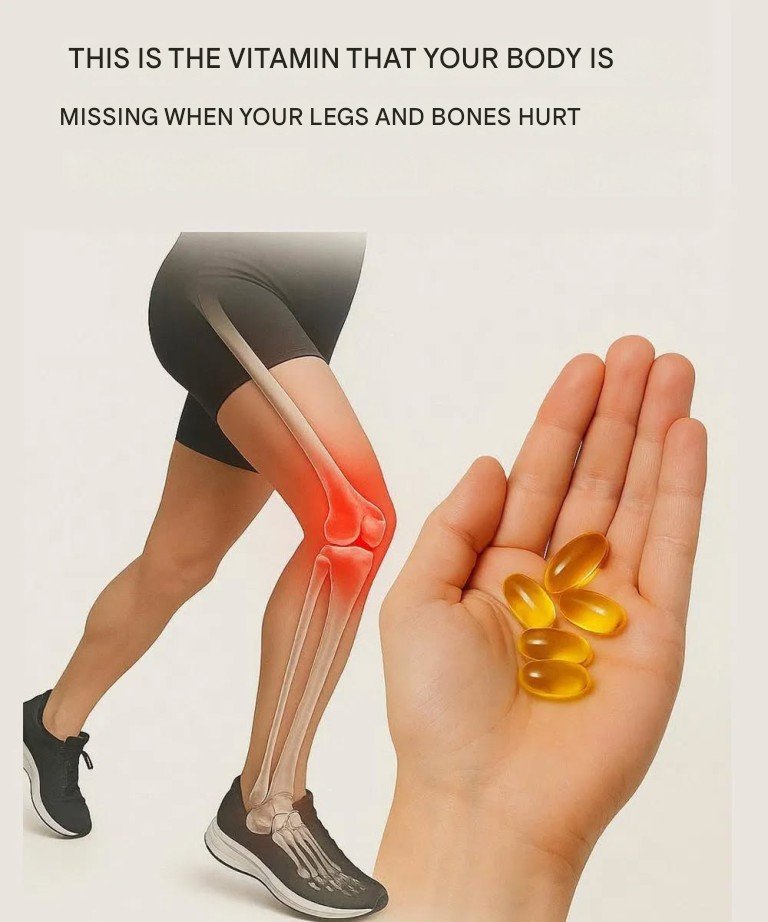
Leg and Bone Pain? 7 Signs Your Body May Be Lacking This Essential Vitamin (And How to Fix It)
Leg and bone pain could signal a hidden vitamin deficiency. Learn which vitamin is most commonly responsible, symptoms to watch for, and safe ways to restore healthy levels.
Why Your Legs and Bones Might Be Trying to Tell You Something
You wake up in the morning and your legs feel stiff.
Your knees ache after walking up stairs.
Your lower back and hips feel sore even when you didn’t do anything strenuous the day before.
At first, it’s easy to dismiss.
Maybe you slept wrong.
Maybe it’s just getting older.
Maybe you need better shoes.
But when leg pain and bone discomfort keep returning, your body may be signaling something deeper — a nutritional deficiency.
One of the most overlooked causes of persistent bone and leg pain in the United States is a lack of a single critical nutrient:
Vitamin D.
In fact, research from the Centers for Disease Control and Prevention (CDC) suggests that nearly 1 in 4 Americans have vitamin D levels that are too low for optimal bone health.
And when your body doesn’t have enough vitamin D, the consequences often show up in places you feel every day:
-
Legs
-
Hips
-
Knees
-
Lower back
-
Bones throughout the body
The good news?
Once you understand what’s happening, the problem is often surprisingly manageable.
In this guide, you’ll learn:
-
Why vitamin D deficiency causes bone and leg pain
-
The most common warning signs people ignore
-
Why vitamin D deficiency is so common in the U.S.
-
Safe ways to restore healthy levels
-
Mistakes many people make when trying to fix it
-
Expert tips for protecting bone health long-term
Let’s start with the key question.
The Vitamin Your Body May Be Missing
When bones and legs hurt due to a vitamin deficiency, vitamin D is the most common culprit.
Vitamin D is often called the “sunshine vitamin.”
Your body produces it when sunlight hits your skin.
You can also obtain it from certain foods and supplements.
But vitamin D isn’t just another nutrient.
It plays a central role in bone health because it helps the body absorb calcium.
Without enough vitamin D:
-
Calcium absorption drops dramatically
-
Bones gradually weaken
-
Muscles lose efficiency
-
Inflammation can increase
Over time, this can lead to aching bones, muscle weakness, and chronic leg discomfort.
According to the Harvard T.H. Chan School of Public Health, vitamin D is essential for:
-
Bone mineralization
-
Muscle function
-
Immune regulation
-
Inflammation control
When levels fall too low, your skeletal system often becomes the first place symptoms appear.
Why Vitamin D Deficiency Causes Leg and Bone Pain
To understand the pain, it helps to understand what’s happening inside your body.
1. Poor Calcium Absorption
Vitamin D allows your intestines to absorb calcium efficiently.
Without it:
-
Only 10–15% of calcium from food gets absorbed
-
Bones begin losing mineral density
Over time, this leads to soft, weak bones that ache under normal stress.
2. Bone Remodeling Problems
Your bones are constantly renewing themselves through a process called bone remodeling.
Vitamin D helps regulate this cycle.
When levels drop:
-
Bone repair slows
-
Microdamage accumulates
-
Pain signals increase
3. Muscle Weakness
Vitamin D also supports muscle contraction and nerve communication.
Low levels can cause:
-
Muscle fatigue
-
Leg weakness
-
Difficulty climbing stairs
-
Increased risk of falls
This is why many people report leg heaviness or aching thighs with deficiency.
4. Increased Inflammation
Emerging research suggests vitamin D plays a role in controlling inflammation.
Low levels may contribute to:
-
Joint discomfort
-
Muscle soreness
-
Chronic body aches
7 Warning Signs Your Body May Be Low in Vitamin D
Many people live with vitamin D deficiency for years without realizing it.
Here are the most common symptoms doctors see.
1. Persistent Leg Pain
Dull aching in:
-
Thighs
-
Calves
-
Shins
Often worse after activity.
2. Bone Pain or Tenderness
Pain may appear in:
-
Lower back
-
Hips
-
Ribs
-
Legs
Some people describe it as deep bone soreness.
3. Muscle Weakness
You may notice:
-
Difficulty climbing stairs
-
Trouble standing from a chair
-
Reduced strength during workouts
4. Fatigue and Low Energy
Low vitamin D is strongly linked to persistent fatigue, even with adequate sleep.
5. Frequent Illness
Vitamin D supports immune function.
Deficiency may lead to:
-
Frequent colds
-
Slow recovery from infections
6. Bone Loss or Stress Fractures
Athletes with low vitamin D sometimes develop stress fractures, especially in the legs.
7. Mood Changes
Research published in The Journal of Clinical Endocrinology & Metabolism has linked low vitamin D levels with increased risk of depression and mood instability.
Why Vitamin D Deficiency Is So Common in the United States
Despite living in a developed country, millions of Americans are deficient.
Several modern lifestyle factors contribute.
Limited Sun Exposure
Many Americans spend most of their time:
-
Indoors
-
In offices
-
Driving
-
Using sunscreen constantly
While sunscreen is important for skin cancer prevention, it can also block vitamin D production.
Geographic Location
Northern states receive less UVB sunlight during winter months.
People living in places like:
-
Minnesota
-
Michigan
-
New York
-
Washington
may produce little to no vitamin D from sunlight for several months each year.
Skin Pigmentation
People with darker skin require more sunlight to produce adequate vitamin D.
This puts some populations at higher risk for deficiency.
Diet Gaps
Few foods naturally contain vitamin D.
Common sources include:
-
Fatty fish
-
Fortified milk
-
Fortified cereals
-
Egg yolks
Many Americans simply don’t consume enough of these foods.
How Doctors Diagnose Vitamin D Deficiency
If symptoms suggest a deficiency, doctors typically order a simple blood test.
The Test
25-hydroxyvitamin D blood test
This measures vitamin D levels in the body.
Typical Reference Ranges
| Vitamin D Level | Meaning |
|---|---|
| Below 20 ng/mL | Deficient |
| 20–29 ng/mL | Insufficient |
| 30–50 ng/mL | Adequate |
| Above 60 ng/mL | Potentially high |
Testing is especially recommended if you have:
-
Chronic bone pain
-
Osteoporosis
-
Fatigue
-
Limited sun exposure
Step-by-Step: How to Restore Healthy Vitamin D Levels
Correcting vitamin D deficiency usually involves a combination of lifestyle changes and supplementation.
Step 1: Safe Sunlight Exposure
Sunlight remains the most natural source of vitamin D.
Experts often recommend:
-
10–30 minutes of midday sun
-
3–4 times per week
-
Arms and legs exposed
However, exposure time varies based on:
-
Skin tone
-
Location
-
Season
Always avoid sunburn.
Step 2: Add Vitamin D–Rich Foods
Include foods such as:
-
Salmon
-
Sardines
-
Tuna
-
Fortified milk
-
Fortified orange juice
-
Egg yolks
Even with these foods, reaching optimal levels through diet alone can be difficult.
Step 3: Consider Vitamin D Supplements
Many Americans benefit from supplements.
Common daily recommendations:
-
600–800 IU for adults
-
Higher doses for deficiency (doctor-guided)
Your doctor may prescribe temporary high-dose supplementation to restore levels faster.
Step 4: Pair Vitamin D With Calcium
Vitamin D works best when combined with adequate calcium intake.
Good calcium sources include:
-
Dairy products
-
Almonds
-
Leafy greens
-
Fortified plant milks
Step 5: Retest Levels
After 8–12 weeks, doctors often repeat blood tests to confirm improvement.
Real-World Example: A Common Scenario
Consider a typical situation.
A 42-year-old office worker in Chicago starts experiencing:
-
Aching legs
-
Persistent fatigue
-
Lower back discomfort
At first, she assumes it’s stress or aging.
After months of symptoms, her doctor orders a vitamin D test.
Result: 17 ng/mL — deficient.
After three months of supplementation and moderate sunlight exposure:
-
Pain improves
-
Energy returns
-
Bone discomfort fades
Stories like this are extremely common.
Pros and Cons of Vitamin D Supplementation
Pros
-
Supports strong bones
-
Improves calcium absorption
-
Enhances immune health
-
Reduces muscle weakness
-
May improve mood and energy
Cons
-
Excess intake can cause toxicity
-
Requires monitoring if taken in high doses
-
Some supplements vary in quality
Moderation and medical guidance are key.
Common Mistakes People Make
Ignoring Early Symptoms
People often dismiss bone pain for years.
Taking Extremely High Doses Without Testing
More is not always better.
Very high doses can cause:
-
Kidney problems
-
Calcium buildup
-
Nausea
Relying Only on Diet
Food sources alone rarely correct a deficiency.
Forgetting Seasonal Changes
Vitamin D levels often drop during winter months.
Expert Tips Most People Don’t Know
Vitamin D Works Better With Magnesium
Magnesium helps activate vitamin D in the body.
Low magnesium may limit its effectiveness.
Morning Outdoor Activity Helps
Walking outside early in the day provides:
-
Sun exposure
-
Physical activity
-
Improved mood
Obesity Can Lower Vitamin D Availability
Vitamin D is fat-soluble and can become trapped in body fat, reducing circulation levels.
Older Adults Absorb Less Vitamin D
Aging skin produces less vitamin D from sunlight, increasing deficiency risk.
2026 Health Trends Around Vitamin D
Health professionals in the U.S. are increasingly emphasizing vitamin D screening because of new research linking it to:
-
Immune resilience
-
Muscle health
-
Fall prevention in older adults
-
Bone density preservation
Many clinics now include vitamin D testing in routine wellness panels.
Frequently Asked Questions
What vitamin deficiency causes leg pain?
The most common vitamin linked to leg pain and bone discomfort is vitamin D deficiency, which affects bone strength and muscle function.
Can low vitamin D cause joint pain?
Yes. Vitamin D deficiency can contribute to joint stiffness, inflammation, and muscle weakness.
How long does it take to fix vitamin D deficiency?
With proper treatment, levels often improve within 8–12 weeks, though full symptom relief may take longer.
Can vitamin D deficiency cause knee pain?
Yes. Weak bones and muscles from deficiency can lead to knee discomfort and instability.
Is leg pain always caused by vitamin deficiency?
No. Other causes include:
-
Arthritis
-
Nerve problems
-
Injuries
-
Circulation issues
Persistent pain should be evaluated by a healthcare professional.
How much vitamin D should adults take daily?
Typical guidelines suggest 600–800 IU daily, though higher amounts may be recommended for deficiency under medical supervision.
Can sunlight alone fix vitamin D deficiency?
Sometimes, but many people also require supplements to restore optimal levels.
Who is most at risk of vitamin D deficiency?
Higher-risk groups include:
-
Older adults
-
People with darker skin
-
Those living in northern climates
-
Individuals who spend little time outdoors
Quick Action Checklist
If you suspect vitamin D deficiency, consider these steps:
✔ Pay attention to persistent bone or leg pain
✔ Schedule a vitamin D blood test
✔ Increase safe sunlight exposure
✔ Eat vitamin D-rich foods
✔ Discuss supplementation with your doctor
✔ Monitor levels periodically
✔ Maintain consistent intake year-round
Conclusion: Listen to What Your Body Is Telling You
Leg and bone pain are easy to dismiss.
But your body often sends subtle signals long before serious problems develop.
Vitamin D deficiency is one of the most common — and most correctable — causes of chronic bone discomfort in the United States.
The encouraging part?
With proper awareness, testing, and simple lifestyle adjustments, many people experience significant relief and improved overall health.
If you’ve been dealing with persistent aches, fatigue, or unexplained leg pain, it may be worth discussing vitamin D levels with your healthcare provider.
Sometimes the solution is simpler than you think.
Persistent leg and bone pain can sometimes signal low vitamin D levels, a widespread issue affecting millions of Americans. Testing, sunlight exposure, proper nutrition, and guided supplementation can often restore healthy levels and reduce discomfort.
If you found this guide helpful, consider sharing it with someone who might be dealing with unexplained bone or leg pain. Your experience or questions may also help others — feel free to join the discussion in the comments.