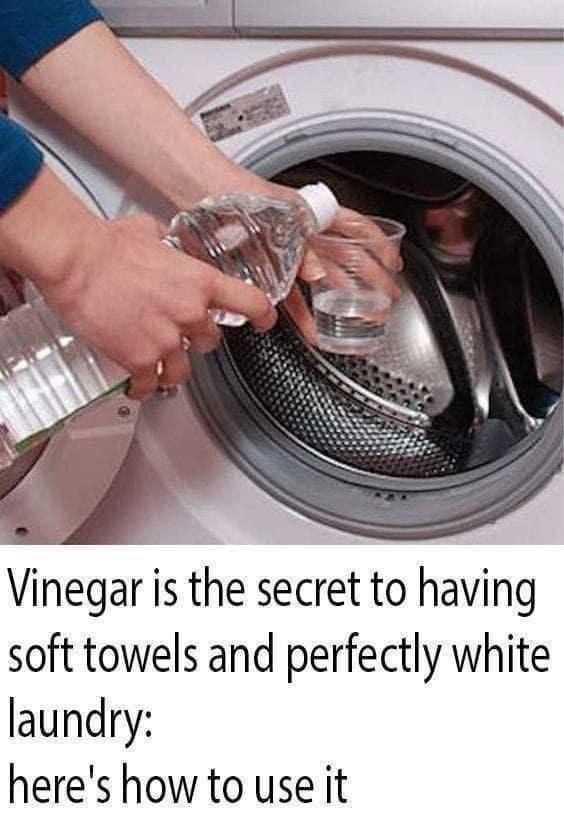
Vinegar Is the Key to Whiter Whites and Softer Towels—But Most Use It Wrong. Here’s the Right Way
Discover the secret to whiter clothes and softer towels with vinegar. Learn the correct method that most people get wrong and achieve laundry perfection.
Why Vinegar Works Wonders in Laundry
Vinegar is more than a kitchen staple—it’s a powerful, natural laundry booster.
-
Whitens whites naturally
-
Softens towels and fabrics
-
Removes odors
-
Breaks down detergent residue
Despite its benefits, most people don’t use vinegar correctly, limiting its effectiveness or even harming fabrics.
Common Mistakes People Make with Vinegar
-
Adding vinegar to the detergent compartment
-
Mixing with detergent can neutralize its cleaning power.
-
-
Using too much vinegar
-
Overuse may leave a lingering smell or affect delicate fabrics.
-
-
Pouring directly on clothes
-
Undiluted vinegar can damage fibers or leave streaks.
-
-
Skipping the rinse cycle
-
Vinegar needs time to act on residue, odors, and minerals.
-
-
Expecting it to replace detergent entirely
-
Vinegar enhances detergent, but isn’t a full cleaning agent for heavily soiled clothes.
-
The Right Way to Use Vinegar in Laundry
Ingredients
-
1/2 to 1 cup white distilled vinegar
-
Your regular detergent
-
Laundry water
Instructions
-
Add detergent normally to your washing machine.
-
Pour vinegar into the fabric softener compartment (or during the rinse cycle if using a top-loader).
-
Use cold or warm water; hot water may damage delicate fabrics.
-
For towels: Wash with vinegar once a month to remove buildup and restore softness.
-
Dry normally; towels will be fluffier and whites brighter.
Tip: Avoid scented vinegar if you prefer a neutral laundry smell. The vinegar scent disappears completely once the clothes dry.
Extra Benefits of Using Vinegar in Laundry
-
Fights hard water deposits: Prevents minerals from dulling whites or stiffening towels.
-
Kills bacteria and mildew: Particularly helpful for towels, gym clothes, or cloth diapers.
-
Eco-friendly alternative: Reduces the need for chemical fabric softeners or bleach.
-
Cost-effective: White vinegar is inexpensive and widely available.
Expert Tips for Maximum Laundry Results
-
Combine with baking soda for tough odors: Add 1/2 cup baking soda to detergent and 1/2 cup vinegar to the rinse.
-
Wash whites separately: Vinegar enhances brightness without affecting colored fabrics.
-
Avoid overloading your washer: Clothes need space for proper agitation and vinegar action.
-
Use vinegar periodically: Too frequent use isn’t necessary; once a month for towels is enough.
-
Check care labels: Delicate fabrics may require special attention—diluted vinegar is safest.
Frequently Asked Questions
Can vinegar replace bleach?
Vinegar whitens naturally but is milder than bleach. It’s safer for most fabrics and colors.
Will vinegar damage my washing machine?
No, vinegar is safe for washing machines and can actually help remove mineral buildup.
Can I use apple cider vinegar instead?
Yes, but white distilled vinegar is preferred for laundry due to its neutrality and lack of colorants.
Does vinegar remove stains?
It helps with mild stains and odor but isn’t as strong as commercial stain removers for tough stains.
Will my clothes smell like vinegar?
No—the smell disappears after rinsing and drying.
Used correctly, vinegar is a game-changer for laundry. It keeps whites bright, towels soft, and fabrics odor-free—all without harsh chemicals.
Remember:
-
Add during the rinse cycle
-
Use the right amount (1/2–1 cup)
-
Don’t mix directly with detergent
Follow these steps, and your laundry will look and feel better than ever—whiter, softer, and fresher with every wash.
Share this tip with friends and family who love practical, natural household hacks, and leave a comment about your favorite vinegar laundry trick.