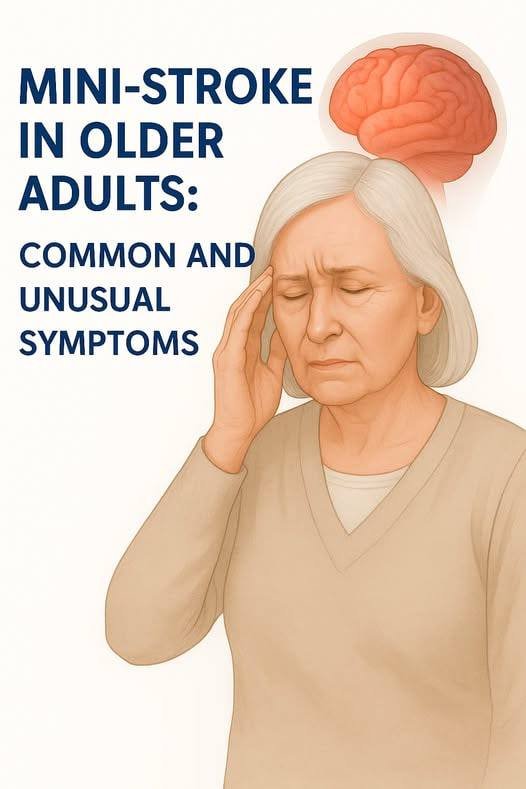
5 Critical Health Signals of a Mini Stroke in Seniors That Shouldn’t Be Ignored
Learn the 5 warning signs of a mini stroke (TIA) in seniors. Early recognition can save lives and prevent long-term damage—know when to act fast.
Understanding Mini Strokes (TIAs)
A mini stroke, medically known as a Transient Ischemic Attack (TIA), occurs when blood flow to part of the brain is temporarily blocked. Unlike a full stroke, symptoms often resolve within minutes to a few hours, which can make them easy to dismiss.
However, a TIA is a serious warning sign. Nearly 1 in 3 seniors who experience a TIA may have a major stroke within a year if untreated. Recognizing the signals early can prevent permanent damage and save lives.
1. Sudden Weakness or Numbness
One of the most common early signs of a mini stroke is sudden weakness, numbness, or tingling, often on one side of the body:
-
Face drooping on one side
-
Arm or leg weakness, making it hard to lift or hold objects
-
Numbness in hands, arms, or legs
Action: If this occurs, even briefly, call emergency services immediately. Quick medical evaluation can prevent progression.
2. Slurred or Confused Speech
TIAs often affect the areas of the brain responsible for language and comprehension:
-
Slurred or garbled speech
-
Difficulty finding the right words
-
Sudden confusion or trouble understanding others
Even if speech returns to normal within minutes, this is a red flag that shouldn’t be ignored.
3. Vision Changes
Mini strokes can disrupt vision temporarily:
-
Blurred or double vision
-
Sudden loss of vision in one eye
-
“Tunnel vision” or dark spots
Vision changes may appear without other symptoms, making awareness critical, especially in seniors who may already have eye conditions.
4. Severe, Sudden Headache
A sudden, intense headache, sometimes described as the worst headache ever, can signal a TIA or stroke:
-
Pain often comes on without warning
-
May be accompanied by dizziness or nausea
Tip: Seniors should never ignore severe headaches, even if they subside quickly.
5. Loss of Balance or Coordination
Mini strokes can affect motor control and balance:
-
Sudden dizziness or vertigo
-
Trouble walking or standing
-
Difficulty with fine motor skills, like picking up objects
These symptoms can be mistaken for fatigue or vertigo, but in combination with other signs, they require urgent medical evaluation.
FAST: A Quick Way to Recognize Stroke Symptoms
The FAST acronym helps seniors and caregivers identify warning signs quickly:
-
F – Face: Look for drooping on one side
-
A – Arms: Weakness or inability to lift an arm
-
S – Speech: Slurred or strange speech
-
T – Time: Call 911 immediately
Even if symptoms are fleeting, time is critical for preventing a major stroke.
Risk Factors for Seniors
Seniors are at higher risk for TIAs and strokes due to:
-
High blood pressure
-
Diabetes
-
Heart disease
-
Smoking or excessive alcohol use
-
High cholesterol
-
Sedentary lifestyle
Managing these factors can significantly reduce the likelihood of a mini stroke.
When to Seek Medical Help
-
Immediately call 911 if any TIA symptoms occur
-
Visit a neurologist or primary care doctor for evaluation
-
Request imaging tests like MRI or CT to rule out blockage
-
Follow prescribed treatments for blood thinners, blood pressure, or cholesterol
Early intervention can prevent permanent brain damage and future strokes.
Lifestyle Steps to Lower Risk
-
Maintain a heart-healthy diet: fruits, vegetables, lean protein, whole grains
-
Stay physically active with low-impact exercises
-
Control blood pressure, diabetes, and cholesterol
-
Avoid smoking and limit alcohol
-
Manage stress and prioritize quality sleep
Mini strokes in seniors are serious warning signs, even if symptoms fade quickly. Recognizing the 5 critical signals—weakness, slurred speech, vision changes, severe headache, and balance issues—can save lives.
Always act quickly, call emergency services, and follow up with a healthcare professional. Proactive care and lifestyle changes can reduce risk and preserve health and independence well into later years.