How to Get a Deep Piriformis Stretch to Relieve Back, Hip, Glute, and Leg Pain (Step-by-Step Guide)
Learn how to safely perform a deep piriformis stretch to relieve back, hip, and leg pain. Step-by-step guide with expert tips for lasting relief.
That Deep Ache in Your Hip or Lower Back? It Might Not Be What You Think
You feel it when you sit too long.
Or when you stand up and something just… pulls.
A deep, stubborn ache in your hip. Tightness in your glutes. Maybe even pain shooting down your leg.
Many people assume it’s just “back pain.”
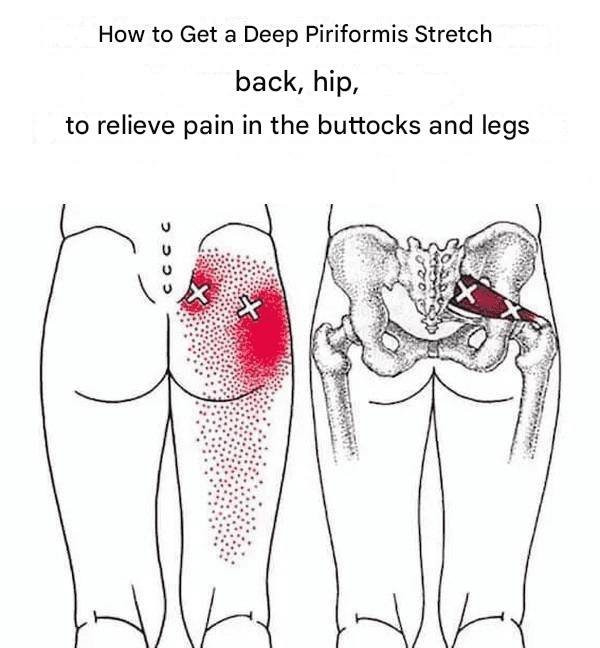
But often, the real culprit is a small muscle called the Piriformis muscle.
When this muscle becomes tight or irritated, it can compress the nearby sciatic nerve—leading to symptoms similar to Sciatica.
The good news?
Targeted stretching can bring real relief—sometimes faster than you expect.
What Is the Piriformis Muscle (And Why It Causes So Much Trouble)
The piriformis is a small, deep muscle located in your hip.
Its Role:
- Helps rotate your hip
- Stabilizes your pelvis
- Supports walking and movement
The Problem:
When tight, it can:
- Press on the sciatic nerve
- Cause pain in the lower back, hips, and legs
- Limit mobility
Signs You Might Need a Piriformis Stretch
You may benefit from this if you experience:
- Pain in one side of the lower back
- Deep glute discomfort
- Tight hips
- Pain that radiates down the leg
- Discomfort after sitting for long periods
Why a “Deep” Stretch Matters
Not all stretches reach the piriformis effectively.
A proper stretch should:
- Target deep hip rotation
- Avoid strain on the lower back
- Be controlled—not forced
Step-by-Step: The Deep Piriformis Stretch
This is one of the most effective and beginner-friendly methods.
🧘 1. Lying Figure-4 Stretch
How to Do It:
- Lie flat on your back
- Bend both knees
- Place your right ankle over your left knee (forming a “4” shape)
- Reach behind your left thigh
- Gently pull it toward your chest
What You Should Feel:
- A deep stretch in your glute (right side)
- Mild tension—not sharp pain
Hold Time:
- 20–30 seconds
- Repeat 2–3 times per side
🔄 2. Seated Piriformis Stretch (For Daily Use)
Perfect if you sit a lot (office workers, drivers, etc.).
Steps:
- Sit upright in a chair
- Cross one ankle over the opposite knee
- Lean forward slightly
- Keep your back straight
Benefit:
Quick relief during the day—no floor required.
🧍 3. Standing Stretch (Advanced Option)
Steps:
- Place one foot on a raised surface (bench or chair)
- Bend the knee outward
- Lean forward gently
Best For:
Active individuals who want a deeper stretch.
Real-Life Scenario: What Happens When You Do This Daily
Let’s say you start today.
Day 1:
- Tightness becomes noticeable
Day 3–5:
- Increased flexibility
- Reduced discomfort
Week 2+:
- Less pain during sitting or walking
- Improved mobility
Consistency is the key.
Common Mistakes That Make It Worse
1. Pulling Too Hard
Stretching should feel relieving—not painful.
2. Rounding Your Back
This reduces effectiveness and adds strain.
3. Skipping Warm-Up
Cold muscles are harder to stretch safely.
Pro Tips Most People Don’t Know
- Breathe slowly while stretching (helps muscles relax)
- Stretch both sides—even if only one hurts
- Combine with light walking for better results
Pros and Cons of Piriformis Stretching
Pros:
- Natural pain relief
- Improves mobility
- Easy to do anywhere
Cons:
- Requires consistency
- Not a complete solution for severe conditions
- Improper form reduces effectiveness
When Stretching Isn’t Enough
You should seek medical advice if:
- Pain is severe or worsening
- You feel numbness or weakness
- Symptoms last several weeks
A professional can rule out deeper issues.
2026 Insight: Why Hip Tightness Is Increasing
Modern lifestyle habits are a major cause:
- Sitting for long hours
- Lack of movement
- Poor posture
The piriformis muscle is especially affected.
Future Outlook: Movement-Based Relief Is Rising
More people are shifting toward:
- Stretching routines
- Mobility training
- Preventive care
Because they work—without relying on medication.
Frequently Asked Questions
1. How often should I stretch?
Daily or at least 4–5 times per week.
2. Can this cure sciatica?
It can relieve symptoms—but not all causes.
3. Should it hurt?
No—mild tension only.
4. When will I see results?
Within days to weeks.
5. Can I do it at night?
Yes—great for relaxation.
6. Is sitting making it worse?
Often, yes.
7. Should I stretch both sides?
Always.
8. Can beginners do this?
Yes—it’s beginner-friendly.
Action Checklist: Start Today
- ✔ Try the lying figure-4 stretch
- ✔ Hold for 20–30 seconds
- ✔ Repeat daily
- ✔ Maintain good posture
- ✔ Stay consistent
Conclusion: Small Movement, Big Relief
You don’t need complicated routines.
Sometimes, one targeted stretch can make a real difference.
The key is doing it correctly and consistently.
A deep piriformis stretch can help relieve back, hip, glute, and leg pain—but lasting results come from daily practice and proper technique.
Have you tried this stretch before?
Did it help—or are you just getting started? Share your experience and help others learn what works.