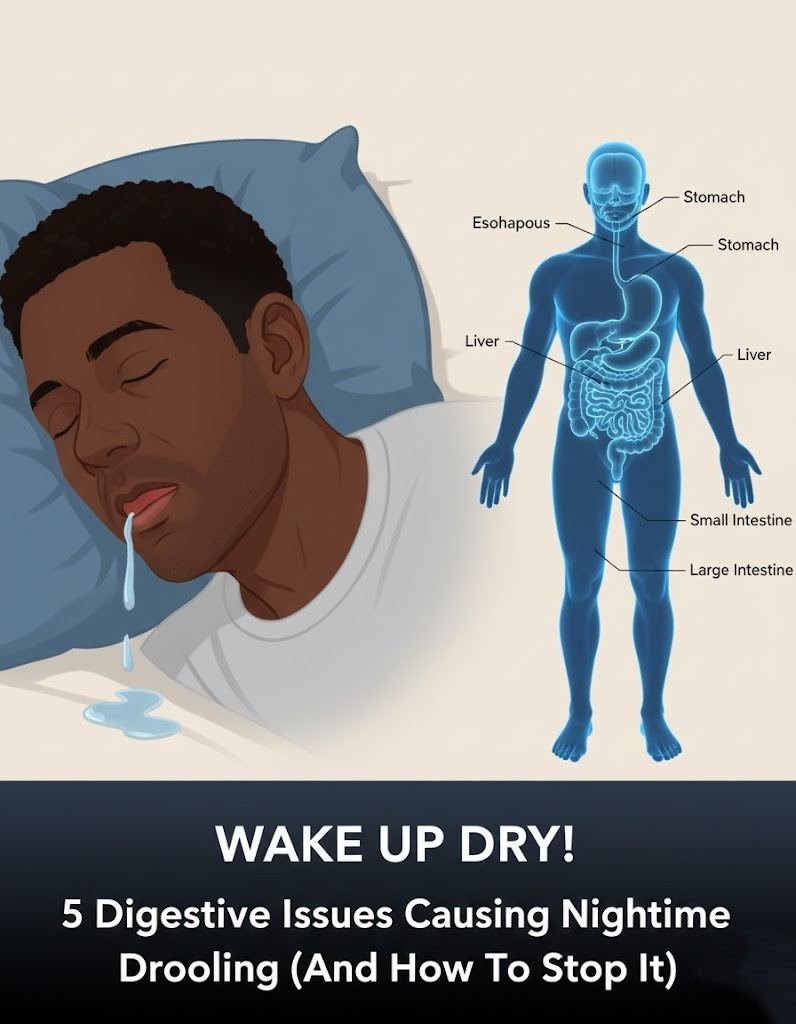
The Morning Habit We All Ignore: Why Drooling Might Be a Warning Signal from Your Body
Waking up with drool? Discover what it really means, when it’s normal, and when it could signal underlying health issues you shouldn’t ignore.
You Wake Up… and It Happens Again
It’s not exactly something people talk about openly.
You wake up, stretch, and then notice it—drool on your pillow.
Most of us laugh it off, blame deep sleep, and move on. But when it happens often, a quiet question starts to linger:
“Is this normal… or is my body trying to tell me something?”
The truth is more nuanced than most people realize.
Drooling during sleep—also known as sialorrhea—can be completely harmless. But in some cases, it may reflect how your body, nerves, and even organs are functioning overnight.
Let’s break it down in a clear, practical, and honest way—without fear or exaggeration.
First, Let’s Clear the Air: Drooling Is Often Normal
Before jumping to conclusions, here’s what you need to know:
Occasional drooling is very common.
It usually happens when:
- You’re in a deep sleep phase
- Your mouth relaxes and opens slightly
- Saliva naturally escapes instead of being swallowed
In fact, deeper sleep often means better rest, which can increase the chances of drooling.
So no—this isn’t automatically a problem.
When Drooling Becomes a Signal Worth Noticing
The concern starts when drooling is:
- Frequent (almost every night)
- Excessive
- Paired with other symptoms
This is where your body might be hinting at something deeper.
5 Possible Reasons Your Body Is Sending This Signal
1. Sleep Position (The Most Common Cause)
Sleeping on your side or stomach allows gravity to pull saliva outward.
What it means:
- Not dangerous
- Easily fixable
Simple fix:
Try sleeping on your back and notice any difference.
2. Nasal Congestion or Breathing Issues
If your nose is blocked, your body switches to mouth breathing.
This is often linked to:
- Allergies
- Sinus infections
- Deviated septum
Result: more drooling during sleep.
3. Acid Reflux and Digestive Imbalance
Conditions like gastroesophageal reflux disease can trigger excess saliva production.
Why?
Your body produces more saliva to neutralize stomach acid.
Signs to watch:
- Burning sensation in chest
- Sour taste in mouth
- Nighttime discomfort
4. Nervous System Signals
Saliva production is controlled by your nervous system.
In rare cases, excessive drooling may relate to neurological conditions such as:
- Parkinson’s disease
- sleep apnea
Important note:
This is not common and usually comes with other noticeable symptoms.
5. Medications and Hormonal Changes
Some medications can increase saliva production, including:
- Sedatives
- Certain antibiotics
- Medications affecting the nervous system
Hormonal changes—especially during pregnancy—can also play a role.
Why This Matters in Everyday Life
In the U.S., sleep quality is declining due to:
- High stress
- Screen exposure
- Irregular schedules
Drooling might seem minor, but it can be a small clue tied to bigger patterns, like:
- Poor breathing habits
- Digestive issues
- Sleep disruptions
Think of it as a signal—not a diagnosis.
Real-Life Scenario
Mark, 36, Texas
- Started noticing frequent drooling
- Also had mild snoring and fatigue
After evaluation, he discovered mild sleep apnea.
By improving sleep posture and using proper treatment:
- Drooling reduced
- Energy levels improved
Sometimes, small signs lead to meaningful improvements.
Pros and Cons of Paying Attention to This Habit
| Pros | Cons |
|---|---|
| Early awareness of potential issues | Can cause unnecessary worry if overanalyzed |
| Opportunity to improve sleep quality | Not always linked to serious conditions |
| Encourages healthier habits | Requires consistency to observe patterns |
Common Mistakes People Make
1. Ignoring It Completely
If it’s frequent, it’s worth observing.
2. Assuming the Worst
Not every symptom is serious. Context matters.
3. Focusing Only on the Symptom
Drooling is often a result, not the root cause.
Expert Tips Most People Don’t Know
✔ Elevate Your Head Slightly
Improves swallowing and reduces saliva pooling.
✔ Improve Nasal Breathing
Try:
- Saline sprays
- Humidifiers
- Allergy management
✔ Avoid Heavy Meals Before Bed
Helps reduce acid reflux and saliva production.
✔ Stay Hydrated
Dehydration can sometimes confuse saliva regulation.
✔ Practice Good Sleep Hygiene
- Consistent sleep schedule
- Reduced screen time before bed
- Comfortable sleep environment
2026 Insight: Why Small Body Signals Matter More Than Ever
Health awareness is shifting toward:
- Early detection
- Preventative habits
- Listening to subtle signals
Not every sign is serious—but ignoring everything isn’t wise either.
The goal is balance.
Frequently Asked Questions
1. Is drooling during sleep unhealthy?
Usually no. It’s often normal unless frequent or excessive.
2. Can drooling indicate a serious condition?
Rarely—but if combined with other symptoms, it’s worth checking.
3. How can I stop drooling at night?
Adjust sleep position, improve breathing, and manage underlying causes.
4. Does stress cause drooling?
Indirectly, yes—through sleep disruption and mouth breathing.
5. Should I see a doctor?
If drooling is persistent and paired with symptoms like snoring, fatigue, or reflux.
6. Can diet affect drooling?
Yes—especially spicy, acidic, or heavy meals before bed.
7. Is it related to dehydration?
Sometimes. Hydration plays a role in saliva balance.
8. Do children drool more than adults?
Yes, especially during development stages.
Your Action Checklist
- Notice how often it happens
- Adjust sleep position
- Check for nasal congestion
- Monitor diet before bed
- Improve sleep hygiene
- Seek advice if symptoms persist
Drooling while you sleep is usually harmless—but it’s not meaningless.
It can reflect:
- Sleep position
- Breathing patterns
- Digestive health
- Nervous system activity
The key isn’t to panic—it’s to pay attention.
Your body speaks in subtle ways.
Most of the time, we ignore it—until something louder shows up.
Instead, try this:
Listen early. Adjust gently. Stay aware.
Have you noticed this happening more often? Share your experience—you might help someone else connect the dots.