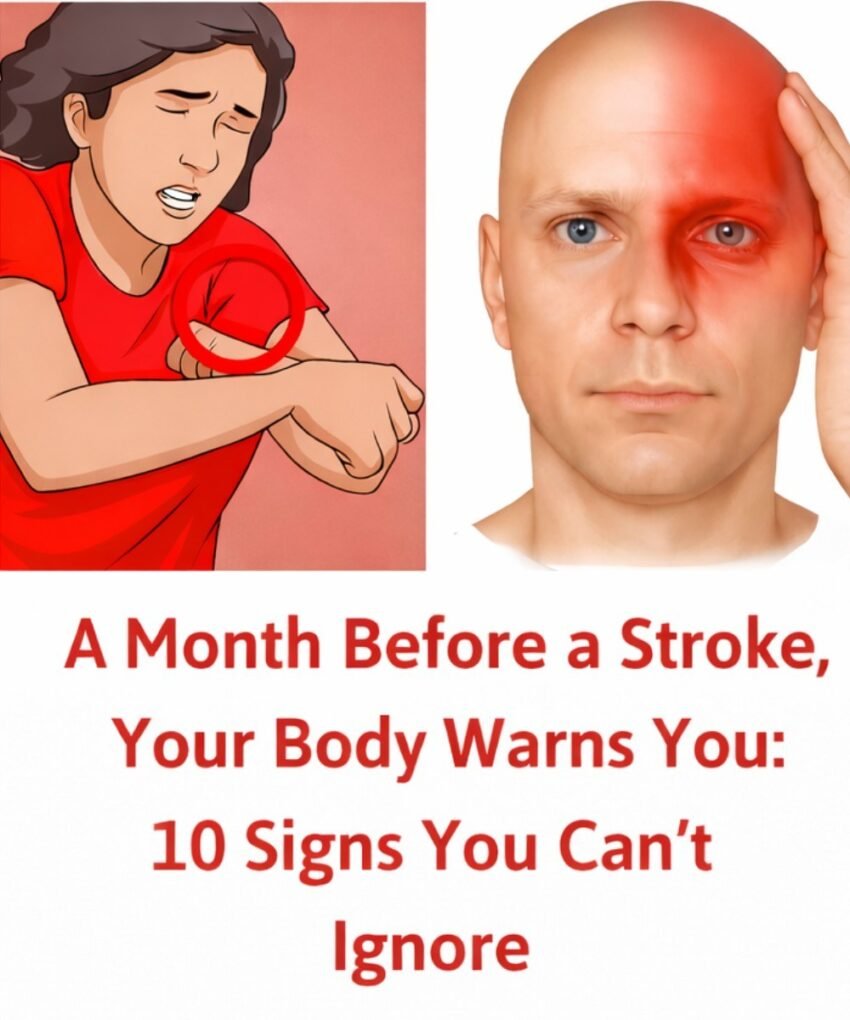
Learn the early warning signs your body may give up to a month before a stroke. Recognize these 10 symptoms and act quickly to protect your health.
Stroke: Why Early Warning Signs Matter
A stroke can happen suddenly, but in many cases, your body gives subtle clues weeks in advance. Recognizing these signs is critical—early action can save your life and reduce long-term damage.
Strokes occur when blood flow to the brain is interrupted, either by a clot (ischemic stroke) or bleeding (hemorrhagic stroke). Knowing the warning signs empowers you to seek medical help immediately, potentially preventing a full-blown stroke.
10 Early Warning Signs to Watch
1. Sudden Weakness or Numbness
- Often affects one side of the body
- Can occur in the arm, leg, or face
- Early weakness may come and go, but should never be ignored
2. Blurred or Double Vision
- Difficulty seeing clearly in one or both eyes
- Loss of vision in half the visual field is a serious warning
- Often accompanied by dizziness or imbalance
3. Sudden, Severe Headache
- A headache unlike any you’ve experienced before
- May occur with nausea or vomiting
- Often described as “the worst headache of my life”
4. Trouble Speaking or Understanding Speech
- Slurred words or difficulty forming sentences
- Struggling to comprehend what others are saying
- Can appear briefly before a stroke
5. Dizziness, Loss of Balance, or Coordination
- Unexplained stumbling, clumsiness, or feeling off-balance
- Trouble walking or holding objects steadily
- May signal cerebellar or brainstem involvement
6. Facial Drooping
- One side of the face may sag when smiling
- Eyelid or mouth droop is often subtle at first
- Early recognition is key
7. Sudden Confusion
- Trouble thinking clearly, making decisions, or remembering simple things
- Often subtle but noticeable to family and friends
- Can precede more serious symptoms
8. Tingling or Pins-and-Needles Sensation
- Unexplained numbness or tingling, especially on one side
- May appear in fingers, hands, or face
- Indicates nervous system disruption
9. Difficulty Swallowing
- Trouble swallowing liquids or solids
- Choking or gagging easily
- Could be an early sign of neurological impairment
10. Fatigue or Sudden Weakness
- Unusual tiredness not related to activity level
- Feeling physically drained even after minimal exertion
- May precede more severe neurological events
Why Acting Early Saves Lives
Recognizing early symptoms is crucial because strokes are time-sensitive emergencies. Immediate medical attention can:
- Reduce brain damage
- Improve recovery outcomes
- Save your life
If you or someone else exhibits even one of these warning signs, call 911 immediately.
Real-Life Scenario
Consider Mark, 62, who felt brief facial drooping and arm numbness but ignored it. Within two weeks, he suffered a major ischemic stroke. Quick recognition of early symptoms might have allowed treatment with clot-busting medication, preventing significant disability.
Practical Steps to Reduce Stroke Risk
- Manage Blood Pressure – High BP is the leading cause of stroke.
- Control Blood Sugar – Diabetes increases stroke risk.
- Maintain a Healthy Diet – Emphasize fruits, vegetables, whole grains, and lean proteins.
- Exercise Regularly – At least 150 minutes of moderate activity per week.
- Limit Alcohol and Quit Smoking – Both increase clot and vessel damage risk.
- Regular Checkups – Detect early warning signs like high cholesterol or atrial fibrillation.
Expert Tips Most People Don’t Know
- Even minor, transient symptoms (TIA or “mini-stroke”) should be evaluated immediately.
- Keep a log of unusual neurological symptoms—patterns help doctors intervene faster.
- Encourage family and friends to notice subtle changes, as patients may not always realize them.
Common Misconceptions
- “It will go away on its own.” Early symptoms may be brief, but ignoring them is dangerous.
- “Only older people get strokes.” Stroke risk increases with age, but anyone can experience warning signs.
- “Headache alone isn’t serious.” Severe, sudden headaches can be a critical early indicator.
Action Checklist: Protect Yourself
- ✔ Know the 10 warning signs listed above
- ✔ Seek immediate medical attention if any occur
- ✔ Track your blood pressure, blood sugar, and cholesterol
- ✔ Maintain a healthy lifestyle to lower risk
- ✔ Educate friends and family about stroke symptoms
Conclusion
Your body often signals trouble before a stroke occurs. Recognizing these early warning signs, no matter how subtle, can be life-saving.
Stroke prevention starts with awareness. Don’t wait for a major event to act—notice the subtle changes, take control of your health, and respond immediately to warning signs.
Have you or a loved one experienced early stroke symptoms? Share your story in the comments to raise awareness and help others recognize the signs before it’s too late.