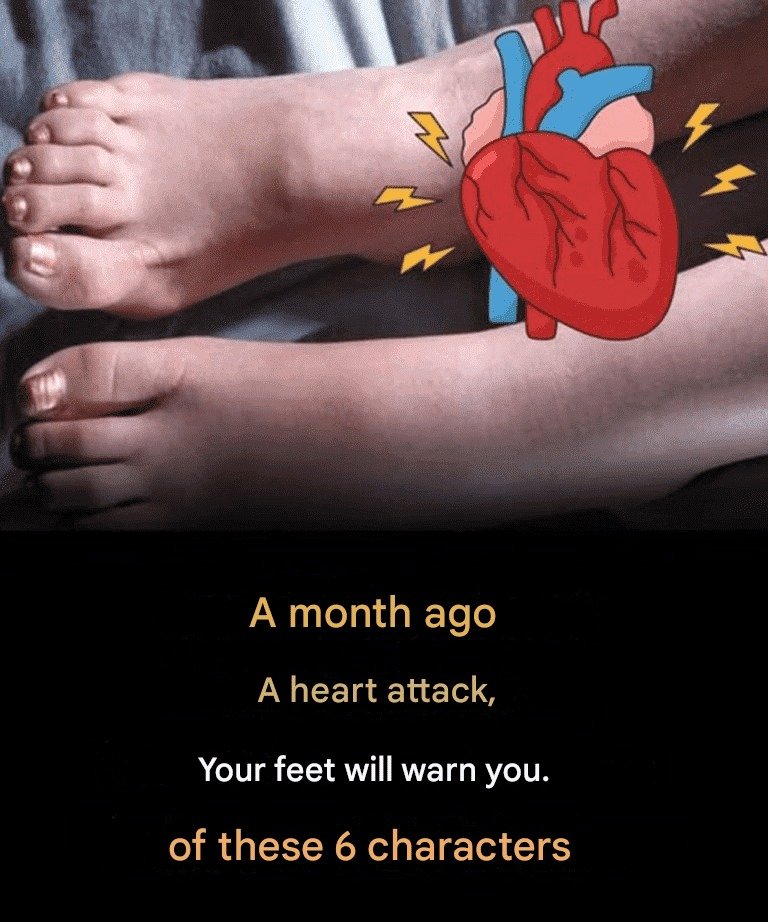
6 Foot Warning Signs That May Appear Weeks Before a Heart Problem (Don’t Ignore These Subtle Clues)
Notice changes in your feet? These 6 warning signs may signal heart trouble weeks in advance. Learn what to watch for and when to act.
Most people expect chest pain to be the first sign of a heart attack.
But the body doesn’t always follow the script.
Sometimes, the earliest warnings show up far from your chest—quietly, gradually, and easy to dismiss. Your feet, in particular, can reveal circulation problems, fluid buildup, and nerve changes that may develop weeks before a serious cardiac event.
That doesn’t mean every foot symptom points to heart disease. But ignoring persistent, unusual changes can cost you time—the one thing that matters most in heart health.
In this guide, you’ll learn six foot-related signs that may indicate underlying cardiovascular issues, why they happen, and what to do if you notice them.
Why Your Feet Can Reveal Heart Problems Early
Your heart’s job is simple but critical: pump blood efficiently throughout your body.
Your feet are the farthest point from that pump. So when circulation weakens or fluid begins to accumulate, your feet are often among the first places where symptoms become visible.
Conditions like Peripheral artery disease, Congestive heart failure, and poor vascular health can all show early signs in the lower extremities.
Think of your feet as a “pressure gauge” for your cardiovascular system.
1. Swollen Feet and Ankles (Edema)
If your shoes suddenly feel tight or you notice puffiness around your ankles, it could be more than just a long day.
What’s Happening
Swelling—also called edema—occurs when fluid builds up in tissues. In heart-related cases, it often stems from the heart struggling to pump blood efficiently, causing fluid to pool in the lower body.
Why It Matters
Persistent swelling is commonly linked to Congestive heart failure, where the heart cannot circulate blood effectively.
When to Be Concerned
- Swelling that lasts several days
- Indentations when you press your skin (pitting edema)
- Swelling paired with fatigue or shortness of breath
What to Do
- Elevate your feet
- Reduce salt intake
- Seek medical evaluation if it persists
2. Cold Feet (Even in Warm Conditions)
Constantly cold feet—especially when the rest of your body feels fine—can signal circulation issues.
What’s Happening
Poor blood flow means less warmth reaches your extremities.
Possible Link
This is often associated with Peripheral artery disease, where narrowed arteries reduce blood flow to the limbs.
Red Flags
- Feet feel cold to the touch
- Numbness or tingling
- Slow healing cuts or sores
Why It Matters
Reduced circulation doesn’t just affect comfort—it can indicate broader cardiovascular strain.
3. Foot Pain While Walking (Claudication)
Pain in your feet or calves when walking—but relief when resting—is a classic warning sign.
What’s Happening
This condition, called claudication, occurs when muscles don’t receive enough oxygen-rich blood during activity.
Underlying Cause
Often tied to Peripheral artery disease.
Real-Life Scenario
You walk a short distance, feel cramping or aching in your feet, stop—and the pain fades. That pattern matters.
Why It Matters
It’s a strong indicator of narrowed arteries, which also increases your risk of heart attack and stroke.
4. Blue or Purple Toes (Cyanosis)
A change in skin color—especially bluish or purplish tones—is not something to ignore.
What’s Happening
Low oxygen levels in the blood can cause discoloration, known as cyanosis.
Possible Causes
- Poor circulation
- Blood flow blockages
- Heart or lung issues
Why It Matters
This can signal serious oxygen delivery problems throughout the body.
Immediate Action
Seek medical attention promptly if this appears suddenly.
5. Slow-Healing Wounds or Sores
Small cuts or blisters on your feet that take unusually long to heal can indicate underlying issues.
What’s Happening
Poor circulation slows the delivery of oxygen and nutrients needed for healing.
Related Conditions
- Peripheral artery disease
- Diabetes (often coexists with heart disease)
Warning Signs
- Wounds that don’t improve after a week
- Frequent infections
- Skin breakdown
Why It Matters
Chronic poor healing can signal widespread vascular problems.
6. Hair Loss on Feet and Toes
This one surprises most people.
What’s Happening
Reduced blood flow can affect hair follicles, leading to hair loss on the feet and toes.
Why It Matters
While subtle, it can be an early indicator of circulation issues linked to heart health.
Look For
- Smooth, shiny skin
- Reduced or absent hair growth
- Changes compared to previous years
Important Reality Check
Not every symptom here means a heart attack is coming.
Foot changes can result from:
- Standing long hours
- Minor injuries
- Weather changes
- Aging
But when symptoms are persistent, worsening, or combined, they deserve attention.
Step-by-Step Action Plan
If you notice any of these signs:
Step 1: Monitor duration and frequency
Step 2: Note accompanying symptoms (fatigue, chest discomfort, breathlessness)
Step 3: Improve basic habits
- Stay active
- Reduce sodium
- Stay hydrated
Step 4: Schedule a medical evaluation
Step 5: Request circulation or heart health screening if needed
Comparison: Harmless vs Concerning Foot Symptoms
| Symptom | Likely Harmless | Potential Concern |
|---|---|---|
| Swelling | After long standing | Persistent, worsening edema |
| Cold feet | Cold weather | Constant, numbness present |
| Pain | Temporary strain | Repeated with walking |
| Skin color | Temporary redness | Blue or purple tones |
| Wounds | Heal within days | Slow or non-healing |
| Hair loss | Gradual aging | Sudden or patchy loss |
Common Mistakes People Make
Ignoring early signs
Many people wait until symptoms become severe.
Self-diagnosing incorrectly
Assuming it’s “just tired feet.”
Delaying medical care
Time matters in cardiovascular health.
2026 Insight: Earlier Detection Is Improving
Advancements in wearable tech and home health monitoring are helping detect circulation issues earlier than ever.
Devices that track:
- Blood oxygen levels
- Heart rate variability
- Activity patterns
…are making it easier to catch subtle warning signs before they escalate.
FAQ Section
1. Can foot symptoms really appear before heart problems?
Yes, especially in conditions affecting circulation, symptoms can show up weeks or months earlier.
2. Are swollen feet always heart-related?
No, but persistent swelling should be evaluated.
3. What is the most serious foot warning sign?
Blue or purple discoloration requires immediate attention.
4. Can young people experience these symptoms?
Yes, particularly if risk factors are present (smoking, obesity, diabetes).
5. Should I see a doctor for mild symptoms?
If they persist or worsen, yes.
6. How are circulation problems diagnosed?
Doctors may use imaging tests, blood work, or vascular studies.
7. Can lifestyle changes reverse these signs?
In early stages, improving diet, activity, and habits can help.
8. Is foot pain always related to arteries?
No, it can also be muscular or nerve-related.
9. How quickly can symptoms progress?
It varies—some develop gradually, others worsen quickly.
10. What’s the biggest risk factor?
Smoking, high blood pressure, diabetes, and high cholesterol.
Action Checklist
Do This:
✔ Monitor unusual foot changes
✔ Stay physically active
✔ Maintain healthy blood pressure
✔ Eat heart-friendly foods
✔ Seek medical advice early
Avoid This:
✘ Ignoring persistent symptoms
✘ Assuming it’s harmless without checking
✘ Delaying doctor visits
✘ Relying only on home remedies
Conclusion
Your body rarely stays silent before something serious happens.
It whispers first.
Your feet—often overlooked—can offer early clues that something deeper isn’t right. Paying attention to these subtle signs gives you a powerful advantage: time to act before things escalate.
If something feels off and doesn’t improve, trust that instinct and get it checked.
Small changes in your feet could be early warnings—don’t ignore what your body is trying to tell you.
If you found this helpful, share it with someone who might need it—and take a moment today to check in with your own health.