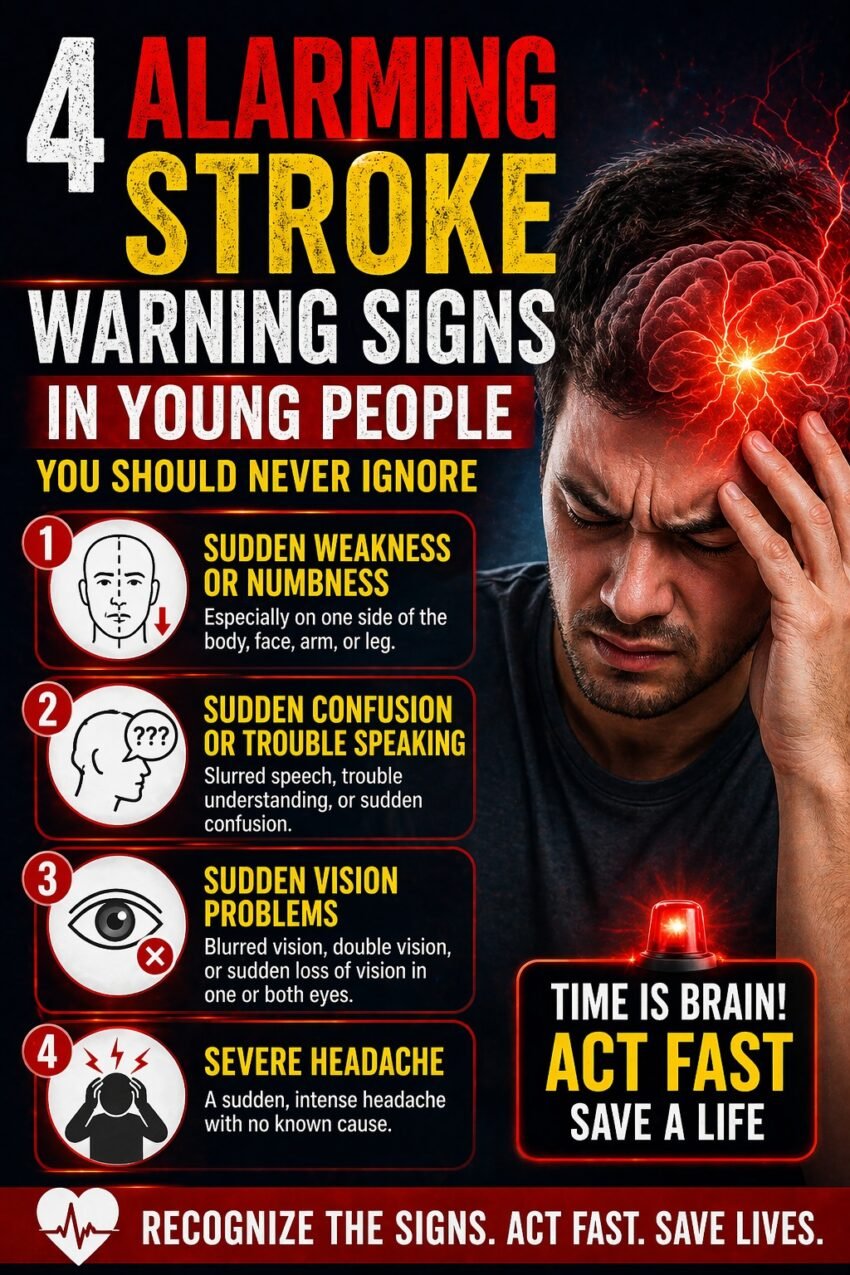
Alarming Stroke Warning Signs in Young People You Should Never Ignore
Stroke isn’t just an older adult’s problem. Learn the early warning signs in young people—and what to do immediately to prevent lasting damage.
A sudden headache. A strange numbness. Trouble speaking for a few seconds.
Most young people brush these off.
“I’m just tired.”
“Probably stress.”
“It’ll pass.”
Sometimes it does.
But sometimes—it’s the first warning of a stroke.
And here’s the unsettling truth: strokes in people under 45 are rising in the United States. Fast.
What makes this even more dangerous is that younger individuals often don’t recognize the symptoms—or they delay seeking help.
This guide breaks down the warning signs you should never ignore, why strokes are happening earlier in life, and exactly what to do if you or someone around you shows symptoms.
Because when it comes to stroke, minutes don’t just matter—they determine outcomes.
What Is a Stroke (And Why It’s Not Just an “Old Person’s Disease”)
A stroke happens when blood flow to part of the brain is interrupted or reduced, depriving brain tissue of oxygen.
There are two main types:
- Ischemic stroke (most common): caused by a blocked artery
- Hemorrhagic stroke: caused by bleeding in the brain
Both can cause permanent brain damage—or worse—if not treated immediately.
Historically, strokes were associated with aging.
But today?
Doctors are seeing more cases in people in their 20s, 30s, and early 40s.
Why Stroke Risk Is Increasing in Young People
This shift isn’t random.
Several modern lifestyle and health trends are contributing:
- Sedentary habits (long hours sitting)
- Increased stress and burnout
- Rising rates of Obesity
- Poor diet (high in processed foods)
- Undiagnosed Hypertension
- Smoking and vaping
- Hormonal birth control (in certain risk groups)
There’s also a growing overlap with conditions like Type 2 Diabetes, even in younger populations.
The result?
A perfect storm of risk factors that often go unnoticed.
The Most Alarming Stroke Warning Signs
Let’s get into what really matters—what your body is trying to tell you.
1. Sudden Numbness or Weakness (Especially on One Side)
This is one of the most classic stroke symptoms.
You might notice:
- A drooping face
- Weakness in one arm
- Difficulty holding objects
Even if it lasts just a few minutes—don’t ignore it.
2. Trouble Speaking or Understanding
Words suddenly don’t come out right.
Or you understand what’s being said—but can’t respond clearly.
This includes:
- Slurred speech
- Confusion
- Saying incorrect or nonsensical words
3. Sudden Severe Headache (Unlike Anything Before)
A stroke-related headache often:
- Comes out of nowhere
- Feels intense or explosive
- May be paired with nausea or vision changes
Some describe it as “the worst headache of my life.”
4. Vision Problems
This can include:
- Blurred vision
- Double vision
- Sudden loss of vision in one or both eyes
It’s often mistaken for eye strain—but it can signal something far more serious.
5. Dizziness, Loss of Balance, or Coordination
You might feel:
- Unsteady while walking
- Like the room is spinning
- Sudden clumsiness
If it happens abruptly, it’s a red flag.
6. Sudden Confusion or Disorientation
You may:
- Forget where you are
- Struggle to follow simple instructions
- Feel mentally “foggy” out of nowhere
This is especially dangerous because it’s often dismissed as fatigue.
The FAST Method (Remember This)
If you remember nothing else, remember FAST:
- F – Face drooping
- A – Arm weakness
- S – Speech difficulty
- T – Time to call 911
Even one of these signs is enough to act immediately.
Why Young People Miss the Signs
There’s a psychological blind spot at play.
Young people tend to:
- Minimize symptoms
- Delay medical help
- Assume they’re “too healthy” for serious issues
This delay can cost critical treatment time.
And in stroke care, early treatment can mean:
- Full recovery
- Minimal damage
- Or the difference between life and death
Mini Case Scenario
Jason, 29, felt a strange tingling in his arm during a late-night gaming session.
He ignored it.
Then came slight slurring in his speech. His friends joked about it.
Two hours later, he collapsed.
At the hospital, doctors confirmed an ischemic stroke.
The cause? Undiagnosed high blood pressure and smoking.
His biggest regret?
“I didn’t think it could happen to me.”
Step-by-Step: What to Do If You Notice Symptoms
- Call emergency services immediately
Don’t wait. Don’t “monitor.” - Note the time symptoms started
This helps doctors determine treatment options - Keep the person calm and still
Avoid giving food or drink - Stay with them until help arrives
Monitor breathing and responsiveness
Common Mistakes That Can Be Deadly
Waiting for symptoms to pass
Even temporary symptoms can signal a stroke.
Driving yourself to the hospital
Emergency services provide faster, critical care en route.
Googling symptoms instead of acting
Time lost = brain cells lost.
Pros and Cons of Early Awareness
Pros:
- Faster treatment
- Reduced brain damage
- Higher survival rates
Cons:
- None worth mentioning when compared to the risk
Expert Insight: Why Minutes Matter
Neurologists often say:
“Time is brain.”
Every minute a stroke goes untreated, millions of brain cells die.
That’s why clot-busting treatments are time-sensitive—usually within a few hours of symptom onset.
2026 Trends: What’s Changing
- Increased stroke awareness campaigns targeting younger adults
- Better wearable tech detecting irregular heart rhythms
- Growing research into early-onset stroke triggers
Healthcare is adapting—but awareness still lags behind.
Future Outlook
Expect:
- More personalized risk assessments
- Earlier screenings for high-risk individuals
- Increased focus on prevention in younger demographics
FAQ Section
1. Can young, healthy people really have strokes?
Yes. Even without obvious risk factors, strokes can occur due to genetics, lifestyle, or undiagnosed conditions.
2. What is the most common cause of stroke in young adults?
Often linked to high blood pressure, smoking, and conditions like Atrial Fibrillation.
3. Are stroke symptoms different in younger people?
Not usually—but they’re more likely to be ignored or misinterpreted.
4. Can stress cause a stroke?
Chronic stress can contribute to risk factors like hypertension.
5. How long do stroke symptoms last?
They can be brief or persistent. Even temporary symptoms require immediate attention.
6. Is a mini-stroke dangerous?
Yes. A transient ischemic attack (TIA) is often a warning sign of a major stroke.
7. Can dehydration trigger a stroke?
Severe dehydration may increase risk, especially when combined with other factors.
8. Are strokes preventable?
Many are—with lifestyle changes and early detection of risk factors.
9. Should I go to the ER for mild symptoms?
Yes. Always err on the side of caution.
10. What’s the survival rate for young stroke patients?
Higher than older adults—but long-term effects can still be serious.
Action Checklist
✅ What to Do:
- Learn the FAST signs
- Act immediately if symptoms appear
- Monitor blood pressure regularly
- Maintain a healthy lifestyle
❌ What to Avoid:
- Ignoring sudden symptoms
- Assuming you’re “too young”
- Delaying medical help
- Self-diagnosing
Conclusion
Stroke doesn’t care about your age.
It doesn’t wait for the “right time.”
And it doesn’t always come with obvious warning signs.
But your awareness?
That can change everything.
If something feels off suddenly—don’t second-guess it. Act fast. It could save a life—maybe even yours.
If this helped you, share it with someone who wouldn’t expect a stroke.
Because awareness spreads faster than risk—and that’s exactly what we need.