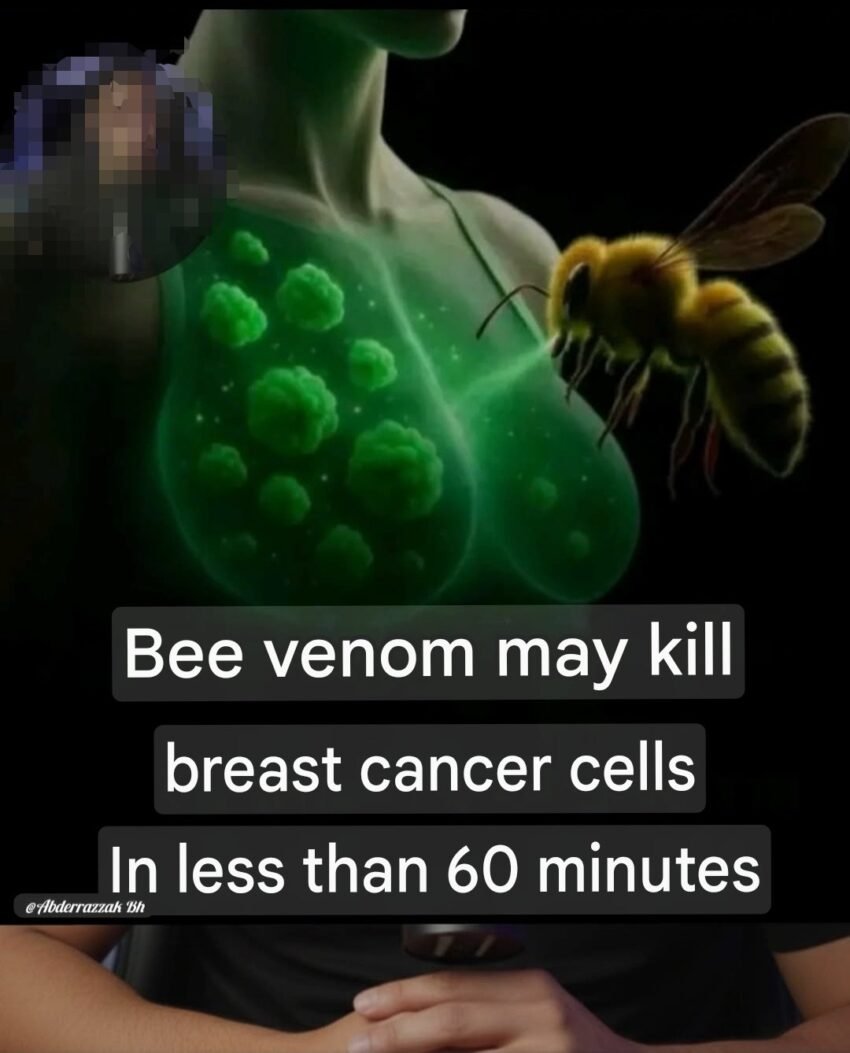
Bee Venom and Breast Cancer: The Viral “Super Bee Attack” Claim That Shocked the Internet — and What Science Actually Says
Can bee venom really kill breast cancer cells in 60 minutes? Discover the real science, risks, and medical research behind this viral health claim.
Bee Venom and Breast Cancer: The Viral “Super Bee Attack” Claim That Shocked the Internet — and What Science Actually Says
Few headlines spread faster online than ones combining:
- Cancer
- “Natural cures”
- Scientific breakthroughs
- Shocking timelines
So when articles and social media posts began claiming:
“Bee venom kills fierce breast cancer cells in less than 60 minutes!”
people immediately paid attention.
Some called it a revolution in medicine.
Others declared chemotherapy obsolete.
And within days, dramatic phrases like:
- “Super Bee Attack”
- “Nature’s hidden cure”
- “Big Pharma won’t tell you”
- “The end of cancer?”
began circulating across blogs, Facebook groups, YouTube videos, and wellness pages worldwide.
But beneath the viral excitement lies a far more complex story.
Because while scientists have studied compounds found in bee venom for potential anti-cancer properties, that does not mean bee stings cure breast cancer.
Not even close.
The gap between laboratory research and real-world medical treatment is enormous—and often misunderstood online.
So what did researchers actually discover?
Why did the internet exaggerate the findings so aggressively?
And could bee venom one day contribute to future cancer therapies?
Let’s separate science from sensationalism carefully.
Where the Viral Claim Came From
The buzz around bee venom surged after researchers explored how certain compounds inside venom affected breast cancer cells in laboratory settings.
One compound received especially intense attention:
melittin.
Melittin is a major component of bee venom and has been studied for its ability to disrupt cell membranes.
In some controlled laboratory experiments, researchers observed that melittin could damage or destroy certain cancer cells under highly specific conditions.
That’s scientifically interesting.
But here’s the critical detail many viral headlines ignored:
These findings occurred primarily in lab studies—not as a proven cure in human patients.
That distinction changes everything.
What Scientists Actually Found
Some studies showed that purified bee venom compounds could affect certain aggressive breast cancer cells in petri dishes within relatively short timeframes.
Researchers became interested because:
- Some cancer cells appeared vulnerable
- Healthy cells were affected differently under certain conditions
- Melittin showed unique biological activity
This created excitement in oncology research communities.
But laboratory success is only the first step in a very long scientific process.
Many compounds destroy cancer cells in labs.
Very few become safe, effective human treatments.
Why Killing Cancer Cells in a Lab Is Not the Same as Curing Cancer
This is one of the biggest misunderstandings in viral health reporting.
Cancer cells inside a petri dish behave very differently from cancer inside the human body.
A successful cancer treatment must:
- Reach tumors safely
- Avoid harming healthy tissue
- Work consistently across patients
- Avoid dangerous immune reactions
- Survive metabolism
- Be deliverable at therapeutic doses
That’s extraordinarily difficult.
Many substances can kill cancer cells in isolated laboratory conditions:
- Alcohol
- Bleach
- Toxic chemicals
- Venoms
But those same substances may also severely damage healthy human tissue.
The challenge is precision and safety.
What Is Melittin?
Melittin is a peptide found in bee venom.
Scientists study it because it can:
- Disrupt cell membranes
- Influence inflammation
- Interact with biological pathways
Researchers are exploring whether melittin could potentially be modified or targeted for future therapeutic applications.
But melittin itself is also toxic in high concentrations.
And raw bee venom is not a medically approved cancer treatment.
That point cannot be overstated.
Why the Internet Turned the Research Into a “Miracle Cure”
The answer is surprisingly simple:
Emotion spreads faster than nuance.
A headline saying:
“Researchers investigate melittin-based cancer applications”
will never outperform:
“Bee venom destroys cancer in 60 minutes!”
Online algorithms reward:
- Shock
- hope
- fear
- outrage
- emotional intensity
That creates a dangerous environment for medical misinformation.
Especially in cancer discussions, where people are emotionally vulnerable and desperately seeking hope.
The Emotional Power of “Natural Cure” Narratives
Humans are deeply attracted to stories involving hidden natural remedies.
Why?
Because they feel:
- Simpler
- More pure
- Less industrial
- More hopeful
Many people also distrust pharmaceutical systems or fear harsh cancer treatments.
So when a story suggests:
“Nature had the answer all along,”
it resonates emotionally.
But emotional appeal is not scientific proof.
The Real Risks of Bee Venom
This part often gets ignored in viral articles.
Bee venom is not harmless.
For some people, exposure can cause:
- Severe allergic reactions
- Anaphylaxis
- Swelling
- Breathing difficulty
- Dangerous immune responses
Bee stings can become life-threatening quickly in allergic individuals.
That’s why self-treatment based on internet claims is extremely dangerous.
No reputable cancer organization recommends replacing evidence-based treatment with bee venom therapy.
Could Bee Venom Help Future Medicine Someday?
Possibly.
And this is where the story becomes genuinely fascinating.
Scientists routinely study natural compounds for medical applications.
Many important medicines originally came from nature, including compounds derived from:
- Plants
- fungi
- bacteria
- marine organisms
- animal toxins
Researchers are interested in whether bee venom components might someday contribute to:
- Drug delivery systems
- Targeted therapies
- Precision oncology research
But research is still ongoing.
That’s very different from declaring:
“Cancer cured.”
Why Breast Cancer Research Receives So Much Attention
Breast cancer remains one of the most heavily researched cancers globally because it affects millions of families directly.
Public interest is enormous.
People naturally pay attention to:
- Survival breakthroughs
- New treatments
- Hopeful studies
- Experimental therapies
That emotional attention creates fertile ground for exaggerated headlines.
Mini Scenario: How One Headline Changes Meaning Completely
Imagine these two headlines:
Version A
“Researchers Study Melittin’s Effects on Breast Cancer Cells”
Version B
“Bee Venom Kills Aggressive Cancer in 60 Minutes!”
Same research.
Completely different emotional impact.
Version B creates:
- urgency
- excitement
- shock
- hope
- controversy
That emotional response drives clicks and sharing.
And in the modern attention economy, clicks often matter more than accuracy.
The Difference Between Research and Treatment
This distinction is critical.
A scientific study does not automatically become medical treatment.
The path from laboratory discovery to approved therapy usually requires:
- Extensive testing
- Animal studies
- Human clinical trials
- Safety evaluation
- Dosage analysis
- Regulatory approval
This process often takes many years.
Sometimes decades.
Many promising compounds fail during testing because:
- Side effects are too severe
- Effectiveness disappears in humans
- Delivery becomes impossible
- Risks outweigh benefits
Why Cancer Misinformation Spreads So Easily
Cancer creates emotional vulnerability unlike almost any other disease.
People facing cancer often feel:
- Fear
- desperation
- urgency
- uncertainty
That emotional state increases susceptibility to:
- miracle cure claims
- conspiracy narratives
- exaggerated hope
This is why cancer misinformation can become especially harmful.
False hope may delay evidence-based treatment.
How To Evaluate Viral Medical Breakthrough Claims
This skill is becoming essential online.
Step 1: Look for Human Clinical Evidence
Lab studies are early-stage science—not proven treatment.
Always ask:
“Has this been tested safely and effectively in humans?”
Step 2: Watch for Emotional Headlines
Phrases like:
- “miracle cure”
- “they don’t want you to know”
- “kills cancer instantly”
- “breakthrough secret”
often signal exaggeration.
Step 3: Separate Research From Recommendation
A scientist studying a compound does not mean doctors recommend public use.
Step 4: Avoid Self-Treatment Based on Viral Content
Natural substances can still be dangerous.
Always prioritize qualified medical guidance.
Comparison Table: Scientific Research vs Viral Hype
| Scientific Research | Viral Hype |
|---|---|
| Uses cautious language | Uses dramatic certainty |
| Emphasizes limitations | Ignores limitations |
| Requires ongoing testing | Declares instant breakthroughs |
| Distinguishes lab vs human results | Blurs critical distinctions |
| Focuses on evidence | Focuses on emotion |
Common Mistakes People Make With Viral Cancer Claims
Mistake #1: Assuming Lab Results Equal Human Cure
Laboratory findings are only early research stages.
Fix: Look for clinical trial evidence.
Mistake #2: Trusting Dramatic Headlines
Shock-based framing often exaggerates reality.
Fix: Read full studies and credible summaries.
Mistake #3: Believing “Natural” Means Safe
Nature produces powerful toxins too.
Fix: Treat natural substances with the same caution as pharmaceuticals.
Mistake #4: Replacing Medical Treatment With Internet Trends
This can become extremely dangerous.
Fix: Discuss treatment decisions with licensed healthcare professionals.
The Psychology Behind “Super Bee Attack” Headlines
Why do these stories feel so irresistible?
Because they combine:
- danger
- hope
- nature
- mystery
- rebellion against authority
It’s almost mythological storytelling.
Tiny bees defeating one of humanity’s most feared diseases.
Emotionally, that narrative is incredibly powerful.
Scientifically, reality is far more cautious.
Expert Insight: Nature Inspires Medicine — But Science Tests It
Many future medicines may indeed emerge from natural compounds.
That’s real science.
But responsible medicine requires:
- controlled testing
- reproducible evidence
- safety validation
- careful dosing
Without those protections, promising compounds remain experimental—not cures.
This distinction protects patients from harm.
The Future of Bee Venom Research in 2026 and Beyond
Researchers continue exploring:
- targeted melittin delivery
- nanoparticle systems
- peptide engineering
- precision cancer therapies
Future breakthroughs are possible.
But most experts remain careful not to overpromise.
That caution is not pessimism.
It’s scientific responsibility.
Pros and Cons of Bee Venom Cancer Research
| Pros | Cons |
|---|---|
| Encourages innovative research | Often exaggerated online |
| Explores new therapeutic pathways | Can create false hope |
| Highlights natural compound science | Bee venom can be dangerous |
| Advances oncology understanding | Human effectiveness remains unproven |
| Stimulates medical curiosity | Self-treatment risks are serious |
Frequently Asked Questions
Can bee venom really kill cancer cells?
Some laboratory studies found that compounds in bee venom affected certain cancer cells under controlled conditions.
Does this mean bee venom cures cancer?
No. Laboratory findings are not the same as proven human treatments.
What is melittin?
Melittin is a peptide found in bee venom that researchers study for its biological effects.
Is bee venom therapy approved for breast cancer?
No major medical authority currently approves bee venom as a standard breast cancer treatment.
Why did the story go viral?
It combined cancer, nature, hope, and dramatic scientific claims—highly emotional topics online.
Can bee stings treat cancer?
No evidence supports self-administered bee stings as a safe or effective cancer treatment.
Is bee venom dangerous?
Yes. Some individuals can experience severe allergic reactions or anaphylaxis.
Why do lab studies often fail in humans?
Human biology is far more complex than isolated laboratory conditions.
Could bee venom inspire future medicine?
Possibly. Researchers continue exploring therapeutic applications cautiously.
Should cancer patients trust viral cure claims online?
No. Treatment decisions should rely on qualified medical professionals and evidence-based care.
Action Checklist: How To Evaluate Viral Health Breakthroughs
What To Do
✔ Read beyond dramatic headlines
✔ Look for human clinical evidence
✔ Check credible medical sources
✔ Understand the difference between research and treatment
✔ Stay cautious about miracle cure language
✔ Discuss health decisions with professionals
What To Avoid
✘ Replacing medical care with internet trends
✘ Assuming “natural” means harmless
✘ Trusting emotionally manipulative claims blindly
✘ Sharing unverified medical information
✘ Confusing early-stage science with proven therapy
The idea of bees helping fight cancer captures the imagination instantly.
And to be fair, the underlying science is interesting.
Nature has inspired countless medical discoveries throughout history, and researchers should absolutely continue exploring promising compounds responsibly.
But fascination should never replace accuracy.
Bee venom research is still research—not a miracle cure, not a medical revolution overnight, and certainly not a reason for desperate self-treatment based on viral headlines.
Because in medicine, the distance between a hopeful laboratory result and a safe human therapy is enormous.
And that distance matters.
Bee venom research may hold scientific potential—but viral “super cure” headlines often exaggerate early findings far beyond what current medical evidence supports.