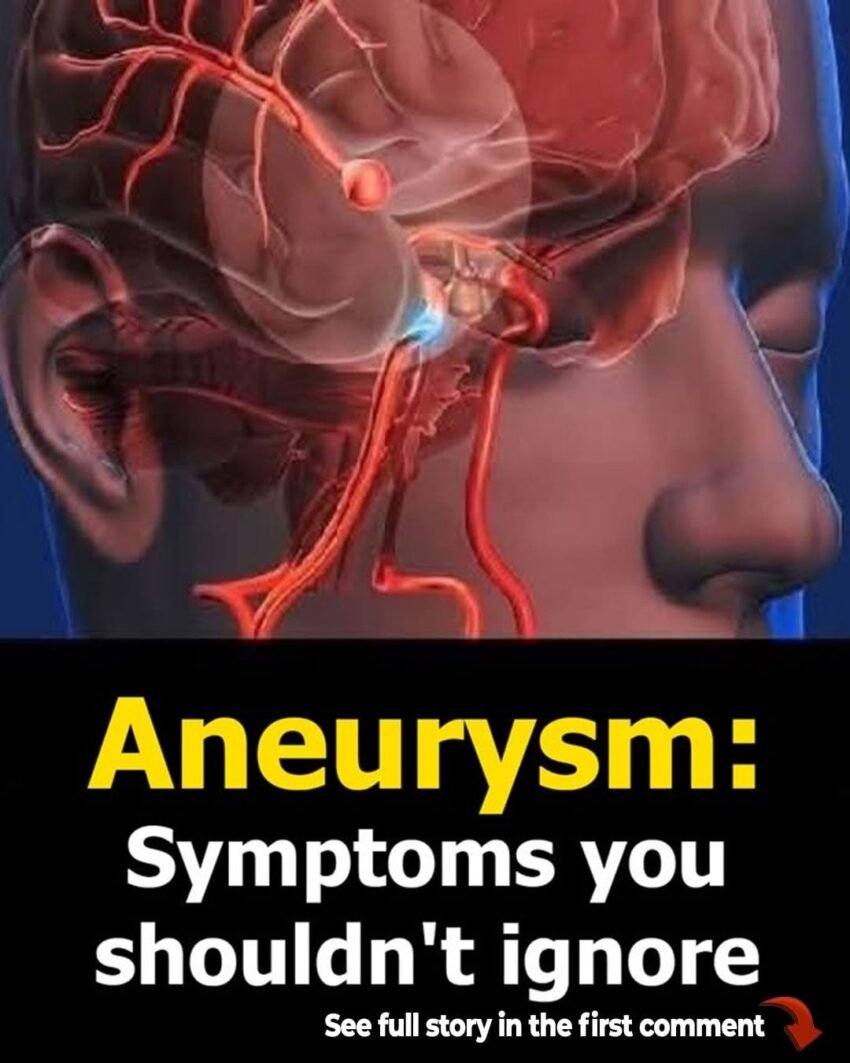
Aneurysm Signs You Shouldn’t Ignore: 13 Warning Symptoms That Demand Attention
Aneurysm signs you shouldn’t ignore include sudden pain, headaches, dizziness, and more. Learn early warning symptoms, risks, and when to seek emergency care.
Aneurysm Signs You Shouldn’t Ignore: 13 Warning Symptoms That Demand Attention
There’s a type of medical emergency that often gives almost no warning — until it suddenly does.
An aneurysm.
Most people don’t think about it until it’s too late or until they hear about a friend, family member, or celebrity who experienced one unexpectedly. The unsettling truth is that aneurysms can develop quietly for years without symptoms.
But when symptoms do appear, they should never be ignored.
Because in many cases, those subtle signals are the body’s last warning before a rupture or life-threatening complication.
This guide breaks down what an aneurysm really is, the warning signs to watch for, and the symptoms that require immediate emergency care — not “wait and see.”
What Is an Aneurysm?
An aneurysm is a weakened, bulging area in the wall of a blood vessel.
Think of a worn-out tire. Over time, pressure builds inside the weak spot, causing it to balloon outward. If the pressure continues, the vessel can rupture.
Medically, this condition is referred to as an Aneurysm.
Aneurysms can occur anywhere in the body, but the most serious types involve:
- The brain (cerebral aneurysm)
- The aorta (aortic aneurysm — the body’s main artery)
If either ruptures, it becomes a medical emergency with a high risk of severe internal bleeding or stroke.
According to the Mayo Clinic, many aneurysms develop silently and are discovered only during imaging tests for unrelated issues.
That’s what makes awareness so important.
Why Aneurysms Are So Dangerous
The danger isn’t usually the aneurysm itself.
It’s what happens when it ruptures.
A rupture can cause:
- Massive internal bleeding
- Stroke (in brain aneurysms)
- Sudden loss of consciousness
- Organ failure
- Death within minutes in severe cases
The Centers for Disease Control and Prevention notes that certain vascular conditions, including aortic aneurysms, can become rapidly fatal without immediate treatment.
The challenge is that many aneurysms remain silent until they are large or unstable.
That’s why recognizing early warning signs matters — even when symptoms seem vague.
Types of Aneurysms (Quick Overview)
Understanding the type helps make sense of symptoms.
1. Brain (Cerebral) Aneurysm
Occurs in blood vessels in the brain. Risk includes hemorrhagic stroke if rupture happens.
2. Aortic Aneurysm
Occurs in the body’s largest artery. Can be:
- Thoracic (chest area)
- Abdominal (abdomen)
3. Peripheral Aneurysm
Less common; occurs in arteries outside the brain and aorta.
Each type behaves differently — but warning signs often overlap.
13 Aneurysm Warning Signs You Shouldn’t Ignore
1. Sudden, Severe Headache (“Worst Headache of Your Life”)
This is one of the most critical warning signs of a brain aneurysm rupture.
People often describe it as:
- Explosive
- Instant
- Completely different from any previous headache
- “Like being hit in the head”
This is a medical emergency.
If this occurs suddenly, emergency care is required immediately.
2. Blurred or Double Vision
Vision changes can occur when an aneurysm presses on nerves in the brain.
Symptoms may include:
- Double vision
- Loss of part of the visual field
- Sudden difficulty focusing
These changes can appear before or during rupture.
3. Drooping Eyelid
A single drooping eyelid (ptosis) can occur when pressure affects cranial nerves.
It may be subtle at first — sometimes only noticed in photos or mirrors.
But in the context of other symptoms, it is significant.
4. Pain Above or Behind the Eye
This symptom is often overlooked.
It may feel like:
- Deep pressure
- Sharp pain
- One-sided discomfort
It can precede rupture in some brain aneurysms.
5. Sudden Neck Pain or Stiffness
A stiff neck combined with severe headache may signal bleeding in the brain.
It can feel similar to meningitis — which is why it’s often misinterpreted.
6. Loss of Consciousness or Fainting
Sudden collapse without warning is a serious red flag.
This may happen if:
- Bleeding reduces blood flow to the brain
- Blood pressure drops rapidly
- The aneurysm ruptures suddenly
Immediate emergency response is critical.
7. Severe Chest or Back Pain
This is more associated with aortic aneurysms.
People often describe:
- Tearing sensation
- Deep, unrelenting pain
- Pain that moves from chest to back
According to the American Heart Association, sudden severe chest or back pain should always be evaluated urgently due to the risk of aortic emergencies.
8. Pulsating Sensation in the Abdomen
Some abdominal aortic aneurysms create a noticeable pulse near the stomach area.
It may feel like:
- A strong heartbeat in the abdomen
- A visible pulsing lump
Not all aneurysms produce this symptom, but when present, it should never be ignored.
9. Sudden Weakness or Numbness (One Side of Body)
If an aneurysm affects brain circulation, it may mimic stroke-like symptoms:
- Weakness in arm or leg
- Facial drooping
- Difficulty speaking
These symptoms require immediate emergency care.
10. Difficulty Speaking or Understanding Speech
This may indicate impaired blood flow to language centers in the brain.
Signs include:
- Slurred speech
- Confusion
- Trouble finding words
Even if symptoms resolve quickly, it can still signal a serious vascular event.
11. Severe Abdominal Pain
Abdominal aortic aneurysms can cause:
- Deep abdominal pain
- Pain radiating to back or groin
- Sudden onset discomfort
If rupture occurs, pain is usually intense and sudden.
12. Rapid Heart Rate and Low Blood Pressure
These may occur if internal bleeding begins.
The body reacts by:
- Increasing heart rate
- Reducing blood pressure
- Triggering shock symptoms
This is a late but critical warning stage.
13. Sudden Collapse With No Clear Cause
This is often the final stage of a rupture event.
It can happen within minutes due to internal bleeding or brain hemorrhage.
Immediate emergency response is essential.
Early Warning Signs Before Rupture
Not all aneurysms rupture suddenly. Some produce subtle symptoms beforehand:
- Mild headaches that worsen over time
- Localized pain in chest or abdomen
- Vision changes
- Dizziness
- Fatigue or confusion
- Unexplained neurological symptoms
However, many aneurysms remain completely silent until rupture.
That unpredictability is what makes them dangerous.
Who Is at Higher Risk?
Risk factors include:
- High blood pressure
- Smoking history
- Family history of aneurysms
- Age over 50
- Atherosclerosis (hardening of arteries)
- Drug use (especially stimulants)
- Certain genetic conditions
Smoking and uncontrolled hypertension are among the strongest risk factors.
What Causes an Aneurysm?
Aneurysms develop when artery walls weaken over time.
Contributing factors include:
- Chronic pressure from high blood pressure
- Damage from plaque buildup
- Genetic weakness in vessel walls
- Inflammation in arteries
- Trauma in rare cases
Over time, the vessel loses elasticity and begins to bulge.
What Happens When an Aneurysm Ruptures?
A rupture is a medical emergency.
Depending on location:
Brain aneurysm rupture:
- Bleeding around the brain (subarachnoid hemorrhage)
- Sudden severe headache
- Stroke symptoms
- Possible coma or death
Aortic aneurysm rupture:
- Massive internal bleeding
- Sudden collapse
- Rapid drop in blood pressure
- High fatality risk without immediate surgery
Time is critical.
When to Seek Emergency Help Immediately
Call emergency services if you or someone experiences:
- Sudden “worst headache of life”
- Severe chest, back, or abdominal pain
- Fainting or collapse
- Sudden vision loss
- Stroke-like symptoms
- Sudden confusion or difficulty speaking
Do not wait to see if symptoms improve.
Diagnosis: How Doctors Detect Aneurysms
Doctors may use:
- CT scan
- MRI
- Ultrasound
- Angiography
Often, aneurysms are found incidentally during scans for other conditions.
Treatment Options
Treatment depends on size, location, and rupture risk.
Monitoring
Small, stable aneurysms may be monitored over time.
Medication
Used to control blood pressure and reduce risk factors.
Surgical repair
- Clipping (brain aneurysm)
- Coiling (minimally invasive brain procedure)
- Endovascular repair (aortic aneurysm)
- Open surgery in severe cases
The goal is always to prevent rupture.
Prevention: Can You Reduce Risk?
While not all aneurysms are preventable, risk can be reduced:
- Control blood pressure
- Stop smoking
- Maintain healthy cholesterol levels
- Exercise regularly
- Manage stress
- Limit stimulant use
- Follow medical advice if high risk
The Cleveland Clinic emphasizes that vascular health management significantly reduces aneurysm-related complications.
Common Misconceptions
“Aneurysms always cause symptoms early”
False. Many have no symptoms until rupture.
“Only older people get aneurysms”
Risk increases with age, but younger people can be affected, especially with genetic factors or smoking.
“If I feel fine, I’m safe”
Not necessarily. Some aneurysms are silent.
Mini Scenario: Why Symptoms Get Missed
Daniel, a 58-year-old former smoker, started experiencing mild back discomfort.
He assumed it was muscle strain from work.
Over weeks, pain became sharper and more persistent.
One evening, he developed sudden severe chest pain and collapsed.
He was diagnosed with a ruptured aortic aneurysm.
His earlier “minor pain” was actually a warning sign.
This is why persistent, unusual pain should never be ignored.
2026 Medical Outlook: Better Detection, Earlier Prevention
Advances in imaging and wearable health tech are improving early detection rates.
Trends include:
- More incidental findings through routine scans
- Increased screening for high-risk patients
- AI-assisted imaging analysis
- Greater awareness of vascular risk factors
Early detection is saving lives more than ever before.
Frequently Asked Questions
Can you feel an aneurysm forming?
Usually no. Most aneurysms are silent until they grow large or rupture.
Are aneurysms always fatal if they rupture?
Not always, but they are life-threatening emergencies requiring immediate treatment.
Can stress cause an aneurysm?
Stress alone does not cause aneurysms, but chronic stress may worsen blood pressure, which is a risk factor.
How fast does an aneurysm grow?
It varies widely. Some grow slowly over years, others remain stable.
Can exercise trigger rupture?
Normal exercise is generally safe, but extremely heavy exertion may increase risk in untreated large aneurysms.
Are aneurysms hereditary?
Yes, family history increases risk, especially for brain aneurysms.
Can aneurysms be detected early?
Yes, through imaging tests, especially in high-risk individuals.
What is the survival rate after rupture?
It depends on location, speed of treatment, and severity. Immediate care significantly improves outcomes.
Do aneurysms hurt before they rupture?
Sometimes, but many do not cause pain until rupture occurs.
Should I get screened?
If you have risk factors like smoking, high blood pressure, or family history, screening may be recommended by a doctor.
Aneurysm Warning Checklist
What To Watch For
✔ Sudden severe headache
✔ Chest, back, or abdominal pain
✔ Vision changes
✔ Fainting or collapse
✔ Speech difficulty
✔ One-sided weakness
✔ Pulsating abdominal sensation
✔ Sudden confusion
What To Do
✔ Seek emergency care immediately for sudden symptoms
✔ Control blood pressure regularly
✔ Stop smoking
✔ Follow medical screening advice
✔ Take persistent pain seriously
What To Avoid
✘ Ignoring sudden severe pain
✘ Delaying emergency response
✘ Dismissing neurological symptoms
✘ Self-diagnosing severe headaches
✘ Assuming young age eliminates risk
Final Thoughts
Aneurysms are unpredictable — and that’s what makes awareness so important.
Most never cause symptoms until they become serious. But when warning signs do appear, they often escalate quickly and require urgent attention.
The key takeaway isn’t fear.
It’s recognition.
Understanding the symptoms means responding faster, seeking care sooner, and potentially preventing life-threatening outcomes.
Sudden severe headache, chest or back pain, neurological changes, or collapse should never be ignored — they may be signs of a serious aneurysm emergency.
If this helped clarify what to watch for, share it with someone who may benefit. Awareness saves time — and in vascular emergencies, time saves lives.