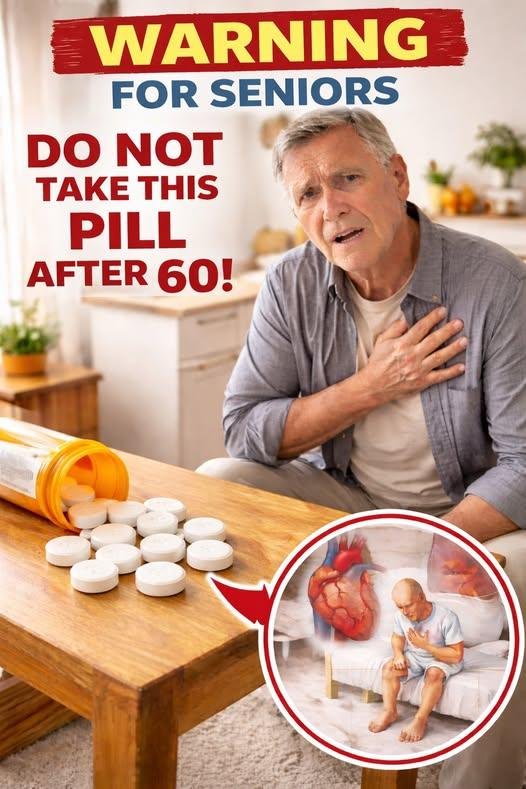
As a Heart Surgeon, I’m Warning You: This Common Pill May Strain Senior Hearts More Than You Think
Some commonly used over-the-counter pain medications may affect heart health in seniors. Learn what doctors caution and safer alternatives.
It’s one of the most common habits in older adults.
A small pill for joint pain.
A quick tablet for headaches.
A familiar over-the-counter remedy taken without much thought.
But here’s something many people don’t realize:
some widely used medications that seem harmless can place extra stress on the heart—especially in seniors.
This isn’t about panic. It’s about awareness.
Because in clinical practice, cardiologists often see a pattern: long-term or frequent use of certain common pain-relief pills coinciding with worsening blood pressure, fluid retention, or increased cardiovascular strain.
So what’s really going on inside the body—and which medications deserve more caution?
Let’s break it down clearly and responsibly.
Why Heart Health Becomes More Sensitive With Age
As we age, the cardiovascular system naturally changes:
- Blood vessels become less flexible
- Heart muscle efficiency declines slightly
- Kidney function slows down
- Blood pressure regulation becomes more delicate
This is why seniors are more sensitive to medications that affect:
- Fluid balance
- Blood pressure
- Kidney filtration
Even small disruptions can have a larger impact compared to younger adults.
This is especially relevant in conditions like Hypertension and Heart Failure, which are more common in older populations.
The Medications Doctors Commonly Caution About
One of the most frequently discussed categories in cardiology is nonsteroidal anti-inflammatory drugs (NSAIDs).
These include common over-the-counter pain relievers used for:
- Arthritis pain
- Muscle aches
- Headaches
- Back pain
Examples include widely used options such as ibuprofen and naproxen.
To be clear: these medications are not “dangerous” when used correctly. But frequency, dosage, and underlying health conditions matter significantly.
How These Common Pills Can Affect the Heart
1. Fluid Retention (Water Build-Up)
Some pain-relief medications can cause the body to retain sodium and water.
This can lead to:
- Swelling in legs or ankles
- Increased blood pressure
- Extra workload on the heart
For seniors, this effect can be more pronounced.
2. Increased Blood Pressure
NSAIDs may reduce the effectiveness of certain blood pressure medications.
This can result in:
- Elevated readings
- Harder-to-control hypertension
- Added cardiovascular strain
3. Kidney Stress
Kidneys play a key role in regulating fluid and blood pressure.
Some medications can temporarily reduce kidney filtration efficiency, which indirectly affects heart function.
This is especially important in older adults who already have reduced kidney reserve.
4. Higher Risk in Existing Heart Conditions
People with pre-existing conditions such as Coronary Artery Disease or heart failure may be more sensitive to these effects.
In these cases, even small fluid changes can impact symptoms like:
- Shortness of breath
- Fatigue
- Swelling
Important Reality Check: Not All Use Is Harmful
This is where clarity matters.
These medications:
✔ Are widely used and approved
✔ Provide effective pain relief
✔ Are safe for many people when used occasionally
The concern arises when:
- They are taken frequently over long periods
- Combined with other risk factors
- Used without medical guidance in seniors
Why Seniors Often Overuse These Medications
In real-world settings, doctors often notice patterns like:
- Chronic joint pain (arthritis)
- Back pain from aging spine changes
- Sleep disruption due to discomfort
- Limited access to alternative therapies
This leads to repeated use of quick pain relief solutions.
Over time, this can unintentionally increase cardiovascular strain.
Safer Ways to Manage Pain in Older Adults
Pain management doesn’t have to rely solely on pills.
1. Physical Therapy and Gentle Movement
Improves joint flexibility and reduces stiffness.
2. Heat and Cold Therapy
- Heat relaxes muscles
- Cold reduces inflammation
3. Topical Pain Relief Options
Creams or gels may reduce systemic absorption compared to oral medications.
4. Doctor-Guided Alternatives
In some cases, physicians may recommend safer medication strategies depending on individual risk.
When to Be Extra Cautious
Seniors should be especially careful if they have:
- High blood pressure
- Heart disease history
- Kidney problems
- Diabetes
- Fluid retention issues
In these cases, even common medications should be reviewed with a healthcare provider.
Real-Life Clinical Scenario
A 71-year-old patient with chronic knee pain regularly used over-the-counter pain medication for relief.
Over time, they developed:
- Mild leg swelling
- Increased blood pressure readings
- Fatigue during daily activity
After reviewing medication habits, doctors adjusted the pain management plan and symptoms improved significantly.
The key issue wasn’t a single pill—it was long-term, unmonitored use.
What Cardiologists Actually Recommend
Heart specialists generally emphasize:
- Use the lowest effective dose
- Avoid long-term unsupervised use
- Monitor blood pressure regularly
- Discuss frequent pain medication use with a doctor
The goal is not avoidance—it is balance and awareness.
Future Outlook: Better Pain Management for Seniors
Healthcare is gradually shifting toward:
- Safer pain management protocols
- Personalized medication plans
- Increased use of non-drug therapies
- Better monitoring of cardiovascular risk
The focus is prevention rather than reaction.
Frequently Asked Questions
1. Are all painkillers bad for the heart?
No. Only certain types may pose risks when overused or misused.
2. Can occasional use harm seniors?
Occasional use is generally considered low risk for most people.
3. What are safer alternatives for pain relief?
Options include physical therapy, topical treatments, and non-drug approaches.
4. Should seniors stop taking NSAIDs completely?
Not necessarily—this should be decided with a healthcare provider.
5. Why do these medications affect blood pressure?
They can influence kidney function and fluid balance.
6. Are over-the-counter drugs always safe?
“Over-the-counter” does not mean risk-free, especially for chronic use.
7. Who is most at risk?
Seniors with heart disease, hypertension, or kidney issues.
8. What should I do if I take these medications often?
Consult a doctor for a safer long-term pain management plan.
Action Checklist
Do This:
✔ Review all medications regularly
✔ Monitor blood pressure
✔ Use pain relief only as needed
✔ Explore non-drug therapies
✔ Consult a doctor for chronic pain
Avoid This:
✘ Long-term unsupervised use
✘ Combining multiple pain medications
✘ Ignoring swelling or blood pressure changes
✘ Self-medicating daily pain
Conclusion
Common pain-relief pills are not inherently dangerous—but in seniors, context matters far more than convenience.
The real concern is not a single tablet, but repeated use without understanding how it interacts with aging heart and kidney function.
Awareness is the key to safer choices. Some commonly used pain medications may place added strain on senior heart health when used frequently or without guidance—so informed, balanced use is essential.
If this helped clarify things, share it with someone who regularly uses pain relievers—and explore more simple, practical ways to support heart health with age.