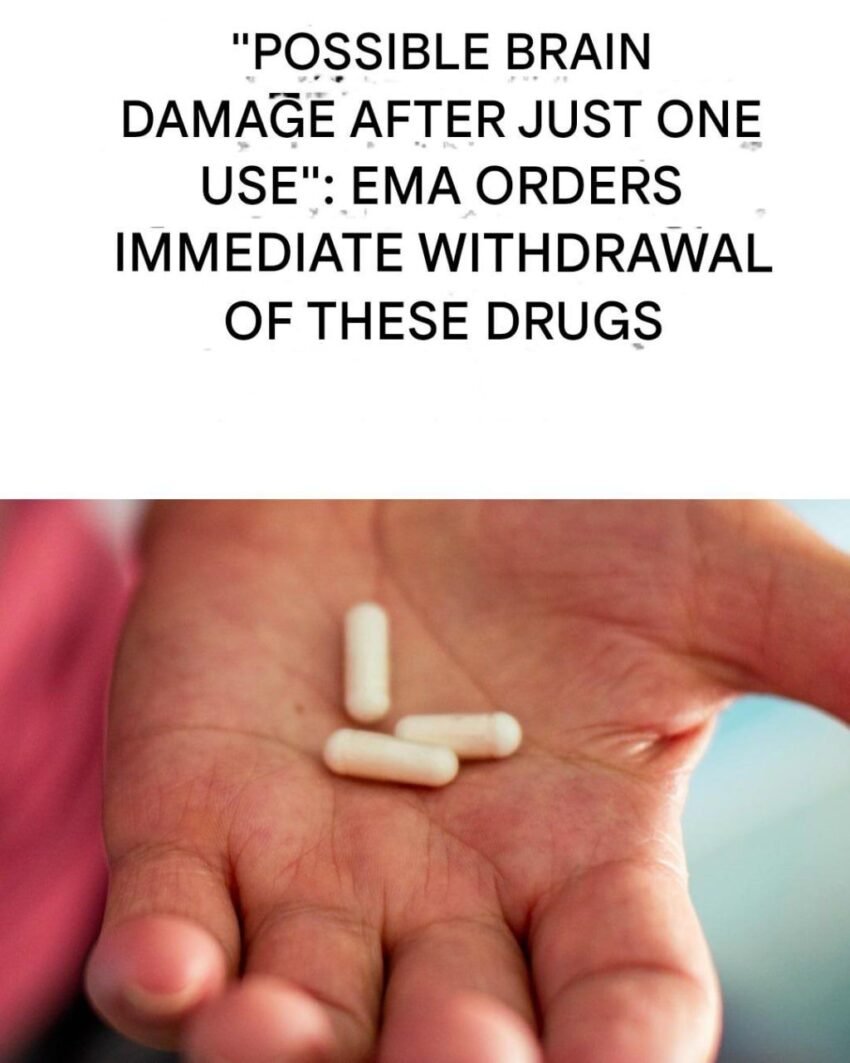
🧠 Drug Safety Alerts Explained: What “Immediate Recall” Really Means and Why Brain Damage Claims Are Often Misunderstood
Learn how EMA drug recalls really work, what safety alerts mean, and the truth about neurological side effects and medication risks.
Every few months, headlines spread across the internet claiming something alarming:
“Drug recalled immediately.”
“Severe brain damage risk discovered.”
“Single dose may cause irreversible harm.”
These phrases are designed to trigger fear—but they often strip away the most important part: context.
In reality, drug safety regulation in Europe and the U.S. is one of the most closely monitored systems in medicine. Agencies like the European Medicines Agency (EMA) and the U.S. FDA do not issue recalls lightly, and they certainly do not base decisions on vague or generalized claims.
So what really happens when a drug is flagged for safety concerns? And how worried should patients actually be?
Let’s break it down clearly.
🧠 What the EMA Actually Does (And Doesn’t Do)
The European Medicines Agency (EMA) is responsible for:
- Evaluating medicines before approval
- Monitoring safety after approval
- Investigating side effects reports
- Issuing safety updates or restrictions when needed
What it does NOT do:
- Issue blanket panic-based recalls
- Claim unverified “brain damage from single dose” risks
- Remove entire categories of medicines without evidence
When a medicine is restricted or withdrawn, it is always based on:
- Clinical trial data
- Real-world adverse event reports
- Risk-benefit analysis
- Independent scientific review
⚠️ Why “Brain Damage From a Single Dose” Claims Are Misleading
This type of claim usually spreads online due to misunderstanding of pharmacovigilance reports.
The reality:
- Serious neurological side effects from medications are rare
- When they occur, they are usually linked to:
- Overdose situations
- Drug interactions
- Pre-existing medical conditions
- Long-term misuse
- A “single dose causing brain damage” is not a general pharmacological pattern
If such a risk existed broadly for an approved medication, it would not remain on the market.
🧪 How Drug Side Effects Are Actually Classified
Regulators categorize side effects into levels:
| Category | Meaning |
|---|---|
| Common | Affects many patients (e.g., nausea, headache) |
| Uncommon | Happens occasionally |
| Rare | Very low incidence |
| Very rare | Extremely uncommon, often case reports only |
Neurological complications—when they occur—are typically in the rare or very rare category, and often involve specific conditions.
🧠 Can Medications Affect the Brain?
Yes—but not in the exaggerated way social media headlines suggest.
Some medications can cause:
- Drowsiness
- Confusion (usually in elderly patients)
- Mood changes
- Rare neurological reactions
However:
👉 Permanent brain damage from a single standard therapeutic dose is not a recognized general outcome for approved medicines under EMA regulation.
🧾 What a “Recall” Actually Means
A recall does NOT always mean danger in the way people assume.
There are different levels:
1. Precautionary suspension
A temporary pause while data is reviewed
2. Batch-specific recall
Only certain production batches are affected
3. Full withdrawal
Only when risk outweighs benefit significantly
Most recalls are not emergency “this is dangerous right now” situations, but controlled regulatory actions.
🧠 Why These Headlines Go Viral
Fear-based claims spread faster than scientific explanations because:
- They sound urgent
- They use medical terminology
- They lack context on purpose
- They trigger emotional reactions
This creates a gap between:
- What regulators actually say
- What people think they said
📊 Real-World Perspective: Medication Risk vs Everyday Risk
To put things into perspective:
| Activity | Relative Risk |
|---|---|
| Approved medication use | Very low (when used correctly) |
| Driving a car daily | Moderate |
| Smoking | High |
| Untreated medical conditions | Often higher than medication risks |
Medications are approved only when benefits clearly outweigh risks.
🧠 Expert Insight: How Neurological Side Effects Are Evaluated
Before any drug reaches the market:
- It undergoes years of clinical trials
- Tens of thousands of data points are reviewed
- Rare side effects are tracked post-approval
- Continuous monitoring systems detect patterns
If a neurological risk emerges, it is:
- Quantified
- Investigated for causation
- Compared against benefits
Only then do agencies act.
🚫 Common Misinterpretations People Make
Mistake 1: Confusing “reported side effect” with “proven effect”
Not all reports indicate causation.
Mistake 2: Assuming recalls mean danger for everyone
Most recalls are limited and specific.
Mistake 3: Believing viral headlines without context
Medical communication is often simplified incorrectly online.
🧾 What Patients Should Actually Do
If you hear about a drug safety alert:
✔️ Do this:
- Check official EMA or FDA statements
- Ask your healthcare provider
- Continue prescribed medication unless advised otherwise
- Look for confirmed risk categories
❌ Avoid this:
- Stopping medication abruptly
- Relying on social media posts
- Assuming worst-case scenarios
- Self-diagnosing side effects without context
❓ FAQ
1. Does EMA really recall drugs for brain damage risk?
Only in very specific, evidence-based cases—not as a general rule.
2. Can a single dose of medicine cause brain damage?
For approved medications used correctly, this is extremely unlikely and not a general risk.
3. Are drug recalls common?
Yes, but most are precautionary or batch-specific.
4. Should I stop my medication if I see a news alert?
No, always consult your doctor first.
5. Why do drug warnings sound so scary?
Because regulatory language is designed to be precise, not emotional.
6. Are neurological side effects common?
Most are rare and often reversible.
7. How does EMA decide on recalls?
Through scientific review of safety and risk-benefit data.
8. Can medications affect mental health?
Some can influence mood or cognition, usually temporarily.
9. Where should I get reliable drug safety info?
Official EMA, FDA, or healthcare providers.
10. Are online drug warnings trustworthy?
Not always—verify with official sources.
🏁 Conclusion
Drug safety is one of the most strictly regulated areas in modern medicine. While it’s true that medications can have side effects—including rare neurological ones—claims about widespread “brain damage after a single dose” or broad EMA recalls are not supported in general medical evidence.
What is real is this:
- Side effects exist, but they are carefully monitored
- Regulators act when there is verified risk
- Most medications on the market are safe when used correctly
The safest approach is not fear—it’s informed awareness. Trust verified medical sources, not viral headlines.
If this helped clarify the confusion, share it with someone who’s seen alarming drug claims online—and explore more evidence-based health insights that cut through misinformation.