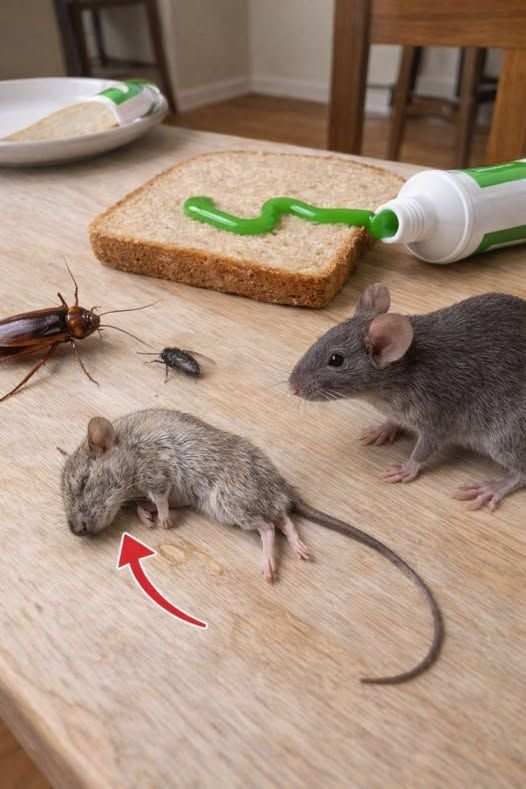
Can Mint Toothpaste Really Repel Pests? The Simple Trick Homeowners Are Trying (and What Actually Works)
Discover whether mint toothpaste can repel common pests like ants and mice, how to use it safely, and what actually works for long-term results.
The Idea Sounds Almost Too Simple…
You spot a trail of ants near your sink. Or maybe you’ve heard scratching behind a wall and suspect mice.
Before reaching for chemical sprays, you remember a tip floating around online:
“Just use mint toothpaste. It repels pests naturally.”
It’s cheap. It’s already in your bathroom. And it sounds harmless.
But does it actually work—or is it just another household myth?
Let’s break it down properly, so you’re not wasting time on something that only seems effective.
Why Mint Gets Linked to Pest Control
Mint—especially peppermint—has a strong, sharp scent.
That matters because many pests rely heavily on smell to:
- Find food
- Navigate spaces
- Detect danger
Strong odors can interfere with those senses.
That’s why peppermint oil (not toothpaste) is often discussed as a natural deterrent for:
- Ants
- Spiders
- Mice (to a limited extent)
But toothpaste is a different story.
So… Can Mint Toothpaste Repel Pests?
The honest answer: Sometimes—but weakly and temporarily.
Here’s why.
Mint toothpaste does contain menthol or mint flavoring, but:
- It’s diluted with other ingredients
- The scent isn’t as concentrated as essential oils
- It dries out quickly, reducing effectiveness
So while it might discourage pests briefly, it’s not a reliable or long-term solution.
Think of it as a mild deterrent—not a fix.
Where It Might Work (Short-Term)
If you’re dealing with minor pest activity, mint toothpaste may help in small ways:
1. Ant Trails
Applying a thin line near entry points can disrupt scent trails temporarily.
But ants are persistent. They’ll often find another route.
2. Small Cracks or Gaps
Dabbing toothpaste into tiny openings might:
- Mask odors
- Slightly discourage entry
However, it won’t physically block pests.
3. Occasional Spider Activity
Some people report fewer spiders in areas with strong scents.
Again—this is inconsistent and not guaranteed.
Where It Won’t Work
Let’s be clear about limitations.
Mint toothpaste is not effective for:
- Established infestations
- Rodent control (mice and rats)
- Roaches or heavy insect problems
- Long-term prevention
In these cases, relying on toothpaste can delay real solutions—and make the problem worse.
The Simple Trick (If You Want to Try It Anyway)
If you’re curious, here’s the safest way to test it:
What to do:
- Apply small dabs of mint toothpaste near:
- Entry points
- Cracks
- Baseboards
- Focus on areas where pests are active
- Reapply every 1–2 days (it dries quickly)
- Observe changes over a few days
What to expect:
- Possible short-term reduction
- No permanent results
This works best as a quick experiment—not a strategy.
What Actually Works Better (And Why)
If you want real results, focus on proven methods.
Organizations like the Environmental Protection Agency emphasize prevention and integrated pest management over quick fixes.
1. Eliminate Food Sources
- Clean crumbs and spills
- Store food in sealed containers
- Take out trash regularly
No food = less attraction.
2. Seal Entry Points
- Use caulk for cracks
- Install door sweeps
- Repair screens
This is one of the most effective long-term solutions.
3. Use Peppermint Oil (If Going Natural)
Unlike toothpaste, concentrated peppermint oil:
- Has a stronger scent
- Lasts longer
- Can be diluted and sprayed
Still not perfect—but more effective.
4. Maintain Clean, Dry Spaces
Pests thrive in:
- Moist environments
- Cluttered areas
Reducing these makes your home less appealing.
Comparison: Mint Toothpaste vs Real Solutions
| Method | Effectiveness | Duration | Reliability |
|---|---|---|---|
| Mint toothpaste | Low | Very short | Inconsistent |
| Peppermint oil | Moderate | Short–medium | Better |
| Sealing entry points | High | Long-term | Very reliable |
| Professional pest control | Very high | Long-term | Most reliable |
Common Mistakes People Make
1. Relying on scent alone
Smell-based deterrents are rarely enough.
2. Ignoring the root cause
Food, water, and shelter attract pests—not just smell.
3. Waiting too long to act
Small problems grow quickly if ignored.
4. Using DIY methods as a full solution
They’re often just temporary fixes.
Expert Insight: Why Quick Fixes Feel Like They Work
Here’s something most people don’t realize:
Pests naturally move around.
So when activity drops after using something like toothpaste, it feels like it worked.
But often, they’ve just relocated temporarily.
That’s why long-term strategies matter.
A Real-Life Scenario
A homeowner notices ants near the kitchen sink.
They try mint toothpaste along the counter edge.
For a day or two, activity slows.
But within a week, ants return—this time from a different entry point.
The real solution?
- Sealing gaps
- Cleaning thoroughly
- Removing food sources
After that, the problem actually stops.
2026 Trend: Smarter, Safer Pest Control
Homeowners are moving toward:
- Non-toxic methods
- Preventive strategies
- Minimal chemical use
But there’s also growing awareness that:
Natural doesn’t always mean effective.
The best approach combines safety with proven results.
Frequently Asked Questions
1. Does mint repel all pests?
No. Some insects dislike it, but it’s not universally effective.
2. Is toothpaste better than peppermint oil?
No. Peppermint oil is significantly stronger and more effective.
3. Can it repel mice?
No reliable evidence supports this.
4. How often should I reapply it?
Every 1–2 days, as it dries quickly.
5. Is it safe around pets?
Generally yes, but avoid large amounts or ingestion.
6. Why do ants come back after using it?
Because it doesn’t remove the root cause.
7. Can I mix toothpaste with water?
You can, but it weakens the already mild effect.
8. What’s the best natural pest repellent?
Peppermint oil, vinegar solutions, and proper sanitation.
9. Should I skip DIY methods entirely?
Not necessarily—but don’t rely on them alone.
10. When should I call professionals?
If the problem persists or grows.
Action Checklist
What to Do
✔ Use toothpaste only as a temporary test
✔ Focus on cleaning and food control
✔ Seal entry points
✔ Try stronger natural alternatives if needed
✔ Monitor pest activity
What to Avoid
✘ Don’t rely on toothpaste alone
✘ Don’t ignore recurring pests
✘ Don’t delay real solutions
✘ Don’t assume “natural” means effective
✘ Don’t overlook entry points
Mint toothpaste might seem like a clever hack—and in small cases, it can have a minor effect.
But it’s not a solution.
Real pest control comes down to understanding what attracts pests—and removing those factors consistently.
That’s what actually works.
Mint toothpaste can help a little—but if you want pests gone for good, focus on prevention, not quick tricks.
Tried this method or something similar? Share your experience—and explore more practical, no-nonsense home solutions that actually deliver results.