🔥 Cooked Salmon Surprise: 7 Shocking Truths About That Weird White Stuff (And Why It’s NOT Worms)
Not worms! Discover what the white stuff on cooked salmon really is, why it happens, and how to prevent it for perfectly cooked fish every time.
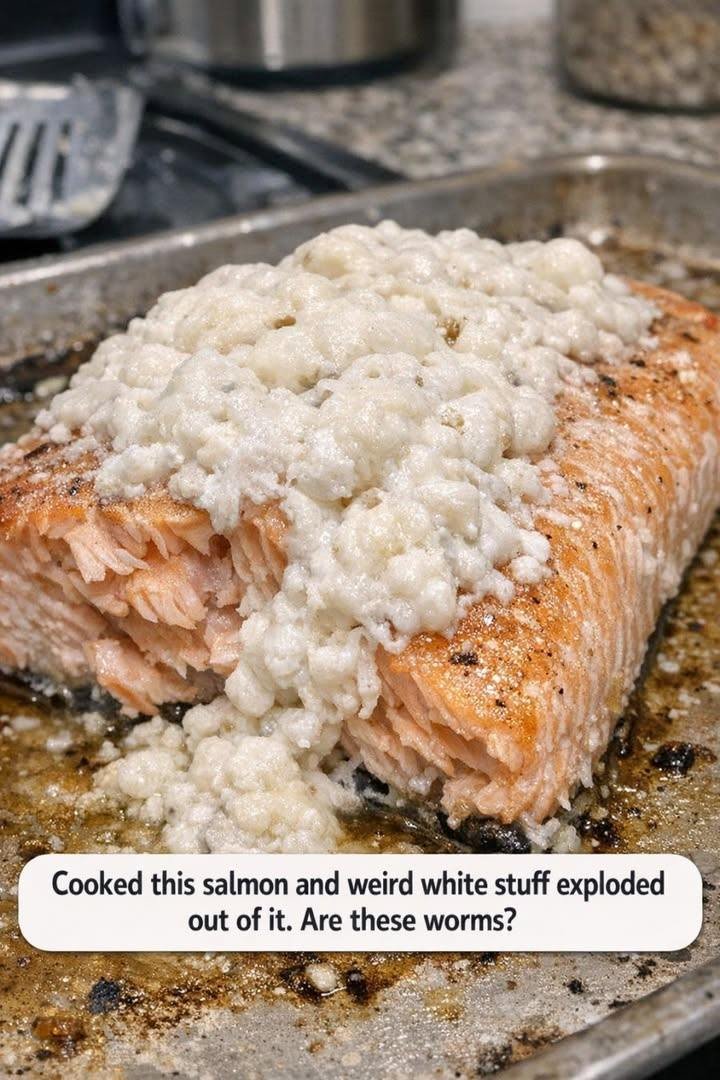
You pull a beautiful salmon fillet out of the oven… and then you see it.
A strange, white, almost foamy substance has oozed out of the fish. It looks alarming—honestly, a little gross. Your first thought?
“Are these worms?”
You’re not alone. Thousands of home cooks across the U.S. have had this exact moment of panic. Some toss the fish immediately. Others Google it mid-dinner, hoping they didn’t just ruin a meal—or worse, risk their health.
Here’s the truth: what you’re seeing is completely normal. And no, it’s not parasites.
In this deep dive, you’ll learn exactly what that white stuff is, why it happens, whether it’s safe to eat, and how to prevent it like a pro. By the end, you’ll cook salmon with total confidence—and probably better than most people you know.
What Is the White Stuff on Cooked Salmon?
Let’s clear the air immediately.
That white substance is called albumin—a protein naturally found in salmon (and many other animals, including humans).
When salmon cooks, heat causes the muscle fibers to contract. As they tighten, they push out albumin, which then coagulates on the surface. That’s what creates the white, sometimes slightly gelatinous layer.
Why It Looks So Weird
Albumin starts as a liquid protein inside the fish. When exposed to heat, it transforms into a solid, opaque substance—similar to how egg whites turn white when cooked.
That transformation is what makes it look unfamiliar—and, to some people, suspicious.
Why This Matters (Especially for U.S. Home Cooks)
Salmon is one of the most popular seafood choices in the United States. It’s widely recommended by organizations like the FDA and the American Heart Association for its omega-3 fatty acids and heart health benefits.
But here’s the issue:
A lot of people avoid cooking salmon at home because of experiences like this.
They think:
- The fish is contaminated
- It’s undercooked or overcooked
- It’s unsafe to eat
In reality, the opposite is often true. Seeing albumin usually means your salmon is fully cooked—sometimes even slightly overcooked.
Understanding this small detail can:
- Save you from wasting expensive fish
- Improve your cooking confidence
- Help you serve restaurant-quality meals at home
Is It Ever Worms? Let’s Address the Fear Directly
Short answer: almost never—and definitely not what you’re seeing here.
Parasites in fish (like anisakis worms) do exist, but they look completely different:
- They’re thread-like, not creamy or foamy
- They’re usually embedded inside raw fish, not oozing out
- Proper cooking kills them entirely
If your salmon was:
- Cooked to a safe internal temperature (145°F per FDA guidelines)
- Purchased from a reputable U.S. supplier
Then you’re safe.
What you saw? Albumin. Every time.
Why Albumin Appears (And Why Sometimes It Doesn’t)
Not all salmon produces that white coating. That’s why it feels unpredictable.
Here’s what affects it:
1. Cooking Temperature
High heat = more albumin.
When salmon cooks too quickly, the proteins contract aggressively, forcing more albumin out.
2. Cooking Time
Overcooking increases albumin release. The longer it cooks, the more moisture and protein get pushed out.
3. Type of Salmon
Wild salmon tends to have more albumin than farmed salmon due to its leaner structure.
4. Preparation Method
Grilling, pan-searing, and baking at high temperatures all increase the likelihood of visible albumin.
Step-by-Step: How to Prevent That White Stuff
If you’d rather your salmon look clean and restaurant-quality, here’s exactly how to do it.
Step 1: Brine the Salmon
This is the single most effective trick.
- Mix 1 tablespoon salt per cup of water
- Soak the salmon for 10 minutes
- Pat dry before cooking
Why it works: Brining helps the muscle fibers retain moisture and reduces albumin leakage.
Step 2: Cook at Lower Temperatures
Aim for:
- 275°F–325°F in the oven
- Medium-low heat on the stovetop
Slow cooking keeps proteins from tightening too quickly.
Step 3: Don’t Overcook
Use a thermometer if possible.
- Target internal temp: 125°F–130°F for moist salmon
- FDA safe temp: 145°F (fully cooked)
Pulling the fish slightly earlier allows carryover cooking to finish the job.
Step 4: Use Gentle Cooking Methods
Best methods:
- Poaching
- Sous vide
- Baking in foil
These reduce direct heat exposure and help maintain texture.
Real-Life Scenario: The Dinner Party Panic
Imagine this:
You’re hosting friends. You’ve got a beautiful salmon fillet from a local grocery store—maybe Whole Foods or Costco. You season it perfectly, slide it into the oven, and everything smells incredible.
Then you take it out…
And there it is. White streaks across the top.
Your confidence drops instantly.
Do you serve it? Apologize? Toss it?
Now you know: you serve it proudly.
Most guests won’t even notice. And if they do, you’ll have the answer that instantly reassures them.
Comparison Table: Albumin vs. Worms vs. Fat
| Feature | Albumin | Worms (Parasites) | Fish Fat |
|---|---|---|---|
| Appearance | White, creamy, foamy | Thread-like, stringy | Translucent, oily |
| Location | Surface of cooked fish | Inside raw fish | Throughout flesh |
| Safety | Completely safe | Killed by proper cooking | Safe |
| Cause | Protein coagulation | Natural parasites | Natural fat content |
| Texture | Soft, slightly firm | Firm, fibrous | Smooth, melts when warm |
Pros & Cons of Albumin Appearing
Pros
- Indicates the fish is cooked
- Completely safe to eat
- Naturally occurring—no additives or contamination
Cons
- Can look unappetizing
- May signal slight overcooking
- Affects presentation (especially for guests)
Common Mistakes (And How to Fix Them)
Mistake #1: Cooking at High Heat
Fix: Lower the temperature and cook longer.
Mistake #2: Skipping Brining
Fix: Always brine if appearance matters.
Mistake #3: Overcooking “Just to Be Safe”
Fix: Use a thermometer. Precision beats guesswork.
Mistake #4: Assuming It’s Unsafe
Fix: Understand the science—albumin is harmless.
Expert-Level Insights Most People Don’t Know
1. Chefs Actually Avoid Albumin for Presentation—Not Safety
In high-end restaurants, minimizing albumin is about aesthetics, not health.
2. Sous Vide Eliminates the Problem Almost Completely
Cooking salmon at a precise temperature (like 120°F) prevents protein shock.
3. Resting the Fish Matters
Letting salmon rest for a few minutes after cooking helps redistribute juices and reduces surface protein buildup.
4. Oil Coating Can Help
Lightly coating the fish in oil before cooking can reduce visible albumin.
2026 Trend: Smarter Home Cooking
With the rise of smart thermometers and precision cooking tools in U.S. kitchens, fewer people are overcooking fish.
Devices now alert you when salmon hits the exact temperature—reducing albumin and improving texture.
Expect:
- More sous vide adoption
- Better home cooking results
- Less food waste from “panic tossing”
Mini Case Scenario
Jake, a first-time home cook in Texas, buys salmon to impress a date. He bakes it at 400°F because that’s what a random recipe said.
White stuff appears. He panics, assumes it’s worms, and throws it out.
Next time, he:
- Brines the fish
- Lowers the temp
- Uses a thermometer
No white residue. Perfect texture. Date impressed.
Same fish. Different outcome.
❓ Frequently Asked Questions
1. Is the white stuff on salmon safe to eat?
Yes, completely. It’s just protein (albumin) and poses no health risk.
2. Does albumin mean the fish is overcooked?
Often, yes—but not always. It usually indicates the fish was cooked at too high a temperature.
3. Can I scrape it off?
Absolutely. Many people do for aesthetic reasons.
4. Why does it happen more with wild salmon?
Wild salmon is leaner, which makes protein coagulation more visible.
5. Does freezing salmon cause this?
Freezing can slightly affect texture, but it’s not the main cause of albumin.
6. How do restaurants avoid it?
They use lower temperatures, precise timing, and techniques like sous vide.
7. Is undercooked salmon safer than overcooked?
Undercooked salmon carries some risk. Always follow FDA guidelines if unsure.
8. Can I prevent it completely?
Not always—but you can reduce it significantly with proper technique.
9. Does it affect taste?
Not much. It’s mostly a visual issue.
10. Should I throw the salmon away if I see it?
No. That would be unnecessary and wasteful.
🧾 Action Checklist
✅ What To Do
- Brine salmon before cooking
- Use lower cooking temperatures
- Monitor internal temperature
- Let fish rest after cooking
- Understand that albumin is normal
❌ What To Avoid
- Cooking at high heat
- Overcooking “just in case”
- Assuming it’s worms
- Throwing away perfectly good fish
- Ignoring cooking technique
🏁 Conclusion
That strange white stuff on your salmon? It’s not worms. It’s not dangerous. And it’s definitely not a reason to toss your dinner.
It’s simply a natural protein reacting to heat—a small detail that, once understood, unlocks a whole new level of confidence in your cooking.
Master a few simple techniques, and you’ll not only avoid it—you’ll cook salmon that rivals your favorite restaurant.
The white stuff is albumin, not parasites. It’s safe, normal, and easy to control with better cooking methods.
If this helped you cook with more confidence, share it with someone who’s had the same “wait… what is THAT?” moment—and explore more ways to level up your kitchen skills.