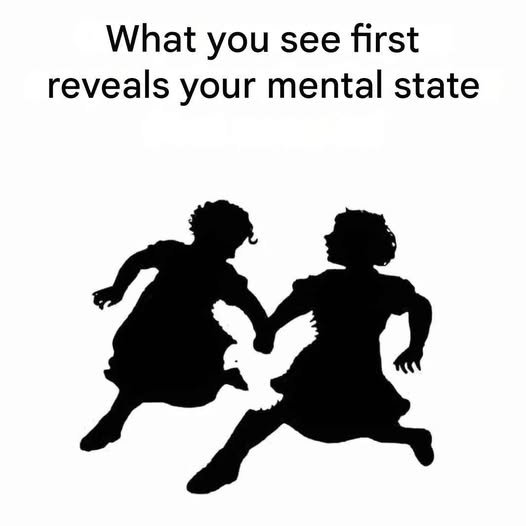
Discover What Your Perception Reveals About Your Mental Well-Being: Hidden Signs Your Mind Has Been Trying to Tell You
Your perception shapes mental health more than you think. Learn what it reveals about stress, emotions, and well-being in everyday life.
The Mind Doesn’t Speak Loudly—It Filters Reality Instead
Have you ever noticed how two people can experience the exact same situation and walk away with completely different interpretations?
One person sees rejection. Another sees redirection.
One sees failure. Another sees feedback.
One feels overwhelmed by life. Another feels challenged by it.
That difference isn’t just personality. It’s perception—and it quietly reflects the state of your mental well-being.
Most people assume mental health is only about emotions like sadness, anxiety, or burnout. But long before emotions become obvious, your perception starts shifting. The way you interpret conversations, setbacks, silence, even success—it all carries subtle psychological signals about your inner state.
And here’s the part most people miss: your perception is constantly updating your mental reality, even when you don’t notice it happening.
This article will help you decode what your perception is revealing about your mental well-being, how it forms, when it becomes distorted, and what you can actually do to recalibrate it.
Because once you understand how your mind filters reality, you stop reacting blindly—and start responding with clarity.
What Perception Really Means in Mental Health
Perception isn’t just “how you see things.” It’s how your brain constructs meaning from what you see.
Your brain receives millions of bits of information every second. But instead of processing everything objectively, it filters, prioritizes, and interprets based on:
- Past experiences
- Emotional state
- Stress levels
- Beliefs and expectations
- Cultural and social conditioning
This means you’re not reacting to reality itself—you’re reacting to your brain’s version of reality.
When mental well-being is stable, perception tends to be flexible and balanced. But when stress, anxiety, or emotional fatigue increase, perception becomes narrower, more reactive, and often biased toward threat or negativity.
In psychology, this is closely tied to cognitive appraisal theory and is widely discussed in behavioral research from institutions like the American Psychological Association.
Why Your Perception Matters More Than You Think (Especially in Modern Life)
In the United States, where productivity culture, digital overload, and constant comparison dominate daily life, perception plays an even bigger role than most people realize.
Two major forces shape this:
1. Constant Information Overload
Your brain is not designed to process:
- Social media comparisons
- News cycles
- Work notifications
- Financial pressure updates
When overwhelmed, the brain simplifies reality—and often in the wrong direction.
2. High Performance Pressure
Many people aren’t just living life—they’re evaluating it constantly:
- “Am I doing enough?”
- “Why are others ahead?”
- “What if I fail?”
This creates a perception loop where the mind becomes both observer and critic.
Ignoring these shifts can lead to:
- Chronic stress misinterpretation
- Emotional exhaustion
- Increased anxiety sensitivity
- Reduced decision clarity
Perception doesn’t just reflect mental health—it actively shapes it.
The Hidden Types of Perception Distortions
When mental well-being begins to strain, perception doesn’t break—it distorts in predictable patterns.
1. Negativity Amplification
Small problems start feeling bigger than they are.
A delayed message becomes rejection.
A small mistake becomes incompetence.
2. Confirmation Bias Toward Fear
The mind starts looking for evidence that supports existing worries.
If you feel “not good enough,” your brain selectively notices proof of it.
3. Catastrophic Interpretation
Neutral situations get projected into worst-case outcomes:
- A boss’s short email → “I’m getting fired”
- A friend’s silence → “They don’t like me anymore”
4. Self-Perception Distortion
You begin to see yourself through a narrowed emotional lens:
- “I always mess things up”
- “I’m behind in life”
- “Everyone else is doing better”
These are not facts—they are perception filters.
What Your Perception May Be Telling You About Your Mental State
Your perception often signals mental well-being issues before emotions fully surface.
If everything feels like a threat:
Your nervous system may be in chronic stress mode.
If neutral situations feel negative:
You may be experiencing emotional fatigue or burnout.
If you assume rejection easily:
There may be underlying anxiety or past emotional wounds influencing interpretation.
If success feels temporary or undeserved:
Low self-worth may be shaping perception more than reality.
These patterns are not diagnoses—they are signals. And signals can be adjusted.
How to Assess Your Own Perception (Practical Self-Check)
Ask yourself these questions honestly:
- Do I assume negative intent before positive intent?
- Do I replay conversations and find hidden criticism?
- Do I feel like I’m constantly “behind” others?
- Do neutral events often feel emotionally charged?
- Do I struggle to see positive outcomes without doubt?
If you answered “yes” to several, your perception may currently be filtered through stress or emotional overload.
How to Recalibrate Your Perception (Step-by-Step Guide)
You don’t “fix” perception—you retrain it.
Step 1: Separate Facts From Interpretation
Write down:
- What actually happened
- What you think it means
Most distress comes from interpretation, not facts.
Step 2: Slow Down First Reactions
Your first interpretation is often emotional, not accurate.
Pause before labeling situations.
Step 3: Challenge the Story Your Mind Creates
Ask:
- Is there another explanation?
- Would I say this to someone I care about?
- What evidence do I actually have?
Step 4: Regulate Your Nervous System
Perception improves when your body feels safe:
- Sleep consistency
- Walking daily
- Reduced screen overstimulation
- Deep breathing practices
Step 5: Rebuild Mental Inputs
Your perception reflects what you consume:
- Limit comparison-heavy content
- Increase real-world interactions
- Choose balanced information sources
Real-Life Scenarios (How This Shows Up Daily)
Workplace Example (U.S. corporate setting)
You send a report and receive no feedback.
Distorted perception: “They think I did a bad job.”
Balanced perception: “They may simply not have reviewed it yet.”
Social Media Example
You see a peer’s achievement post.
Distorted perception: “I’m falling behind.”
Balanced perception: “I’m seeing their highlight, not their full reality.”
Personal Relationship Example
A friend responds briefly.
Distorted perception: “They’re upset with me.”
Balanced perception: “They might just be busy.”
Comparison: Healthy vs Distorted Perception
| Situation | Balanced Perception | Distorted Perception |
|---|---|---|
| Feedback at work | Opportunity to improve | Proof of inadequacy |
| Silence from others | Neutral or unknown cause | Rejection or conflict |
| Challenges | Temporary difficulty | Personal failure |
| Others’ success | Inspiring or irrelevant | Personal comparison threat |
Pros and Cons of Heightened Perception Sensitivity
Pros
- Strong emotional awareness
- Better empathy
- Attention to detail
- Deep reflection ability
Cons
- Overthinking tendencies
- Emotional exhaustion
- Misinterpretation of neutral events
- Higher stress response
Balance—not suppression—is the goal.
Common Mistakes People Make
- Assuming perception equals truth
- Trying to “think positive” without evidence
- Ignoring physical stress signals
- Consuming emotionally heavy content constantly
- Not questioning automatic thoughts
The biggest mistake? Believing perception is fixed.
It isn’t.
Expert-Level Insight: What Psychology Research Suggests
Research from cognitive behavioral psychology (CBT frameworks widely used in clinical practice and supported by organizations like the APA) consistently shows:
- Thoughts influence emotions
- Emotions influence perception
- Perception reinforces thoughts
This loop can either stabilize mental well-being or distort it over time.
Harvard-affiliated studies in cognitive science also highlight that reframing interpretation patterns can measurably reduce stress response over time.
In simpler terms: change perception, and emotional experience follows.
Latest Trends (2026 Perspective on Mental Perception)
Modern mental health approaches are increasingly focusing on:
- AI-assisted cognitive behavioral tools
- Real-time mood and thought tracking apps
- Digital detox therapy protocols
- Neurofeedback-based stress regulation
- Workplace mental perception training programs
The shift is clear: mental health is no longer treated only as emotional recovery—it’s perception training.
Future Outlook: Where This Is Heading
The next phase of mental wellness will likely focus on:
- Personalized perception mapping
- Emotion-aware AI coaching systems
- Real-time cognitive distortion detection
- Preventive mental health systems instead of reactive care
The goal isn’t just to treat mental distress—but to detect perception shifts before they escalate.
Mini Case Scenario: The “Always Behind” Feeling
A software engineer in the U.S. constantly feels like he’s falling behind peers.
He works hard, delivers results, and receives positive reviews. Yet his perception remains unchanged: “I’m not doing enough.”
After tracking his thoughts, he realizes:
- He compares himself only to top performers
- He ignores his own progress milestones
- He assumes others are progressing faster than reality
By shifting his interpretation habits—not his job—his stress levels decrease significantly.
Nothing external changed. His perception did.
Frequently Asked Questions
1. What does perception have to do with mental health?
Perception determines how you interpret events, which directly affects emotional responses and stress levels.
2. Can perception really change over time?
Yes. It changes based on experiences, stress, habits, and intentional cognitive training.
3. Is negative perception a sign of mental illness?
Not necessarily. It can indicate stress, fatigue, or temporary emotional overload.
4. How do I know if my perception is distorted?
If neutral events often feel negative or threatening, distortion may be present.
5. Can mindfulness improve perception?
Yes. Mindfulness helps separate observation from interpretation.
6. Why do I assume the worst in situations?
This is often a protective mechanism linked to anxiety or past experiences.
7. How long does it take to change perception patterns?
With consistent practice, noticeable changes can occur in weeks to months.
8. Does social media affect perception?
Yes. It often amplifies comparison and selective reality bias.
9. Can therapy help with perception issues?
Cognitive Behavioral Therapy is specifically designed to address distorted thinking patterns.
10. What’s the first step to improving perception?
Start by separating facts from interpretations in daily situations.
Action Checklist
What to Do
- Write down thoughts vs facts daily
- Pause before reacting emotionally
- Limit comparison-heavy media
- Practice short mindfulness breaks
- Track recurring thought patterns
What to Avoid
- Treating assumptions as facts
- Consuming constant negative content
- Comparing full lives to highlight moments
- Ignoring stress signals in the body
- Over-identifying with thoughts
Conclusion: Your Perception Is Not Reality—It’s a Lens You Can Adjust
What you see is not always what is happening. It is what your mind has decided to highlight.
And while that may sound unsettling at first, it’s actually empowering.
Because if perception can shift under stress, it can also shift with awareness.
When you begin questioning your interpretations instead of obeying them automatically, something important changes—you stop living inside emotional assumptions and start engaging with reality more clearly.
That shift doesn’t make life perfect. But it makes it understandable. And that alone changes everything.
Your mental well-being is not just reflected in how you feel—it is constantly revealed in how you interpret your world.