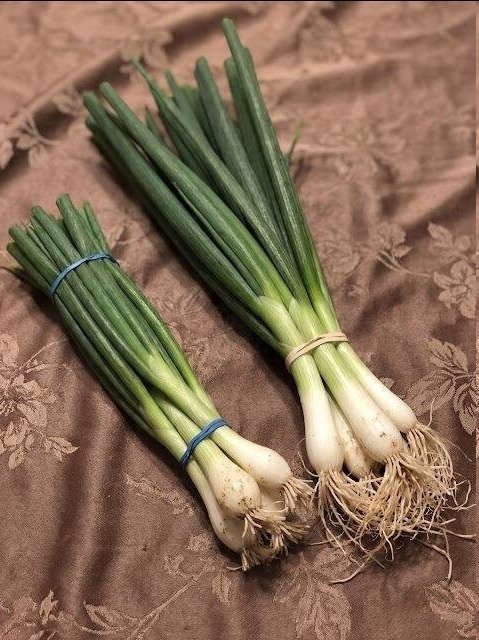
Green Onions vs Scallions: Are They the Same Thing or Totally Different? (And Why This Kitchen Confusion Happens So Often)
Confused about green onions and scallions? Learn whether they’re the same, how they differ, and why recipes use both terms interchangeably.
You get a simple grocery request: “Pick up green onions.”
You bring them home feeling confident—only to be told they’re not what was asked for. Suddenly, a basic errand turns into a kitchen disagreement over something that looks… exactly the same.
If this has happened to you, you’re not alone. This is one of the most common produce misunderstandings in cooking.
So what’s the truth? Are green onions and scallions actually different—or just different names for the same thing?
Let’s clear it up once and for all.
The Short Answer: They’re Basically the Same Thing
In most grocery stores and recipes, green onions and scallions are the same vegetable.
They come from the same plant species: Allium fistulosum, a type of young onion harvested before the bulb fully develops.
That means:
- Same plant
- Same flavor profile
- Same culinary use
So if you bought scallions when someone asked for green onions, you did nothing wrong in practical cooking terms.
Why the Confusion Exists
The problem isn’t the vegetable—it’s the naming.
Different regions and cooking traditions use different terms:
- United States (most regions): green onions or scallions
- UK and parts of Europe: spring onions
- Asia (in recipes): scallions is more common in English translations
So depending on where someone learned to cook, they may use one name exclusively—even though the produce is identical.
Green Onions vs Scallions vs Spring Onions
Here’s where it gets slightly more detailed.
All three terms are often used interchangeably, but technically:
- Scallions / Green onions: harvested very early, no bulb
- Spring onions: slightly more mature, may have a small bulb
The key difference is maturity—not species.
Visual Differences (What You Actually See in the Store)
Even though they’re similar, you might notice:
Scallions / Green Onions
- Thin, straight white base
- No bulb or barely visible bulb
- Mild flavor
Spring Onions
- Slightly thicker base
- Small round bulb forming
- Stronger onion taste
But in everyday grocery shopping, stores often label them inconsistently.
Why Your Mother-in-Law Might Have Reacted That Way
This isn’t really about vegetables—it’s about expectations.
In many households:
- Recipe names are learned one way
- Generational cooking habits vary
- Terms become “fixed” in memory
So if someone grew up hearing only “green onions,” they may assume anything labeled differently is incorrect—even if it’s the same ingredient.
The Real Culinary Truth
Professional chefs don’t stress over the naming.
In most kitchens:
- Scallions = green onions = spring onions (functionally interchangeable)
They are used for:
- Garnishing soups
- Stir-fries
- Salads
- Sauces
- Toppings
The flavor impact is the same: mild onion freshness.
Where It Actually Matters (Rare Cases)
There are a few situations where slight differences matter:
- If a recipe specifies spring onions for grilling, the thicker bulb holds up better
- If you need a very mild garnish, scallions are preferred
- If texture is important, maturity level can affect crunch
But for everyday cooking? The difference is minimal.
Simple Way to Never Get Confused Again
When a recipe or person says:
- “Green onions” → grab scallions
- “Scallions” → same thing
- “Spring onions” → slightly more mature version
If you want to be extra safe:
- Choose bunches labeled “green onions/scallions” with thin white stems
Real-World Example
A recipe calls for green onions in a salad.
You use scallions instead.
Result:
- Same crunch
- Same mild onion flavor
- Same visual garnish
No noticeable difference in the final dish.
Comparison Table: Green Onions vs Scallions
| Feature | Green Onions | Scallions | Spring Onions |
|---|---|---|---|
| Plant species | Same | Same | Same |
| Bulb size | Minimal | Minimal | Small visible bulb |
| Flavor intensity | Mild | Mild | Slightly stronger |
| Common usage | Global term | Culinary term | Regional term |
Pros and Cons of This Naming Confusion
Pros
- Flexible ingredient use
- Easier substitutions in cooking
- Global culinary overlap
Cons
- Miscommunication in households
- Recipe confusion for beginners
- Unnecessary grocery misunderstandings
Common Mistakes (And Fixes)
Mistake: Thinking they are completely different vegetables
Fix: Understand they’re variations of the same plant
Mistake: Overthinking recipe wording
Fix: Focus on appearance and freshness instead
Mistake: Rejecting substitutions in cooking
Fix: Learn interchangeable ingredient groups
Expert Insight
Food labeling varies widely across markets and countries, which is why even professional cooks rely more on visual identification than terminology.
Food education platforms like U.S. Food and Drug Administration emphasize consistent labeling standards, but everyday grocery naming still has regional variation.
Trend: Why Ingredient Naming Confusion Is Common
In 2026, global cooking trends mean:
- Recipes cross countries instantly online
- Ingredients are translated loosely
- Cooking shows use interchangeable terms
This increases confusion but also encourages flexibility in cooking.
Future Outlook
Expect:
- More standardized labeling in supermarkets
- Recipe platforms adding ingredient visuals
- AI-assisted grocery identification apps
But in home kitchens, interchangeable naming will likely always exist.
FAQ Section
1. Are green onions and scallions the same thing?
Yes, they are essentially the same plant.
2. What is the difference between scallions and spring onions?
Spring onions are slightly more mature with a small bulb.
3. Can I substitute scallions for green onions?
Yes, they are interchangeable in most recipes.
4. Why do recipes use different names?
Regional language differences and translation habits.
5. Do they taste different?
Only slightly—maturity affects intensity.
6. Which part of the green onion is edible?
Both the white base and green tops.
7. Are scallions cooked or raw?
Both—used in salads, soups, and cooked dishes.
8. Why do stores label them differently?
No strict global naming standard exists.
9. Are spring onions stronger in flavor?
Yes, slightly more pungent.
10. What should I buy if unsure?
Choose the bunch labeled green onions or scallions with thin stalks.
Action Checklist
Do:
- Treat green onions and scallions as the same in cooking
- Focus on freshness and appearance
- Use them interchangeably in recipes
Avoid:
- Overthinking naming differences
- Rejecting substitutions unnecessarily
- Assuming strict rules where none exist
Conclusion
What started as a simple grocery mix-up is actually a common language issue in cooking—not a mistake in ingredients.
Green onions and scallions are, for most practical purposes, the same thing. The confusion comes from regional naming, not culinary reality.
You didn’t buy the wrong thing—you bought the same ingredient with a different label.
If this cleared up the confusion, share it with someone who loves cooking debates—and explore more everyday food mysteries that turn out to be simpler than they seem.