How to Grow Sweet Potatoes Fast and Achieve Big Harvests With Compost Tea Top Dressing
Learn how to grow sweet potatoes faster and increase yields naturally using compost tea top dressing, soil prep, watering, and proven gardening tips.
How to Grow Sweet Potatoes Fast and Achieve Big Harvests With Compost Tea Top Dressing
Sweet potatoes are one of those crops that quietly reward gardeners who understand timing, soil biology, and patience.
At first, the vines can seem slow. Almost unimpressive.
Then suddenly, the plants explode with growth, spread aggressively across the garden bed, and by harvest season, you’re digging up arm-sized tubers wondering how they multiplied so fast underground.
But here’s what many gardeners discover too late:
Big sweet potato harvests rarely happen by accident.
The difference between thin, disappointing roots and large, healthy sweet potatoes usually comes down to a few key factors:
- soil quality
- nutrient balance
- watering consistency
- warmth
- microbial activity
And one of the most effective natural methods for improving all of those at once is compost tea top dressing.
When used correctly, compost tea helps feed soil microbes, improve nutrient availability, strengthen root development, and encourage vigorous vine growth without relying heavily on synthetic fertilizers.
The result?
Faster-growing plants, healthier root systems, and often significantly larger harvests.
In this guide, you’ll learn:
- how sweet potatoes actually grow
- why compost tea works so well
- the best soil conditions for rapid growth
- step-by-step planting methods
- how to top dress properly
- common mistakes that reduce harvest size
- expert tips for maximizing tuber production
- how to know exactly when to harvest
Whether you’re growing in raised beds, containers, or backyard rows, these methods can dramatically improve your results.
Why Sweet Potatoes Grow Slowly for Some Gardeners
A lot of people plant sweet potatoes expecting quick growth similar to regular potatoes.
That’s usually the first mistake.
Sweet potatoes are tropical plants.
They thrive in:
- warm soil
- loose earth
- long growing seasons
- biologically active soil
When conditions stay too cool or compacted, plants struggle to establish strong root systems early.
And weak early growth almost always means smaller harvests later.
The Hidden Secret to Bigger Sweet Potato Harvests
Most gardeners focus heavily on feeding the plant above ground.
Experienced growers focus underground first.
Sweet potatoes produce best in soil that is:
- loose
- oxygen-rich
- microbially active
- moderately fertile
- well-draining
That’s why compost tea can be so powerful.
It improves the soil ecosystem itself instead of just dumping nutrients into the ground.
Healthy soil biology creates healthier roots.
Healthier roots create larger tubers.
What Is Compost Tea?
Compost tea is a liquid made by steeping high-quality compost in water to extract beneficial:
- microbes
- nutrients
- fungi
- bacteria
- organic compounds
Think of it as a biological booster for your soil.
Instead of feeding only the plant directly, compost tea helps feed the living ecosystem around the roots.
That ecosystem:
- breaks down nutrients
- improves nutrient absorption
- supports root growth
- strengthens plant resilience
And sweet potatoes absolutely love biologically active soil.
Why Compost Tea Works So Well for Sweet Potatoes
Sweet potatoes are heavy root developers.
That means microbial activity near the root zone matters enormously.
Compost tea helps by:
Improving Soil Biology
Beneficial microbes help release nutrients plants can actually absorb.
Encouraging Faster Vine Growth
Healthy vines create more photosynthesis, which fuels tuber development.
Reducing Nutrient Stress
Balanced biological activity supports steadier growth.
Improving Moisture Retention
Organic matter and microbial health help soil hold moisture more effectively.
Supporting Larger Root Expansion
Loose, healthy soil allows tubers to grow without deformity.
Choosing the Right Sweet Potato Variety
Some varieties naturally produce faster or larger harvests.
Popular high-performing varieties in the United States include:
| Variety | Best For | Days to Harvest |
|---|---|---|
| Beauregard | Large yields | 90–100 days |
| Georgia Jet | Fast growth | 90 days |
| Covington | Excellent flavor | 95–110 days |
| Centennial | Consistent production | 100 days |
| Jewel | Disease resistance | 100 days |
If your growing season is shorter, fast-maturing varieties matter significantly.
Step 1: Prepare Loose, Warm Soil
This step determines almost everything later.
Sweet potatoes hate:
- heavy clay
- waterlogged soil
- compacted ground
Ideal Soil Conditions
- pH: 5.8–6.5
- Loose texture
- Rich in organic matter
- Excellent drainage
- Warm temperatures
Raised beds work exceptionally well because they warm faster in spring.
The Best Soil Mix for Big Tubers
A productive sweet potato bed often includes:
- compost
- aged leaf mold
- sandy loam
- coconut coir
- well-rotted organic matter
Avoid excessive nitrogen-heavy manure.
Too much nitrogen creates huge vines but smaller tubers.
Step 2: Start With Healthy Slips
Sweet potatoes are grown from slips, not seeds.
Slips are vine cuttings sprouted from mature sweet potatoes.
What Healthy Slips Look Like
- 6–10 inches long
- bright green leaves
- strong stems
- no yellowing
- no rot or mold
Weak slips usually stay weak throughout the season.
Step 3: Plant at the Right Temperature
This is where impatient gardeners lose weeks of growth.
Sweet potatoes need warm soil.
Ideal Conditions
- Soil temperature above 65°F
- Air temperature consistently warm
- No frost risk
Cold soil delays root development dramatically.
In many US regions, late spring planting works best.
Step 4: Space Plants Correctly
Overcrowding reduces tuber size.
Recommended Spacing
| Plant Part | Spacing |
|---|---|
| Between slips | 12–18 inches |
| Between rows | 3–4 feet |
Proper spacing improves:
- airflow
- root expansion
- nutrient access
- sunlight exposure
Step 5: Apply Compost Tea Top Dressing Properly
This is where growth acceleration really begins.
Instead of pouring heavy fertilizers directly around plants, compost tea gently feeds the soil ecosystem.
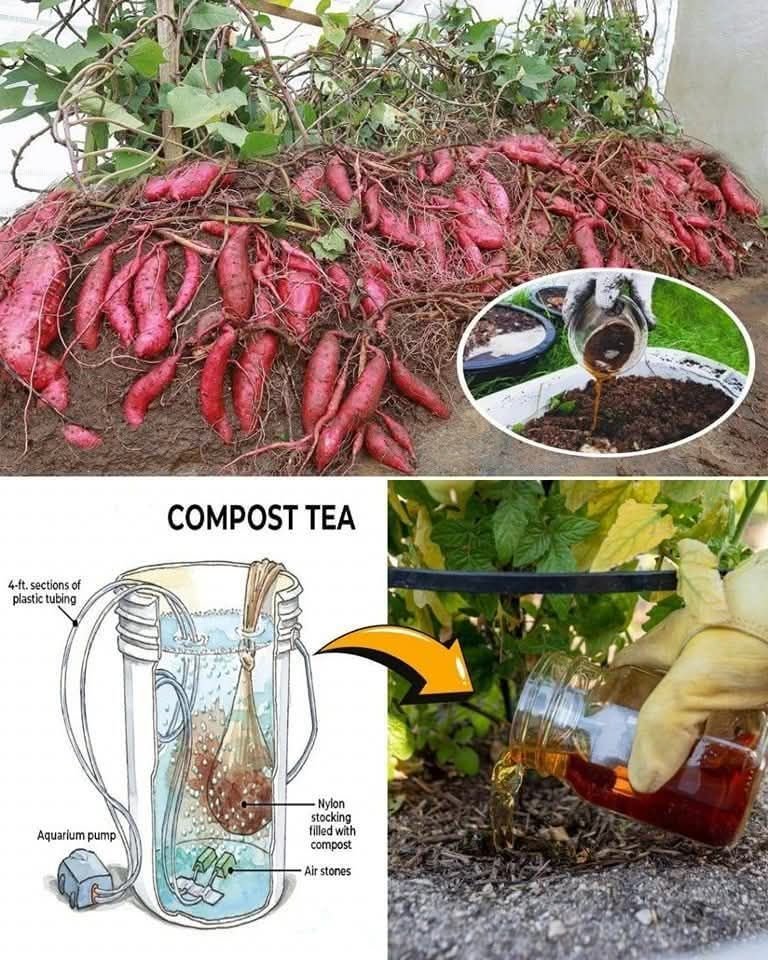
How to Make Basic Compost Tea
You’ll Need
- 5-gallon bucket
- non-chlorinated water
- finished compost
- mesh bag or cloth sack
- optional molasses
Basic Method
- Fill bucket with water
- Add compost inside mesh bag
- Let steep 24–36 hours
- Stir occasionally
- Use immediately
Some gardeners aerate the mixture using aquarium pumps for even stronger microbial activity.
How to Top Dress Sweet Potatoes With Compost Tea
Top dressing means applying nutrients around the base of the plant rather than directly onto leaves alone.
Best Timing
Apply compost tea:
- 2 weeks after planting
- every 2–3 weeks during active growth
- early morning or evening
Application Method
- Water soil lightly first
- Pour compost tea around root zone
- Avoid flooding
- Add light compost layer afterward if desired
The goal is steady biological stimulation, not overfeeding.
Why Overfeeding Can Hurt Sweet Potatoes
Many beginners accidentally reduce harvests with excessive fertilizer.
Too much nitrogen creates:
- massive leaves
- long vines
- weak tuber production
Sweet potatoes need balance.
Once vines establish, plants naturally shift energy underground.
That transition matters.
Watering Secrets for Faster Growth
Sweet potatoes like consistent moisture — not soggy soil.
Best Watering Strategy
- Deep watering
- Less frequent soaking
- Mulch for moisture retention
- Avoid constant shallow watering
Inconsistent watering can lead to:
- cracked tubers
- slow growth
- misshapen roots
Mulching Makes a Huge Difference
Mulch helps:
- regulate soil temperature
- reduce weeds
- maintain moisture
- feed soil gradually
Excellent mulch options include:
- straw
- shredded leaves
- untreated grass clippings
Warm, moist soil accelerates microbial activity dramatically.
Common Mistakes That Reduce Harvest Size
Planting Too Early
Cold soil slows growth for weeks.
Too Much Nitrogen
Huge vines don’t always mean huge potatoes.
Compact Soil
Tubers struggle to expand properly.
Overwatering
Waterlogged roots often rot.
Harvesting Too Soon
Sweet potatoes bulk up heavily during final weeks.
Patience matters.
Expert-Level Tip: Stop Heavy Feeding Late in the Season
Once tubers begin swelling significantly, excessive feeding can reduce storage quality.
Late-season growth should focus on:
- stable moisture
- healthy foliage
- continued photosynthesis
Not aggressive fertilization.
Signs Your Sweet Potatoes Are Growing Well
Healthy plants usually show:
- vigorous vine spread
- deep green leaves
- steady new growth
- thick stems
- minimal yellowing
Underground development often accelerates quietly after vines mature.
How to Know When Sweet Potatoes Are Ready to Harvest
Timing matters enormously.
Typical Signs
- Yellowing leaves
- Slower vine growth
- Mature size reached
- 90–120 days after planting
Before first frost is ideal.
Cold damage reduces storage quality quickly.
How to Harvest Without Damaging Tubers
Sweet potatoes bruise easily.
Best Harvest Method
- Loosen soil gently first
- Use garden forks carefully
- Pull vines slowly
- Dig wider than expected
Large tubers often spread farther underground than beginners realize.
The Critical Curing Step Most Beginners Skip
Freshly harvested sweet potatoes improve dramatically after curing.
Why Curing Matters
It:
- sweetens flavor
- heals skin damage
- improves storage life
Ideal Curing Conditions
- 80–85°F
- high humidity
- 7–14 days
After curing, store in cool dry conditions.
Never refrigerate raw sweet potatoes.
Raised Beds vs Containers vs Ground Growing
| Method | Advantages | Challenges |
|---|---|---|
| Raised Beds | Warm soil, excellent drainage | More watering needed |
| Containers | Space-saving | Smaller harvests possible |
| In-Ground | Large production potential | Soil quality matters more |
Raised beds are often ideal for beginners seeking large harvests quickly.
A Real-World Example From Home Gardeners
One gardener in North Carolina struggled for years with thin sweet potatoes despite healthy vines.
The issue?
Compacted clay soil and excessive nitrogen fertilizer.
After switching to:
- raised beds
- compost-heavy soil
- compost tea top dressing
- reduced nitrogen feeding
harvest sizes improved dramatically within one season.
The vines actually looked slightly smaller — but the tubers became much larger.
That surprises many gardeners.
The 2026 Trend: Regenerative Gardening Methods
More home gardeners are shifting toward:
- microbial soil health
- organic feeding systems
- compost teas
- reduced synthetic fertilizers
- biologically active growing methods
Why?
Because healthier soil often produces:
- stronger plants
- better flavor
- improved resilience
- more sustainable harvests
Sweet potatoes respond especially well to these methods.
Frequently Asked Questions
Does compost tea really increase sweet potato yields?
It can improve soil biology and nutrient availability, which often supports healthier growth and larger harvests.
How often should I apply compost tea?
Every 2–3 weeks during active growth is usually effective.
Can sweet potatoes grow in containers?
Yes, though larger containers generally produce better harvests.
Why are my sweet potato vines huge but tubers small?
Excess nitrogen is a common cause.
What soil is best for sweet potatoes?
Loose, well-draining, slightly sandy soil rich in organic matter works best.
Do sweet potatoes need full sun?
Yes. At least 6–8 hours of sunlight daily is ideal.
Can I use kitchen compost for compost tea?
Yes, if the compost is fully decomposed and healthy.
How long do sweet potatoes take to grow?
Most varieties mature in 90–120 days.
Should I prune sweet potato vines?
Usually unnecessary unless vines become excessively invasive.
Can compost tea replace fertilizer entirely?
In some rich soils, yes. In poorer soils, supplemental nutrients may still help.
Action Checklist for Bigger Sweet Potato Harvests
What To Do
✔ Plant in warm soil
✔ Use healthy slips
✔ Improve soil drainage
✔ Apply compost tea regularly
✔ Mulch consistently
✔ Water deeply but moderately
✔ Space plants properly
✔ Harvest before frost
✔ Cure tubers after harvest
What To Avoid
✘ Planting in cold soil
✘ Excess nitrogen fertilizer
✘ Overwatering
✘ Compact clay soil
✘ Crowded spacing
✘ Harvesting too early
✘ Ignoring curing process
Final Thoughts
Growing massive sweet potatoes isn’t about forcing plants with heavy fertilizer.
It’s about building the right environment.
Warm soil.
Healthy microbes.
Balanced feeding.
Consistent moisture.
Patience.
Compost tea top dressing works so well because it supports the entire soil ecosystem instead of overwhelming plants chemically.
And sweet potatoes thrive when soil life thrives.
Once you understand that relationship, harvests often improve dramatically.
Not overnight.
But season by season.
And honestly, there’s something deeply satisfying about digging up huge, healthy sweet potatoes from soil you built naturally yourself.
The fastest-growing and highest-yielding sweet potatoes usually come from biologically healthy soil, consistent care, and smart compost tea top dressing — not excessive fertilizer.