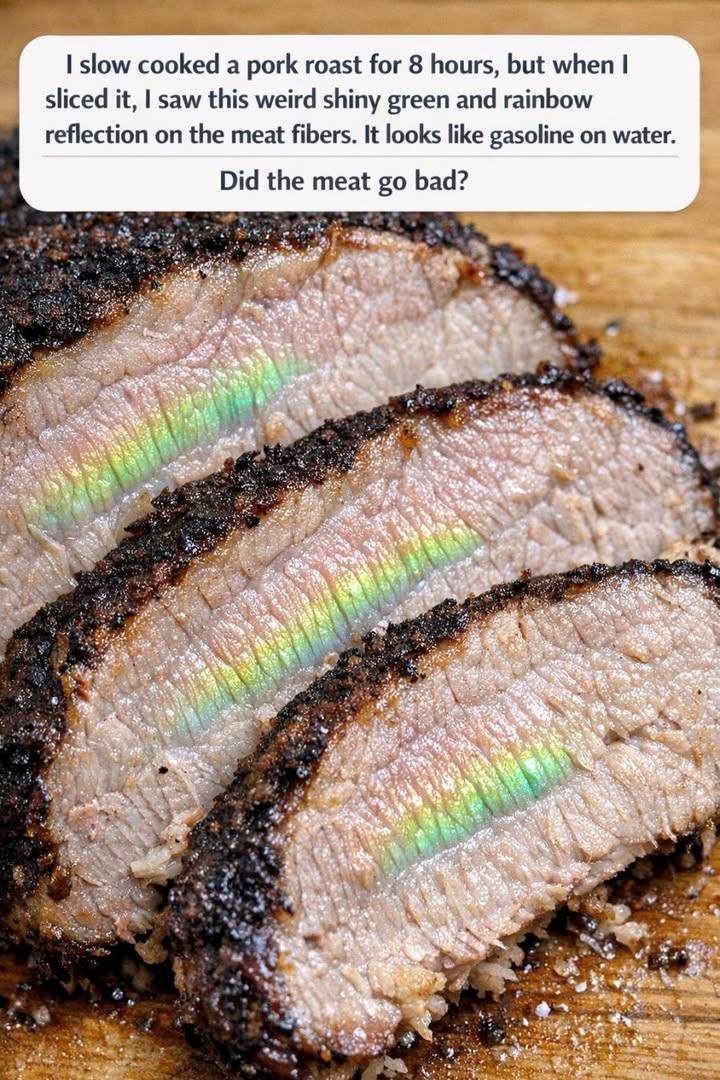
Why Your Slow-Cooked Pork Roast Looked Green & Rainbow-Shiny (And Whether It’s Safe to Eat)
Seeing a green or rainbow sheen on slow-cooked pork can be alarming, but it’s often a harmless light-refraction effect called iridescence—not spoilage.
You’ve done everything right.
You seasoned the pork roast, set your slow cooker, and let it do its slow, comforting magic for 8 long hours. The house probably smelled amazing—rich, savory, like Sunday dinner memories coming back to life.
Then you sliced into it.
And something strange stopped you.
A greenish, rainbow-like shimmer across the meat fibers. Almost like gasoline floating on water. Your stomach drops a little. “Did I just ruin dinner?”
Before you toss it out, take a breath—because what you’re seeing is often not spoilage at all.
🌈 What That Rainbow or Green Shine Actually Is
That unusual shimmer on cooked pork (and sometimes beef or chicken) is usually something called:
👉 Iridescence (or light refraction in muscle fibers)
It happens when:
- Meat is cooked and sliced against the grain
- Muscle fibers are compressed or tightly packed
- Light hits the surface and reflects in a rainbow pattern
It can look:
- Green
- Blue
- Purple
- Oil-slick rainbow sheen
💡 Important truth:
This effect is optical—not chemical spoilage.
🧠 Why It Happens After Slow Cooking
Slow cooking breaks down collagen and softens muscle fibers. But it can also:
- Compress proteins into smooth, reflective layers
- Change how light bounces off the surface
- Create a “sheen” when sliced cleanly
It’s more noticeable when:
- The meat is very lean
- It’s sliced thinly
- It’s cut against the grain
- It has been tightly packed during cooking
⚠️ When You SHOULD Be Concerned
While iridescence is usually harmless, spoiled meat looks and smells very different.
🚫 Signs the pork is actually bad:
- Strong sour or rotten smell
- Slimy or sticky texture
- Gray-green dull color (not shiny rainbow)
- Bubbling or gas release when cut
- Off taste (if you already tried it)
💡 Key difference:
- Iridescence = shiny rainbow reflection
- Spoilage = dull, foul, sticky, and smelly
🥩 Is It Safe to Eat?
In most cases: YES.
If:
- It smells normal
- It was cooked properly (safe internal temp ~63°C / 145°F minimum, but slow roasts are often higher)
- The texture feels normal
Then the rainbow sheen is just a visual effect.
It does NOT mean:
- Bacteria growth
- Chemical contamination
- Spoilage
🧂 Other Reasons You Might See It
Sometimes, the effect is enhanced by:
1. Protein structure changes
Heat alters how muscle fibers reflect light.
2. Slicing direction
Cutting against the grain exposes reflective layers.
3. Salt curing or seasoning
Certain salts and rubs can intensify sheen.
4. Fat separation
Thin fat layers can reflect light like oil on water.
👨🍳 Chef Insight (What Professionals Know)
Experienced chefs actually recognize this phenomenon and rarely worry about it.
In kitchens, it’s sometimes called:
- “Meat iridescence”
- “Rainbow sheen”
- “Optical shimmer”
It’s especially common in:
- Ham
- Roast pork
- Smoked meats
- Slow-cooked roasts
💡 In fact, deli meats and smoked meats often show this effect regularly.
🧪 Does It Affect Taste or Quality?
No.
The rainbow effect:
- Does NOT change flavor
- Does NOT change nutrition
- Does NOT mean overcooking
- Does NOT mean undercooking
It’s purely visual.
🧊 How to Reduce or Avoid It Next Time
If it bothers you visually, here’s how to minimize it:
✔ Slice differently
Always cut with the grain instead of against it
✔ Let meat rest properly
Resting 15–20 minutes reduces fiber compression
✔ Avoid overly tight wrapping during cooking
Let heat circulate evenly
✔ Use slightly thicker slices
Thin slices show reflection more clearly
🍽️ What You Should Do Now
If everything else checks out (smell, texture, taste), you can:
- Slice and serve normally
- Add gravy or sauce (hides visual sheen completely)
- Shred it for sandwiches or pulled pork
If you’re still unsure, reheat a small portion and check smell again—your senses are the best safety tool.
That strange green and rainbow shimmer on your pork roast looks unsettling, especially after hours of slow cooking.
But in most cases, it’s just light playing tricks on protein fibers—not a sign that your food has gone bad.
Food science can look weird sometimes… even a little sci-fi.
So before you throw it away, trust your nose, your texture check, and the facts—not just the shine.
And next time you see that “gasoline-on-water” look on meat, you’ll know exactly what it is: not spoilage… just science showing off.