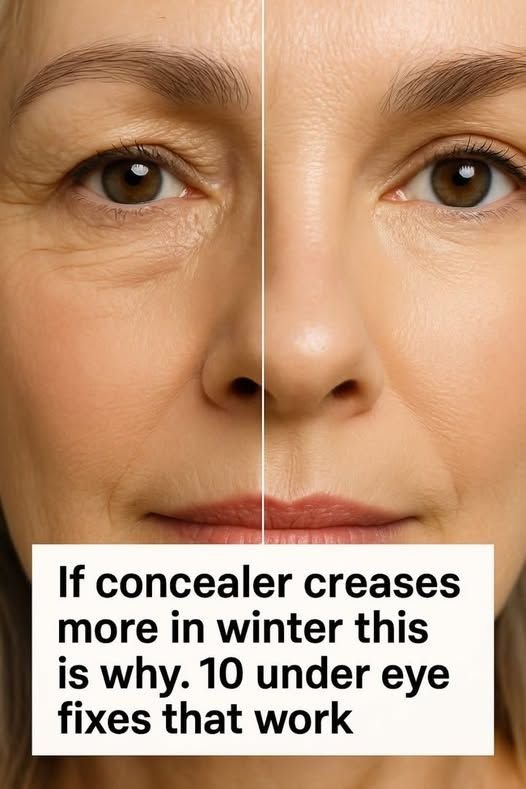
Concealer Creasing More in Winter? 10 Under-Eye Fixes That Actually Work
Concealer creasing more in winter? Discover the real reasons your under-eye makeup cracks, cakes, and settles — plus 10 fixes that truly work.
Concealer Creasing More in Winter? 10 Under-Eye Fixes That Actually Work
You apply concealer. It looks flawless for about 12 minutes.
Then suddenly:
- Fine lines appear out of nowhere
- Makeup starts separating
- The under-eye area looks dry, cracked, or oddly heavy
- Everything settles into creases you swear weren’t there before
And somehow, it gets worse in winter.
A lot worse.
If your concealer behaves beautifully during warmer months but turns patchy, cakey, or creased once temperatures drop, you’re not imagining it. Winter changes your skin in ways most makeup routines never fully account for.
The frustrating part? Most advice online oversimplifies the issue.
“Just moisturize more.”
That’s rarely enough.
Winter under-eye makeup problems usually come from a combination of dehydration, barrier disruption, product texture mismatch, indoor heating, and application habits that suddenly stop working once humidity disappears.
The good news is that you usually don’t need entirely new makeup. You need a smarter system.
This guide breaks down exactly why concealer creases more in winter — and the 10 under-eye fixes makeup artists, dermatologists, and experienced beauty lovers actually rely on.
Why Concealer Creases More in Winter
Your under-eye area is already one of the thinnest sections of skin on your body.
Winter makes it even more vulnerable.
Cold air outside plus dry indoor heat inside creates a perfect storm:
- Less moisture retention
- Weakened skin barrier
- Increased flaking
- More visible fine lines
- Faster makeup separation
Here’s what many people miss: creasing isn’t always caused by “too much product.”
Sometimes it’s caused by skin pulling moisture out of the concealer itself.
That changes everything.
Instead of melting smoothly into skin, makeup starts clinging unevenly to dryness and expression lines.
The result?
That tired, cracked under-eye look that somehow appears by lunchtime.
The Hidden Winter Makeup Problem Most People Ignore
Humidity matters more than people realize.
In summer, environmental moisture helps keep skin more flexible. In winter, dry air accelerates transepidermal water loss — meaning your skin loses hydration faster.
According to the American Academy of Dermatology, cold weather and indoor heating can significantly dry out skin and compromise the skin barrier.
That affects:
- Texture
- Elasticity
- Product absorption
- Makeup wear time
Your usual concealer routine may not actually be “bad.”
It may simply no longer match your skin environment.
10 Under-Eye Fixes That Actually Work
1. Stop Applying Concealer Immediately After Skincare
This one changes everything for a surprising number of people.
If your eye cream is still wet or slippery when concealer goes on, products mix together and destabilize.
That often leads to:
- Separation
- Sliding
- Creasing
- Patchiness
What to do instead:
Apply skincare first, then wait 3–5 minutes before makeup.
Your skin should feel hydrated — not greasy.
This tiny pause gives products time to settle properly.
2. Use Less Eye Cream Than You Think
Winter dryness makes people panic-moisturize.
Understandable. But overloaded under-eyes often crease more.
Too much rich cream underneath concealer can:
- Break down pigment
- Cause migration
- Create slipping
- Emphasize lines
The trick is balance.
Use:
- A pea-sized amount
- Lightweight hydration first
- Richer cream at night instead of before makeup
Think “cushioned,” not shiny.
3. Switch to a More Flexible Concealer Formula
Some concealers are beautiful in humid weather and terrible in winter.
Matte, ultra-full-coverage formulas often become rigid in dry air.
That rigidity exaggerates movement lines.
Look for formulas described as:
- Hydrating
- Serum-like
- Flexible
- Skin finish
- Satin finish
A softer finish usually moves better with winter skin.
4. Prep the Under-Eye Area With Dampened Warmth
Professional makeup artists use this trick constantly.
Before makeup:
- Soak a clean washcloth in warm water
- Press gently under eyes for 20–30 seconds
- Pat dry
- Apply skincare lightly
This softens surface dryness and helps makeup sit more evenly.
Especially helpful if your concealer looks textured before you even leave the house.
5. Powder Less — and More Strategically
One of the biggest winter makeup mistakes?
Over-powdering.
People see creasing and think:
“I need more powder.”
Usually the opposite is true.
Too much powder:
- Dries the under-eye further
- Makes lines sharper
- Creates stiffness
- Causes cracking later
Better approach:
Use a tiny amount only where movement is strongest.
Often that means:
- Inner corner
- Directly beneath lower lash line
Not the entire under-eye triangle.
6. Your Sponge Might Be the Problem
Dry sponges absorb moisture from both skin and makeup.
That’s bad news in winter.
A properly damp sponge helps:
- Press product into skin
- Prevent excess buildup
- Maintain hydration balance
- Create thinner layers
Key detail:
The sponge should feel slightly damp — never soaking wet.
7. Layer Thinly Instead of Correcting Heavily
Heavy correction often backfires in dry weather.
Instead of:
- Thick concealer
- Heavy color corrector
- Extra powder
Try:
- Very thin layers
- Spot application only
- Building gradually
The less product moving around under the eye, the less opportunity for creasing.
The “Triangle Concealer” Trend Is Aging Many Faces
For years, people applied massive bright triangles under the eyes.
It photographs dramatically.
Real life? Different story.
Large amounts of concealer settle into:
- Smile lines
- Fine dehydration lines
- Texture changes
Especially in winter.
Modern makeup artists increasingly prefer targeted placement:
- Inner darkness only
- Slight outer lift
- Minimal blending
It looks fresher and moves more naturally.
8. Fix Dehydration Before Makeup — Not During
If your under-eyes feel dry throughout the day, makeup won’t fully solve the issue.
You need to support hydration systemically too.
That includes:
- Water intake
- Sleep quality
- Humidifier use
- Reduced alcohol intake
- Omega-3 intake
- Barrier-supportive skincare
The Mayo Clinic notes that dry indoor environments and seasonal changes can worsen skin dehydration significantly.
Sometimes the makeup problem is actually a skin barrier problem.
9. Stop Baking the Under-Eyes in Winter
Heavy baking became massively popular online.
In real life — especially after age 30 — it often creates:
- Dryness
- Creasing
- Texture emphasis
- Tightness
Winter air intensifies all of it.
Soft setting techniques usually perform better:
- Pressed powder
- Tiny fluffy brush
- Minimal application
- Fine mist setting spray afterward
Your under-eyes should still look like skin.
10. Midday Rehydration Beats Midday Reapplication
Most people try to fix creasing by adding more concealer.
That usually makes everything heavier.
Instead:
- Tap creases gently with clean fingertip
- Use tiny amount of hydrating mist
- Re-smooth product lightly
- Add minimal concealer only if necessary
Think refresh — not repaint.
Huge difference.
What Actually Causes Under-Eye Creasing?
Let’s clear something up:
Almost everyone creases a little.
The under-eye area moves constantly.
Natural creasing is normal.
The issue becomes noticeable when:
- Product is too thick
- Skin is too dry
- Formulas are incompatible
- Powder is excessive
- Layers become heavy
A perfectly crease-free under-eye all day long usually exists more in edited social media content than real life.
Healthy-looking skin should be the goal — not frozen makeup.
The Biggest Winter Concealer Mistakes
Using Summer Products Year-Round
Your skin changes seasonally.
Your makeup routine should too.
Skipping Exfoliation Completely
Dry flakes create texture underneath concealer.
Gentle exfoliation helps smooth application.
The key word is gentle.
Over-exfoliation damages the barrier further.
Applying Thick Layers to “Cover Dryness”
This almost always emphasizes texture.
Thin layers perform better.
Using Too Much Brightening Product
Overly light concealer shades can make dry texture look chalky.
Winter skin often looks more natural with slightly less contrast.
Ignoring Indoor Heating Effects
Central heating dries skin aggressively.
Humidifiers help more than many expensive makeup products.
A Simple Winter Under-Eye Routine That Works
Morning
- Gentle cleanse
- Lightweight hydrating serum
- Small amount of eye cream
- Wait several minutes
- Thin concealer application
- Minimal powder placement
- Hydrating setting spray
Midday
- Light tapping to smooth creases
- Optional mist refresh
Night
- Thorough makeup removal
- Barrier-supporting moisturizer
- Richer overnight hydration
Consistency matters more than constantly changing products.
Ingredients That Help Winter Under-Eyes
Look for:
- Hyaluronic acid
- Ceramides
- Glycerin
- Squalane
- Peptides
- Panthenol
These support hydration and barrier repair.
The Cleveland Clinic frequently highlights ceramides and barrier-supportive ingredients for dry winter skin management.
Ingredients That Can Make Creasing Worse
Sometimes the issue isn’t the concealer itself.
Watch for excessive:
- Alcohol-heavy formulas
- Fragrance
- Overly matte ingredients
- Harsh exfoliants
- Drying acne treatments migrating upward
Retinoids around the eyes can also temporarily increase dryness if overused.
Real-World Scenario: Why One Tiny Change Fixed Everything
Ashley, a 36-year-old marketing consultant in Boston, thought she suddenly needed “better concealer.”
Every winter, her makeup cracked by noon.
She bought:
- More expensive formulas
- Brighter shades
- Extra setting powders
Nothing worked.
The actual issue?
She applied concealer immediately after a thick eye cream.
Once she waited five minutes and used less powder, the creasing improved dramatically.
Sometimes it’s not the product.
It’s the interaction between products.
Are Expensive Concealers Actually Better?
Not always.
Luxury concealers often contain:
- Better emollients
- More refined textures
- Flexible pigments
But application technique matters more than price surprisingly often.
Some affordable formulas outperform luxury products simply because they suit dry winter skin better.
Compatibility beats hype.
2026 Makeup Trends: Why Under-Eyes Look More Natural Now
Beauty trends are shifting away from:
- Heavy matte coverage
- Ultra-bright under-eyes
- Thick baking
Toward:
- Skin-like texture
- Softer finishes
- Flexible coverage
- Strategic correction
People increasingly want makeup that looks believable in real daylight — not just under studio lighting.
That shift actually benefits winter skin tremendously.
Pros and Cons of Popular Under-Eye Techniques
| Technique | Pros | Cons |
|---|---|---|
| Heavy baking | Long wear | Emphasizes dryness |
| Hydrating concealer | Flexible finish | May need light setting |
| Powder-free under-eyes | Natural look | Can crease faster |
| Damp sponge application | Thin smooth layers | Requires practice |
| Full triangle concealer | Brightening effect | More product movement |
| Minimal spot concealing | Fresh natural finish | Less dramatic coverage |
Expert-Level Tips Makeup Artists Quietly Use
They Prep Skin Longer Than You Think
Professional artists often spend more time prepping skin than applying makeup.
Hydrated skin changes everything.
They Rarely Use Full Coverage Everywhere
Strategic correction photographs and wears better than thick blanket coverage.
They Let Products Set Between Layers
Rushing application increases separation later.
They Expect Some Movement
Perfectly frozen under-eyes rarely look natural in person.
Good makeup moves slightly while still looking fresh.
Frequently Asked Questions
Why does my concealer suddenly look dry in winter?
Cold weather and indoor heating reduce skin moisture, making makeup cling to dehydration and fine lines more visibly.
Should concealer go before or after foundation?
Usually after foundation. That prevents using unnecessary extra product under the eyes.
Why does powder make my under-eyes worse?
Too much powder removes flexibility and exaggerates dryness, especially during winter.
Is creasing completely avoidable?
Not entirely. Some movement is natural because the under-eye area constantly shifts with facial expressions.
What type of concealer works best for mature under-eyes?
Flexible, hydrating, medium-coverage formulas with satin finishes usually perform best.
Does setting spray help under-eye makeup?
Yes — especially hydrating formulas that reduce powdery texture and improve skin-like finish.
Why does concealer separate after a few hours?
Often because skincare underneath is too heavy, incompatible, or not fully absorbed before makeup application.
Are matte concealers bad for winter?
Not always, but many matte formulas become too dry or rigid in low-humidity environments.
Can dehydration make wrinkles look worse temporarily?
Absolutely. Dehydrated skin often makes fine lines appear sharper and deeper.
Should I exfoliate under my eyes?
Very gently and cautiously. Over-exfoliation can worsen irritation and dryness dramatically.
Winter Under-Eye Survival Checklist
What To Do
✔ Wait before applying concealer after skincare
✔ Use thinner makeup layers
✔ Hydrate skin consistently
✔ Use less powder
✔ Try flexible concealer formulas
✔ Blend with a damp sponge
✔ Use a humidifier indoors
✔ Prep skin gently with warmth
✔ Prioritize sleep and hydration
✔ Refresh makeup instead of piling more on
What To Avoid
✘ Heavy baking daily
✘ Thick concealer triangles
✘ Over-powdering
✘ Applying makeup onto wet skincare
✘ Ignoring skin barrier damage
✘ Using summer routines unchanged in winter
✘ Over-exfoliating delicate under-eyes
✘ Chasing completely texture-free skin
Final Thoughts
Winter changes your skin more than most makeup routines are designed to handle.
That’s why the concealer technique that worked perfectly in July suddenly looks dry, cracked, or creased by January.
Usually, the fix isn’t buying 14 new products.
It’s understanding:
- Hydration balance
- Product layering
- Texture compatibility
- Seasonal skin behavior
Small adjustments create the biggest improvements.
Less powder. Better prep. Thinner layers. More flexibility.
And maybe most importantly?
Letting your under-eyes still look like real skin.
Because natural movement will always look fresher than heavy makeup fighting against it all day.
Winter concealer creasing is usually a skin hydration and product layering issue — not a makeup failure. Smarter prep beats heavier coverage every time.
If you found a winter under-eye trick that genuinely works, share it in the comments. Someone else is probably fighting the exact same concealer battle right now.