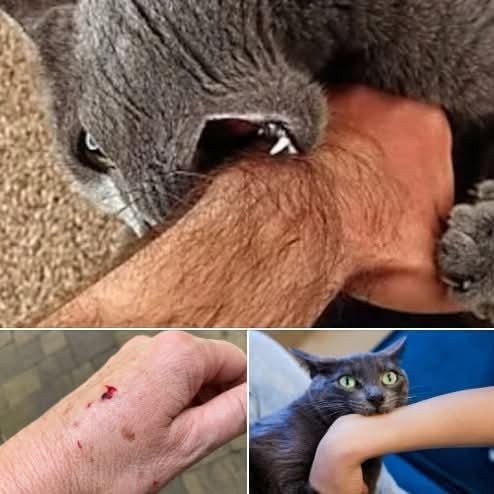
If Your Cat Bites You, Here’s What It Really Means (And What You Should Never Ignore)
Cat bites aren’t always aggression. Learn what your cat is really trying to communicate, when to worry, and how to stop biting behavior safely.
Few things confuse cat owners faster than this:
Your cat is purring, rubbing against you, maybe even cuddling… and then suddenly — bite.
Not a full attack. Not always hard. But enough to make you pull your hand back and wonder what just happened.
Was the cat angry? Playing? Warning you? Trying to dominate you?
Here’s the truth most people miss: cats rarely bite “for no reason.” Even the seemingly random ones usually carry a message. The problem is that humans often misunderstand feline communication because cats don’t express discomfort, overstimulation, fear, or affection the way dogs — or people — do.
And when those signals get ignored, biting becomes the fastest way for a cat to make a point.
Some bites are harmless behavioral quirks. Others are signs of stress, pain, territorial insecurity, or medical issues that shouldn’t be brushed off. A few can even become dangerous if the wound isn’t treated correctly.
This guide breaks down what cat bites actually mean, why they happen, what your cat may be trying to tell you, and exactly how to respond without damaging trust.
Because once you understand the pattern behind the bite, your entire relationship with your cat changes.
Why Cats Bite in the First Place
Cats aren’t miniature dogs. That sounds obvious, but it explains a lot.
Dogs evolved socially. Cats evolved as both predators and prey. Their nervous systems are built around caution, boundaries, and rapid reactions. A cat usually bites for one of three reasons:
- Communication
- Self-protection
- Instinctive behavior
The bite itself is often the last step in a chain of signals.
Before biting, many cats will:
- Flick their tail
- Flatten their ears
- Turn their head away
- Tense their body
- Dilate their pupils
- Stop purring suddenly
- Swish their tail sharply
Most people miss those cues completely.
Then comes the bite.
And from the cat’s perspective, the bite worked because the unwanted interaction stopped immediately.
That’s why misunderstanding early warning signs accidentally reinforces biting behavior over time.
The Different Types of Cat Bites — And What They Usually Mean
Not all bites mean the same thing. The context changes everything.
The “Love Bite”
This one confuses almost everyone.
You’re petting your cat. They seem relaxed. Then they gently bite your hand.
These are often called “love bites,” though the term oversimplifies what’s happening.
Usually, this bite means:
- Your cat is overstimulated
- They’re transitioning from affection to irritation
- They’re communicating “that’s enough”
- Their hunting instincts were lightly triggered
Cats can become overwhelmed by repetitive petting surprisingly fast, especially around sensitive areas like:
- Lower back
- Belly
- Tail base
Some cats tolerate only 20–30 seconds before their nervous system flips from pleasure to irritation.
One moment feels good. The next feels unbearable.
That quick switch is normal feline behavior.
The Play Bite
Kittens learn hunting through mock attacks.
If a cat grabs your hand with their paws and bites lightly while kicking with their back legs, that’s usually play behavior rooted in predatory instinct.
This often happens when:
- Cats were separated from littermates too early
- Owners used hands as toys
- Indoor cats lack stimulation
- The cat has excess energy
The issue isn’t “aggression.” It’s misplaced hunting behavior.
Unfortunately, what feels playful at 8 weeks old becomes painful at 2 years old.
The Fear Bite
Fear bites are fast, intense, and defensive.
A scared cat may:
- Hide first
- Freeze
- Growl or hiss
- Bite suddenly if cornered
This commonly happens during:
- Vet visits
- Nail trimming
- Forced handling
- Loud houseguests
- Sudden environmental changes
Fear-based bites are survival reactions, not personality flaws.
Punishing the cat afterward usually increases anxiety and makes future biting more likely.
The Redirected Aggression Bite
This type catches owners completely off guard.
Imagine your indoor cat sees another cat outside the window. Their adrenaline spikes. They become highly aroused emotionally.
Then you walk by and touch them.
They spin around and bite you.
You were not the actual target.
This is called redirected aggression, and it’s one of the most misunderstood forms of feline biting.
Triggers can include:
- Outdoor animals
- Strange smells
- Territorial stress
- Loud noises
- Conflict with another pet
Cats in this state are neurologically overloaded. Their brain is operating in survival mode.
The Pain-Induced Bite
Sometimes the sweetest cats start biting because they hurt.
This is especially common in older cats.
Pain-related biting may stem from:
- Arthritis
- Dental disease
- Injuries
- Skin conditions
- Neurological issues
- Internal illness
A cat that suddenly dislikes being touched should never automatically be labeled “mean.”
Behavior changes are often medical before they’re behavioral.
According to the American Veterinary Medical Association, subtle aggression shifts can be linked to underlying pain conditions that owners don’t notice immediately.
The Most Dangerous Myth About Cat Bites
Many people think:
“It’s just a small bite.”
That assumption sends thousands of Americans to urgent care every year.
Cat bites are medically riskier than many dog bites because cats have narrow, needle-like teeth that puncture deeply into tissue. The surface wound may look tiny while bacteria gets trapped underneath the skin.
This creates an ideal environment for infection.
One of the biggest concerns is Pasteurella multocida, a bacterium commonly found in cats’ mouths.
Infections can develop quickly — sometimes within 24 hours.
Watch for:
- Redness
- Swelling
- Heat
- Pus
- Fever
- Increasing pain
- Red streaks on the skin
People with diabetes, weakened immune systems, or circulation issues should be especially cautious.
If a bite punctures deeply or shows infection signs, medical care matters more than “waiting it out.”
What Your Cat Is Actually Trying to Tell You
Here’s where things get interesting.
Most cat bites are less about aggression and more about boundaries.
Cats communicate through consequences.
If subtle signals fail, they escalate.
In many homes, cats accidentally learn:
- Meowing doesn’t work
- Walking away doesn’t work
- Tail flicking doesn’t work
- Biting works instantly
That realization changes how you interpret behavior.
Your cat may be saying:
- “I’m overstimulated.”
- “I’m anxious.”
- “I need space.”
- “You missed my warning.”
- “I’m in pain.”
- “I want to play.”
- “I don’t feel safe.”
Understanding which message applies requires observing patterns, not isolated incidents.
Why Some Cats Bite Certain People More Than Others
This pattern is surprisingly common.
A cat may adore one person and constantly bite another.
Why?
Usually because of differences in:
- Body language
- Touch sensitivity
- Energy level
- Handling style
- Predictability
Cats tend to trust calm, readable behavior.
People who:
- Stare directly
- Move suddenly
- Over-pet
- Ignore warning signals
- Pick cats up frequently
…often trigger defensive responses unintentionally.
Children are especially vulnerable because they move unpredictably and may not recognize stress signals.
That doesn’t mean the cat is “bad with kids.” It means the interaction style overwhelms the cat.
The Petting Aggression Trap Most Owners Don’t Notice
This deserves its own section because it causes so many bites.
Petting aggression happens when physical contact becomes overstimulating.
The tricky part?
The cat may initially seek attention.
That confuses people.
But feline nervous systems can become overloaded quickly. Repetitive touch builds stimulation like filling a cup drop by drop.
Eventually it spills over.
Common warning signs before a bite:
- Tail twitching
- Skin rippling on the back
- Sudden head turns
- Ears rotating sideways
- Tensing
- Dilated pupils
The fix is surprisingly simple:
- End petting before irritation starts
- Keep sessions shorter
- Focus on safer zones like cheeks and chin
- Let the cat re-initiate contact
Many owners accidentally push interactions too long because they assume purring always means enjoyment.
Not necessarily.
Cats sometimes purr when stressed, nervous, or trying to self-soothe.
How to Stop a Cat From Biting Without Damaging Trust
This is where many people make the situation worse.
Yelling, hitting, spraying water, or scruffing often increases fear and unpredictability.
A frightened cat doesn’t become calmer through intimidation.
Instead, use a behavior-based approach.
Step 1: Identify the Trigger
Track:
- Time
- Environment
- Body language
- Type of interaction
- Intensity of bite
Patterns usually emerge fast.
Step 2: Stop Using Your Hands as Toys
This sounds basic, but it matters enormously.
Hands should never mimic prey.
Use:
- Wand toys
- Kickers
- Interactive toys
- Puzzle feeders
This redirects predatory behavior appropriately.
Step 3: Learn the “Threshold”
Every cat has a tolerance limit.
The goal is to stop interaction before the bite.
Think of it like noticing a storm before lightning strikes.
Step 4: Reward Calm Behavior
Positive reinforcement works far better than punishment.
Reward:
- Gentle play
- Relaxed body posture
- Calm interactions
- Appropriate toy use
Cats repeat behaviors associated with safety and rewards.
Step 5: Increase Environmental Enrichment
Bored cats create stimulation.
Indoor cats especially need:
- Vertical climbing spaces
- Window perches
- Hunting-style play
- Rotating toys
- Predictable routines
An under-stimulated cat often becomes a reactive cat.
A Real-Life Scenario That Explains Cat Biting Perfectly
Sarah adopted a two-year-old tabby named Milo from a shelter in Ohio.
Milo seemed affectionate at first but bit her almost daily during petting.
She assumed he was aggressive.
Then she started filming interactions on her phone.
What she noticed changed everything:
- Milo’s tail twitched about 10 seconds before every bite
- His ears shifted sideways first
- The bites only happened during long petting sessions
- He never bit during play or feeding
The issue wasn’t aggression.
It was overstimulation.
Sarah shortened interactions, let Milo initiate affection, and stopped petting near his lower back.
Within three weeks, the biting nearly disappeared.
The cat hadn’t changed personality.
The communication changed.
When Cat Biting Becomes a Serious Behavioral Problem
Some cases go beyond normal feline communication.
Professional help may be needed if:
- Bites break skin frequently
- Attacks appear unprovoked
- The cat stalks people aggressively
- There’s escalating violence
- Multiple pets are involved
- The cat cannot calm down after triggers
In these cases, a veterinarian should rule out:
- Pain
- Hormonal issues
- Neurological disorders
- Anxiety conditions
Then, if needed, a certified feline behaviorist can help create a modification plan.
Ignoring severe aggression rarely improves outcomes.
Indoor Cats vs Outdoor Cats: Does It Change Biting Behavior?
Yes — dramatically.
Indoor cats often display more:
- Play aggression
- Frustration
- Redirected aggression
- Energy-related biting
Outdoor-access cats may show more:
- Territorial aggression
- Defensive reactions
- Stress from environmental threats
The modern trend in the U.S. toward fully indoor cats has increased awareness around enrichment needs.
A bored predator in a small environment will invent stimulation somehow.
Sometimes that “somehow” becomes your ankle.
Common Mistakes Cat Owners Make After a Bite
Mistake #1: Punishing the Cat
This usually creates fear, not learning.
Mistake #2: Ignoring Medical Issues
Sudden aggression changes always deserve attention.
Mistake #3: Forcing Affection
Cats value choice and control more than constant handling.
Mistake #4: Misreading Purring
Purring is not always happiness.
Mistake #5: Using Hands During Play
This trains attacking behavior directly.
Mistake #6: Expecting Dog-Like Communication
Cats communicate subtly and indirectly.
Missing those signals creates conflict.
The Hidden Emotional Side of Cat Biting
A lot of owners quietly feel hurt after being bitten.
Especially when they deeply love the cat.
Some even start avoiding interaction entirely.
But understanding feline behavior changes the emotional dynamic.
Most biting is not personal betrayal.
It’s communication through instinct.
Cats don’t think:
“I want to upset my owner.”
They think:
“I need this interaction to stop.”
or
“I’m overwhelmed.”
or
“I’m trying to play.”
That distinction matters emotionally.
Once owners stop interpreting bites as spite, solutions become much easier.
Cat Bite Severity Comparison Table
| Type of Bite | Common Cause | Warning Signs | Risk Level | Best Response |
|---|---|---|---|---|
| Love Bite | Overstimulation | Tail twitching, tension | Low | Stop petting calmly |
| Play Bite | Hunting instinct | Pouncing, grabbing | Moderate | Redirect to toys |
| Fear Bite | Feeling trapped | Hissing, flattened ears | High | Give space immediately |
| Redirected Bite | External trigger | Hyper-focus, agitation | High | Avoid contact temporarily |
| Pain Bite | Medical discomfort | Sudden sensitivity | Moderate–High | Veterinary evaluation |
| Territorial Bite | Defending space | Staring, blocking | Moderate | Reduce stress triggers |
What Experts Understand About Cats That Most Owners Don’t
Cats are consent-driven animals.
That sounds unusual, but it explains their behavior better than dominance theories ever did.
Most cats thrive when they can:
- Predict outcomes
- Control interactions
- Retreat safely
- Choose engagement
Owners who respect those dynamics usually experience fewer behavioral problems overall.
This is one reason modern feline behavioral science has shifted away from punishment-based methods.
Fear suppresses behavior temporarily.
Trust changes behavior long term.
2026 Trends in Feline Behavior and Cat Ownership
Cat ownership in the U.S. has evolved significantly over the past few years.
Veterinarians and behaviorists are seeing increased awareness around:
- Cat anxiety
- Environmental enrichment
- Stress-related aggression
- Fear-free veterinary care
- Interactive indoor lifestyles
There’s also growing recognition that behavioral issues often connect to unmet mental stimulation rather than “bad personality.”
New products gaining popularity include:
- Motion-activated toys
- Cat exercise wheels
- Smart feeders
- Scent enrichment tools
- Calming pheromone systems
The future of feline care is becoming more behavior-focused, not just medically focused.
That shift is improving relationships between cats and owners dramatically.
Frequently Asked Questions
Why does my cat bite me gently out of nowhere?
It usually isn’t random. Gentle bites often signal overstimulation, play behavior, or a request to stop interaction.
Are cat bites dangerous?
They can be. Even small puncture wounds may become infected quickly because bacteria gets trapped beneath the skin.
Why does my cat bite me while purring?
Purring doesn’t always mean contentment. Some cats purr while overstimulated, anxious, or conflicted emotionally.
Should I punish my cat for biting?
No. Punishment often increases fear and stress, which can worsen biting behavior over time.
Why does my cat only bite one person?
Cats respond differently to handling styles, body language, scent, and predictability. One person may unintentionally cross the cat’s comfort threshold more often.
Can a cat bite mean affection?
Sometimes. Gentle nibbles may be social or playful, but they still usually communicate stimulation limits or excitement.
When should I see a doctor after a cat bite?
Seek medical care if:
- The bite punctured deeply
- Redness spreads
- Swelling develops
- You have fever or worsening pain
- You have diabetes or weakened immunity
Why does my indoor cat attack my ankles?
This is often predatory play behavior combined with boredom or excess energy.
Can older cats start biting because of pain?
Absolutely. Arthritis, dental pain, and illness commonly cause sudden behavior changes in senior cats.
Do kittens grow out of biting naturally?
Not always. Without proper redirection and training, playful biting can continue into adulthood.
Quick Action Checklist
What To Do
✔ Learn your cat’s warning signs
✔ End petting sessions early
✔ Use toys instead of hands
✔ Provide daily interactive play
✔ Watch for sudden behavior changes
✔ Reward calm behavior
✔ Give cats safe escape spaces
✔ Seek veterinary help for unusual aggression
What To Avoid
✘ Punishing or yelling
✘ Forcing physical affection
✘ Ignoring bite wounds
✘ Assuming all purring means happiness
✘ Rough play with hands
✘ Cornering a fearful cat
✘ Dismissing sudden aggression as “bad behavior”
A cat bite is rarely “just a bite.”
It’s often a message — about stress, boundaries, pain, fear, excitement, or overstimulation.
The owners who build the strongest relationships with cats aren’t the ones who dominate them. They’re the ones who learn to read them.
Once you understand the signals behind feline behavior, biting stops feeling random. You begin noticing the tiny moments that happen before it — the tail twitch, the pause, the tension, the subtle shift in posture.
And that awareness changes everything.
If your cat bites frequently, don’t panic. Observe patterns. Adjust interactions. Rule out medical issues. Build trust slowly.
Cats communicate quietly until they feel they have no other option.
The goal is to hear them before the bite happens.
👉 Have a cat with confusing biting behavior? Share your experience in the comments or send this article to another cat owner who’s trying to figure out what their feline is really saying.