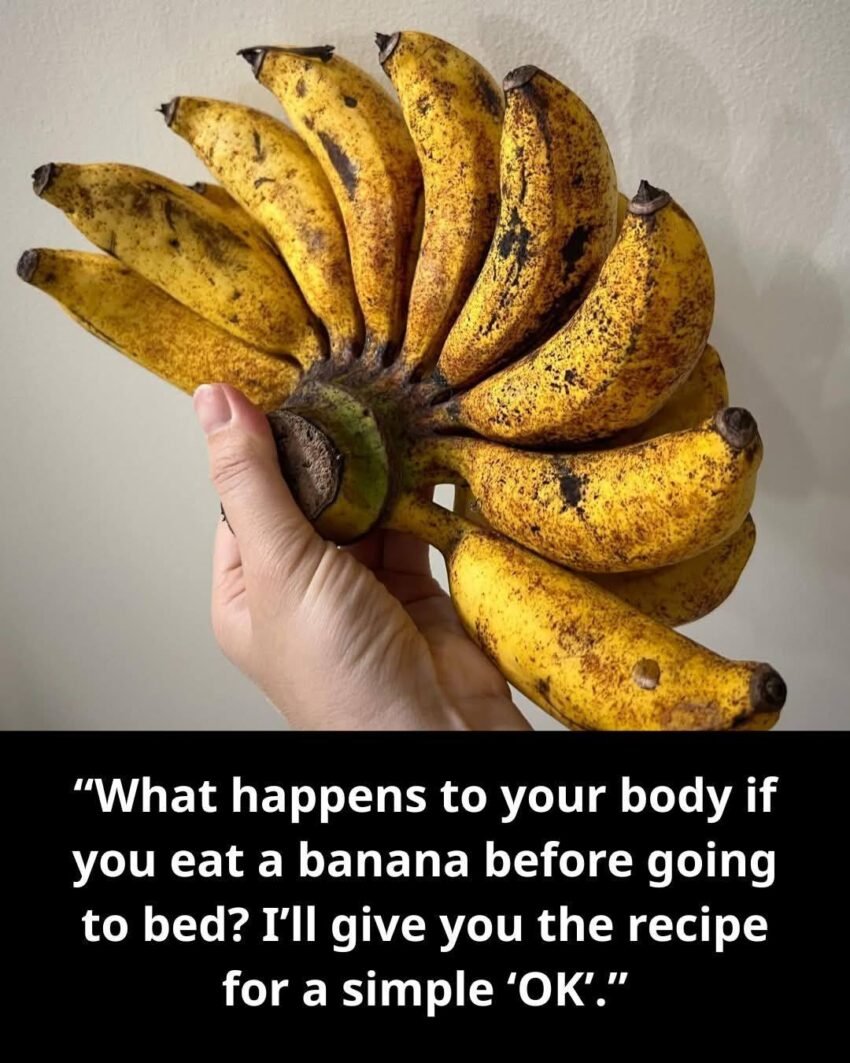
If You Eat Bananas at Night, You’ll Increase Your… What Science Actually Says (Myths vs Reality Explained)
Do bananas at night cause weight gain or sleep issues? Discover the real science behind eating bananas before bed and what actually happens in your body.
You’ve probably heard it before:
“If you eat bananas at night, you’ll increase your weight… or ruin your digestion… or disturb your sleep.”
It sounds confident. Even a little worrying.
So many people avoid bananas after dinner, thinking there’s some hidden nighttime danger inside this simple fruit.
But here’s the truth most viral claims leave out:
👉 Your body doesn’t “switch off” at night in the way food myths suggest.
So what actually happens when you eat a banana before bed?
Let’s break it down without fear, exaggeration, or internet myths.
The Claim: What People Think Happens
The incomplete sentence—“If you eat bananas at night, you’ll increase your…”—is usually followed online by:
- Weight gain
- Mucus production
- Blood sugar spikes
- Poor digestion
- “Cold” body effects (in traditional beliefs)
But most of these claims are not supported by strong scientific evidence.
Let’s look at what really matters.
What Actually Happens When You Eat a Banana at Night
A banana is a nutrient-dense fruit containing:
- Natural carbohydrates
- Fiber
- Potassium
- Vitamin B6
- Magnesium
- Small amounts of natural sugar
When you eat it at night, your body:
✔ Digests it normally
✔ Uses glucose for energy or storage
✔ Absorbs minerals like magnesium and potassium
✔ Processes fiber in the gut
There is nothing in bananas that “breaks” your metabolism at night.
The Weight Gain Myth
Let’s address the most common fear first.
“Eating bananas at night makes you gain weight”
This is not true in a direct sense.
Weight gain depends on:
- Total daily calorie intake
- Overall diet quality
- Activity level
Not the timing of a single fruit.
A banana has about 90–120 calories—similar whether eaten at 9 AM or 9 PM.
👉 What matters is consistency, not clock time.
Do Bananas at Night Affect Digestion?
For most people: no negative effect.
In fact, bananas are often:
- Easy to digest
- Gentle on the stomach
- Helpful for mild acidity
The fiber in bananas can even support digestion overnight.
However:
- Eating very large amounts of any food right before bed may cause discomfort in sensitive individuals
- People with specific digestive conditions may react differently
But for the average person, bananas are not a digestive problem at night.
Can Bananas Help You Sleep?
Interestingly, this is where bananas actually get a positive reputation.
They contain:
Magnesium
Supports muscle relaxation and calm nervous system activity.
Vitamin B6
Helps in serotonin and melatonin production (sleep-related hormones).
Natural carbohydrates
May support tryptophan absorption, which is linked to sleep regulation.
👉 This is why some people actually find bananas helpful before bedtime.
Blood Sugar Concerns (Another Common Myth)
Bananas contain natural sugars—but also fiber.
This combination:
- Slows glucose absorption
- Prevents rapid spikes in most healthy individuals
For people without diabetes or insulin resistance, a banana at night does not cause dangerous blood sugar issues.
However, individuals with diabetes should always consider portion size and overall diet context.
Why This Myth Became Popular
There are a few reasons:
1. “Night eating = bad” culture
Many diets falsely label nighttime eating as unhealthy.
2. Misunderstanding metabolism
Your metabolism doesn’t shut down at night—it continues working.
3. Traditional beliefs
Some cultures classify foods as “heavy” or “light” at night without scientific backing.
4. Viral misinformation
Short claims spread faster than full explanations.
What About Mucus Production?
Another popular claim is:
“Bananas at night increase mucus.”
There is no strong scientific evidence supporting this in healthy individuals.
Some people may feel subjective throat sensations due to texture or digestion, but it is not a physiological increase in mucus production.
When Eating Bananas at Night Might Not Be Ideal
Bananas are generally safe—but context matters.
You might want to avoid late-night bananas if:
- You are eating large quantities before bed
- You have strict calorie goals and are not accounting for snacks
- You experience discomfort with late eating
- You have specific medical dietary restrictions
Even then, it’s about timing and quantity—not the banana itself.
Real-Life Scenario
A college student starts avoiding bananas at night after hearing they cause weight gain.
Instead, she replaces them with processed snacks like chips or cookies.
Result:
- Higher calorie intake overall
- Poorer sleep quality
- No improvement in weight control
Later, she reintroduces bananas as a light evening snack.
Result:
- Better satiety
- Fewer cravings
- More stable eating habits
The difference wasn’t the banana—it was the overall dietary pattern.
Bananas vs Other Night Snacks
| Snack Type | Calories | Satiety | Sleep Impact |
|---|---|---|---|
| Banana | Moderate | High | Neutral to positive |
| Chips | High | Low | Negative |
| Cookies | High | Low | Negative |
| Yogurt | Moderate | High | Positive |
Bananas often perform better than processed alternatives.
Expert Perspective
Nutrition experts generally agree on three key points:
- Timing matters less than total intake
- Whole fruits are healthier than processed snacks
- Individual tolerance should guide food choices
There is no major guideline recommending against bananas at night.
Simple Healthy Way to Eat Bananas in the Evening
If you enjoy bananas at night:
✔ Stick to 1 banana
✔ Pair with protein (like yogurt or nuts if needed)
✔ Eat 1–2 hours before bed if sensitive to digestion
✔ Keep overall diet balanced
FAQ
1. Can eating bananas at night make you fat?
No, weight gain depends on total calories, not timing.
2. Are bananas bad before bed?
Not for most people—they are generally safe.
3. Do bananas help you sleep?
They may support relaxation due to magnesium and B6.
4. Can diabetics eat bananas at night?
Yes, but portion control is important.
5. Do bananas cause mucus at night?
There is no strong scientific evidence for this.
6. Is it better to eat bananas in the morning?
They can be eaten any time—timing is flexible.
7. Can I eat banana before sleeping?
Yes, if it fits your digestion and calorie needs.
8. Do bananas slow metabolism at night?
No, metabolism continues functioning during sleep.
9. Are bananas heavy at night?
They are considered light and easy to digest for most people.
10. What is the healthiest night snack?
Whole fruits, yogurt, or light protein-based snacks are often good options.
Conclusion
The idea that eating bananas at night automatically leads to weight gain or health issues is not supported by modern nutrition science.
Your body doesn’t treat food differently based on the clock—it responds to overall balance, quantity, and quality.
Eating a banana at night will not “increase” anything harmful in your body. For most people, it’s a safe, nutritious, and even helpful bedtime snack when eaten in moderation.
If this helped clear up the confusion, share it with someone still avoiding bananas after sunset for no real reason.