If You Have These Two Holes in Your Lower Back, Here’s What It Really Means
Curious about the two small “holes” in your lower back? Learn what they mean, why they appear, and when they might signal something more.
You’ve Seen Them—But Never Questioned Them
Maybe you noticed them in the mirror.
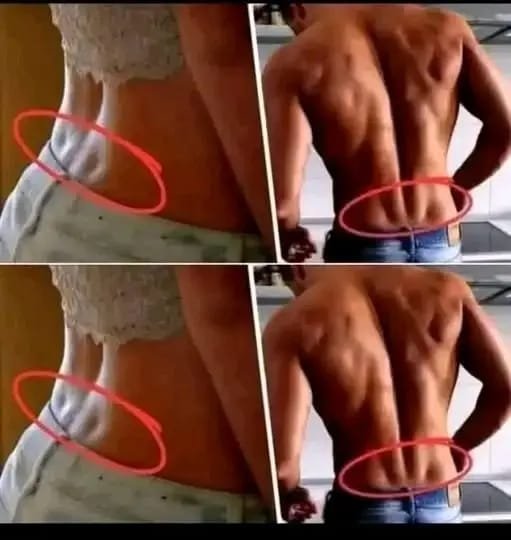
Two small indentations—one on each side of your lower back, just above your hips. They almost look like tiny “holes.”
Some people have them. Others don’t.
And somewhere along the way, you may have heard claims like:
- “They mean you’re super healthy”
- “They’re a sign of attractiveness”
- “Only certain people are born with them”
So what’s the truth?
Are these little dips just a harmless body feature—or do they actually mean something about your health?
Let’s break it down clearly, honestly, and without the myths.
What Are These “Two Holes” in Your Back?
Those indentations are commonly known as “back dimples.”
Medically, they’re called:
👉 Dimples of Venus (in women)
👉 Sometimes referred to as Dimples of Apollo (in men)
They appear on the lower back, right where the pelvis meets the spine.
Why Do These Dimples Form?
It comes down to anatomy and genetics.
These dimples are caused by:
- A natural gap where the skin attaches to the underlying pelvic bone
- The structure of your ligaments in that area
- Your body fat distribution
Key point:
You’re either born with them or you’re not.
They are not something you can “develop” through exercise or diet alone.
Why Some People Have Them—and Others Don’t
It’s largely genetic.
Factors that influence visibility:
- Bone structure
- Skin elasticity
- Body fat percentage
- Muscle distribution
People with lower body fat may have more visible dimples—but even very fit individuals might not have them at all.
Do These Dimples Mean You’re Healthy?
Here’s where misinformation spreads.
❌ Myth: Back dimples = perfect health
❌ Myth: They indicate better circulation or fertility
✔ Reality:
Back dimples are simply a physical trait.
They do not directly indicate health status.
Why They’re Often Considered Attractive
In U.S. pop culture and fitness aesthetics, back dimples are sometimes seen as a sign of:
- Symmetry
- Lower body fat
- Defined musculature
They’re often highlighted in:
- Fitness photography
- Fashion media
- Celebrity culture
But attractiveness is subjective—and this feature has no medical advantage.
When These “Holes” Might Actually Matter
In most cases, they’re completely harmless.
However, there’s one important exception:
1. Deep Dimples Present at Birth (Especially in Infants)
In rare cases, a deep sacral dimple (especially if located lower or accompanied by other signs) may be linked to spinal conditions.
Watch for red flags in babies:
- A dimple that is very deep
- Located lower on the spine
- Associated with hair tufts or skin discoloration
- Fluid drainage
If present, pediatric evaluation is recommended.
Adult Perspective: Should You Be Concerned?
For adults:
👉 Back dimples are almost always harmless.
You do NOT need:
- Medical tests
- Treatment
- Any kind of correction
Unless there is:
- Pain
- Swelling
- Sudden changes
…there’s no cause for concern.
Real-World Scenario
Emily, 29, noticed her back dimples after losing weight and thought something had changed medically.
After checking with her doctor, she learned:
- They were always there
- They became more visible due to reduced body fat
No health issue—just a natural feature.
Pros and Cons of Having Back Dimples
| Pros | Cons |
|---|---|
| Harmless anatomical trait | Can be misunderstood |
| Sometimes considered aesthetic | No health benefit |
| No maintenance required | Subject to myths |
Common Misconceptions
❌ “You can get them through workouts”
No exercise specifically creates them.
❌ “They indicate strong core muscles”
They’re unrelated to muscle strength.
❌ “They’re rare or special”
They’re fairly common and vary by genetics.
Expert Insights Most People Don’t Know
- These dimples are tied to ligament placement, not muscle
- Even identical twins may differ in how visible they are
- Cosmetic procedures exist to create them—but results vary and are not medically necessary
2026 Perspective: Why This Topic Keeps Trending
- Social media aesthetics drive curiosity
- Viral posts exaggerate meaning
- Visual features often get linked to “hidden health signs”
This is a classic case of appearance being mistaken for medical significance.
Practical Takeaway: What Should You Do?
If you have them:
- No action needed
- They’re normal
If you don’t:
- Also completely normal
If you notice unusual symptoms:
- Pain
- Skin changes
- New or growing indentations
👉 Get a medical opinion—not because of dimples, but because of the change.
Mini Case Example
Jake, 35, saw a viral post claiming back dimples indicate “perfect genetics.”
He didn’t have them and worried something was wrong.
After learning the facts, he realized:
- It’s purely genetic
- It has zero impact on health
Concern resolved—no issue.
Frequently Asked Questions
1. What are the two holes in my lower back?
They’re called back dimples—natural indentations above the hips.
2. Are back dimples rare?
No, they’re fairly common.
3. Do they mean I’m healthy?
No—they don’t indicate health status.
4. Can I get them through exercise?
No—they’re genetic.
5. Are they a sign of low body fat?
Not necessarily, but they may be more visible with lower fat.
6. Should I be worried about them?
Not in adults—unless unusual symptoms appear.
7. Do men have them too?
Yes, though they’re less often discussed.
8. Are they linked to spinal issues?
Only certain deep dimples in infants—not typical adult back dimples.
Action Checklist
- ✔ Recognize back dimples as normal anatomy
- ✔ Ignore misleading viral claims
- ✔ Monitor for unusual changes (rare)
- ✔ Seek medical advice only if symptoms appear
- ✔ Focus on overall health—not physical traits
Conclusion: Not Everything You See Means Something Is Wrong
Those two small “holes” in your back?
They’re not a warning sign.
They’re not a secret health indicator.
They’re not something you need to fix.
They’re just a natural part of human anatomy—nothing more, nothing less.
Back dimples are harmless, genetic features—not medical signals. If you have them or don’t, it makes no difference to your health.
If you’ve ever wondered about other “mysterious” body features, drop your questions below. Curiosity is good—just make sure it’s backed by real information.