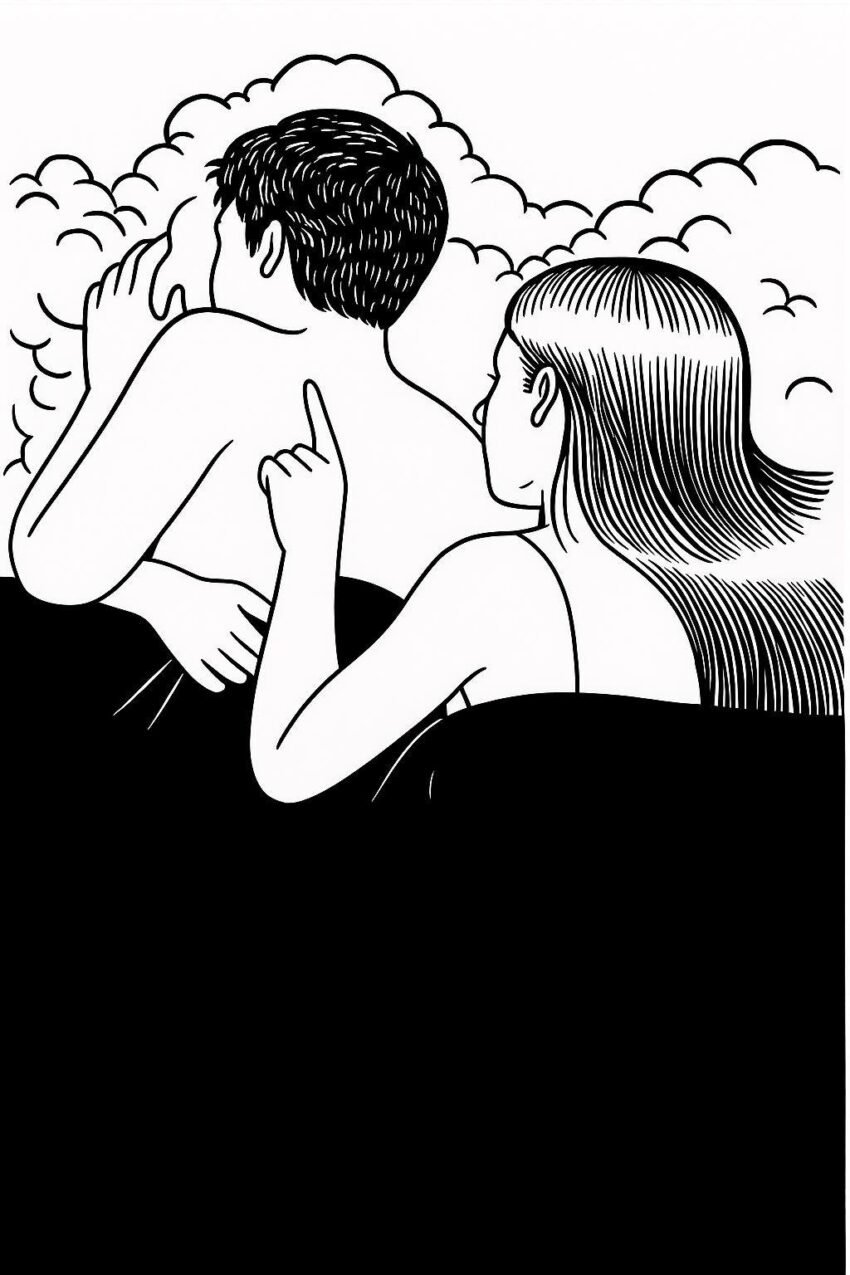
If Your Partner Turns Their Back to You While Sleeping, It Means This (Truth Behind Sleep Positions in Relationships)
Discover what it really means when your partner turns their back while sleeping—psychology, relationship insights, and what actually matters.
It’s late at night. The room is quiet. You shift slightly in bed and notice it—your partner has turned their back to you.
And suddenly, a simple sleep position starts to feel like a message.
Are they upset? Distant? Losing interest?
Before your mind starts building stories out of silence, it helps to understand something important: sleep behavior is rarely a direct reflection of relationship feelings.
In fact, most of what happens in sleep has more to do with comfort, temperature, and brain activity than emotional distance.
This guide breaks down what it actually means when a partner turns away while sleeping—and what it doesn’t mean.
First: Sleep Position Is Not a Relationship Statement
One of the biggest misconceptions in relationships is reading too much into unconscious behavior.
Sleep is not a social activity. It’s a biological state where the body prioritizes:
- Comfort
- Temperature regulation
- Spinal alignment
- Deep rest
So when your partner turns away, the first truth is simple:
It is usually not intentional.
What It Most Commonly Means (The Real Reasons)
Let’s break down the realistic explanations.
1. Comfort and Body Temperature
One of the most common reasons someone turns away in bed is simple: heat.
Humans naturally regulate temperature during sleep. Facing away from someone reduces:
- Body heat buildup
- Skin-to-skin contact warmth
- Overheating during deeper sleep stages
If you’ve ever woken up slightly sweaty or restless, your body is doing the same adjustment.
This is especially common in warmer climates and seasons.
2. Natural Sleep Movement
People don’t stay in one position all night.
Studies on sleep behavior show that most adults shift positions multiple times during sleep cycles. This includes turning:
- Side to back
- Facing partner to facing away
- Curling or stretching positions
It’s not conscious—it’s part of how the body maintains comfort during REM and deep sleep stages.
3. Spinal Alignment and Pressure Relief
Your body instinctively adjusts to reduce pressure points.
Turning away may:
- Reduce shoulder strain
- Ease hip pressure
- Improve breathing comfort
This is especially common in side sleepers.
4. Personal Sleep Conditioning
Everyone develops sleep habits over years.
If someone has slept alone for a long time before the relationship, their body may naturally prefer:
- Edge sleeping
- Facing open space
- Minimal contact during deep sleep
This doesn’t change emotional closeness—it’s just muscle memory.
5. Emotional Distance? Sometimes—but Rarely Alone
Now let’s address the concern directly.
Yes, in some cases, consistent avoidance of contact during awake moments plus emotional withdrawal can signal relationship tension.
But here’s the key distinction:
Sleep position alone is not a reliable emotional indicator.
Relationship experts and psychologists emphasize that behavioral interpretation requires patterns—not single signals.
What It Usually DOESN’T Mean
Let’s clear the noise.
If your partner turns away in sleep, it does NOT automatically mean:
- They are losing interest
- They are upset with you
- They are cheating
- They are emotionally disconnected
- The relationship is failing
These are interpretations, not facts.
What Matters More Than Sleep Position
If you’re concerned about emotional closeness, focus on waking-life behavior:
- Do they communicate openly?
- Do they show affection during the day?
- Do they make time for you?
- Do they support you emotionally?
These are real indicators of relationship health—not unconscious sleep movements.
Psychological Insight: Why We Overthink This
Humans are wired to look for emotional meaning in patterns.
At night, when everything is quiet, the brain fills gaps with interpretation. This is called meaning-making under uncertainty.
So a simple turn in bed can become:
- “Are they distancing from me?”
- “Did I do something wrong?”
- “Is something changing?”
But in reality, the brain is trying to create structure where none exists.
Real-Life Example
Consider a couple who are deeply connected emotionally during the day:
- They laugh together
- Communicate openly
- Support each other
At night, one partner turns away to sleep comfortably.
Nothing changes in the relationship—but the sleep position does.
That’s the disconnect between perception and reality.
When You Should Pay Attention
Sleep position alone isn’t meaningful—but combined patterns can be.
It may be worth noticing if you also see:
- Reduced communication during the day
- Lack of physical affection while awake
- Emotional withdrawal or irritability
- Avoidance of closeness overall
Even then, the issue is not the sleep position—it’s the broader behavior pattern.
Healthy Ways to Respond (Instead of Overthinking)
If this bothers you, here’s what actually helps:
1. Talk During the Day
Not at night. Not during sleep frustration. Calm, open conversation works best.
2. Focus on Emotional Connection
Build closeness when both of you are awake and present.
3. Adjust Physical Comfort
Try:
- Bigger blankets
- Cooler room temperature
- Side-by-side but separate comfort zones
4. Don’t Assign Meaning to Sleep Behavior
Train yourself to separate unconscious actions from emotional signals.
Expert Perspective on Sleep & Relationships
Sleep researchers consistently highlight that:
- Movement during sleep is normal
- Couples often sleep better with slight separation
- Physical closeness is not required for emotional closeness
In fact, many couples report better sleep quality when they have enough space to move freely.
2026 Relationship Trend Insight
Modern couples are increasingly:
- Prioritizing sleep quality
- Using larger beds
- Normalizing “independent sleep space within shared beds”
The shift is toward comfort compatibility, not constant physical contact.
Mini Scenario
A couple upgrades from a small bed to a larger one.
At first, they sleep closer. Over time, they naturally drift into separate positions.
Their relationship doesn’t weaken—in fact, they sleep better, feel more rested, and argue less.
Why? Because rest quality improves emotional regulation during the day.
Frequently Asked Questions
1. Does turning away in sleep mean my partner is upset?
No. Most of the time it’s about comfort, not emotion.
2. Should I worry if my partner doesn’t cuddle at night?
Not necessarily. Many people shift away during deep sleep.
3. Can sleep positions reflect relationship problems?
Only when combined with daytime emotional distance—not alone.
4. Is it normal for couples to sleep facing away?
Yes, very normal and common.
5. Does sleeping apart improve relationships?
For many couples, better sleep quality improves overall relationship satisfaction.
6. Should I wake my partner to cuddle?
It’s better to communicate preferences during the day instead.
7. Why do I feel emotionally rejected when this happens?
It’s a natural emotional interpretation, but not always accurate.
8. What’s the healthiest sleep position for couples?
Whatever allows both partners to sleep comfortably.
Action Checklist
What To Do
✔ Focus on daytime emotional connection
✔ Communicate sleep preferences calmly
✔ Prioritize sleep quality for both partners
✔ Adjust environment (temperature, bedding)
✔ Observe behavior patterns—not isolated actions
What To Avoid
✘ Don’t overinterpret sleep positions
✘ Don’t assume emotional distance without evidence
✘ Don’t create conflict based on unconscious behavior
✘ Don’t ignore real communication issues if they exist
Conclusion
A partner turning their back while sleeping is rarely a hidden message—it’s usually just the body doing what it needs to rest.
Comfort, temperature, and natural sleep movement explain most of what we see at night.
What actually defines a relationship is what happens when both people are awake: communication, respect, consistency, and care.
Sleep positions don’t tell the full story—your daily connection does.
Don’t read emotional meaning into sleep behavior. Focus on the relationship you live during the day, not the positions you take while you rest.