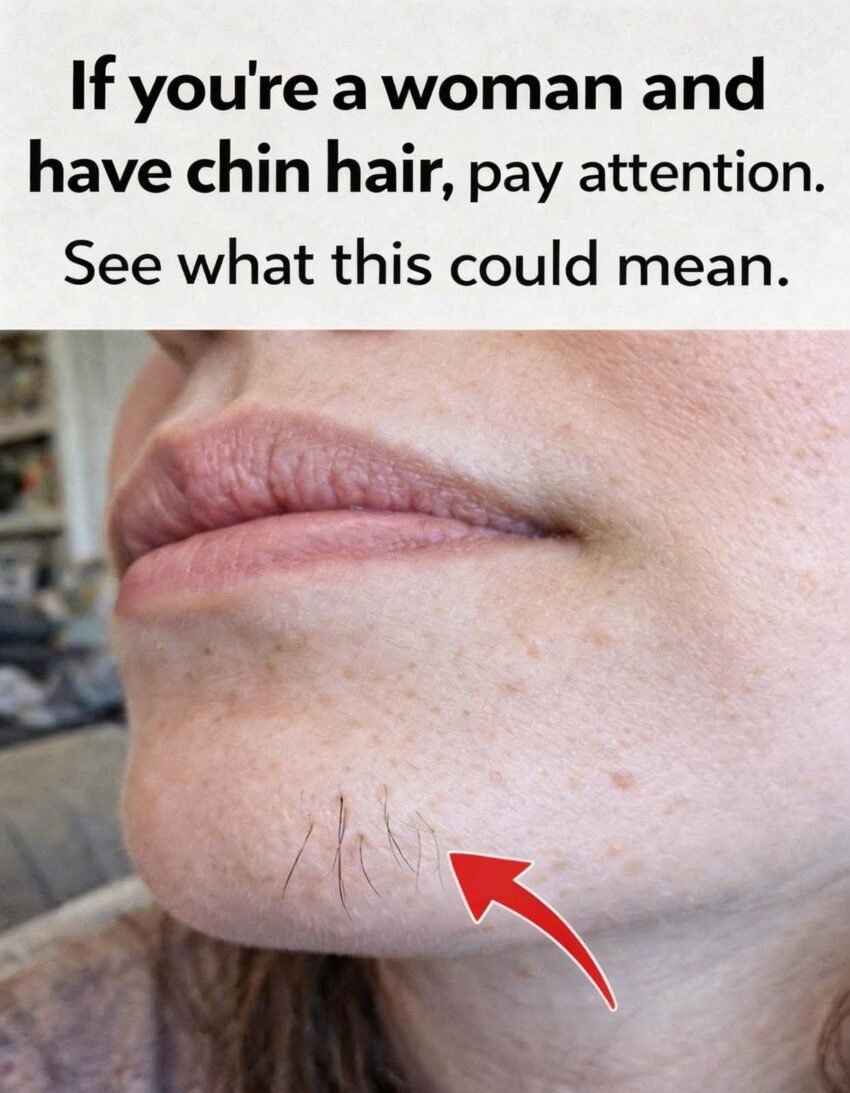
If You’re a Woman and You Notice Chin Hair, Pay Attention: What It Could Actually Mean (Without the Panic or Myths)
Chin hair in women is more common than you think. Learn what causes it, when it’s normal, and when it may signal a hormonal or health change.
It usually starts quietly.
A quick glance in the mirror.
A change in lighting.
Maybe a stray hair you didn’t notice before.
Then a closer look.
And suddenly the thought appears:
“Wait… why is there hair there?”
For many women, chin hair can feel surprising — even unsettling — because it doesn’t match the expectations we’re often taught about appearance.
But here’s something most people don’t hear enough:
Facial hair in women is far more common than it’s made to seem.
And in most cases, it’s not a sign of anything dangerous or unusual.
Still, it can sometimes reflect changes happening inside the body — especially hormonal shifts.
So instead of fear or embarrassment, what’s more useful is understanding.
First, Let’s Normalize What’s Actually Normal
Women naturally have hair on their face.
It may be:
- fine and light (vellus hair)
- darker and more noticeable in some areas
- more visible with age or hormonal changes
Chin hair specifically can appear due to:
- genetics
- age-related hormone shifts
- ethnicity
- natural variation in androgen sensitivity
In many cases, it’s simply part of normal human biology — not a warning sign.
But context matters.
The Most Common Reason: Hormonal Changes
The biggest influence behind chin hair is hormones — specifically androgens.
Women produce small amounts of androgens naturally. These hormones can influence hair growth in areas like:
- chin
- upper lip
- jawline
When sensitivity to these hormones increases, hair may become more noticeable.
This doesn’t automatically mean something is wrong.
It often happens gradually and subtly over time.
Age and Life Stages Play a Role
One of the most overlooked factors is age.
Chin hair often becomes more noticeable during:
Perimenopause and menopause
Hormone levels shift, especially estrogen and progesterone. This can make existing facial hair more visible.
Late 20s to 40s hormonal changes
Even outside menopause, natural fluctuations can affect hair growth patterns.
Post-pregnancy changes
Hormones can temporarily shift hair distribution and texture.
These changes are often gradual — not sudden.
Genetics: The Quiet Influence Nobody Talks About
If your mother or grandmother had facial hair, there’s a higher chance you might notice it too.
Genetics can affect:
- hair follicle sensitivity
- density of facial hair
- growth patterns
In some families, light chin hair is simply a shared trait — not a medical concern.
When Chin Hair May Be Linked to a Medical Condition
In some cases, increased or sudden chin hair growth can be associated with hormonal conditions such as:
- Polycystic Ovary Syndrome (PCOS)
- Thyroid imbalances
- Elevated androgen levels
But context is key.
Doctors typically look for patterns, not a single symptom.
Other signs that may appear alongside hormonal imbalance include:
- irregular menstrual cycles
- acne flare-ups
- unexplained weight changes
- increased hair growth in multiple areas
If chin hair appears suddenly or rapidly increases, it may be worth discussing with a healthcare professional.
Why This Topic Feels More Emotional Than Medical
Even though chin hair is a biological phenomenon, the reaction is often emotional rather than logical.
Why?
Because of social conditioning.
For generations, beauty standards have promoted the idea that:
- women should be hair-free on the face
- any visible facial hair is “undesirable”
- smooth skin equals femininity
So when chin hair appears, it can trigger:
- embarrassment
- self-consciousness
- anxiety about aging or health
But biology doesn’t follow beauty standards.
Real-Life Perspective: What Dermatologists Actually See
Dermatologists often point out that chin hair is one of the most common concerns among women — yet rarely a serious medical issue.
In clinical practice, they often see:
- normal hormonal variation
- age-related changes
- mild hirsutism without underlying disease
In other words, most cases are cosmetic, not clinical.
When You Should Actually Pay Attention
It’s worth looking deeper if you notice:
- sudden increase in coarse hair
- rapid changes over a short period
- chin hair combined with other hormonal symptoms
- irregular cycles or persistent acne changes
These don’t automatically mean something serious — but they are signals worth checking.
What You Can Do About It (If You Want To)
There’s no single “correct” response to chin hair.
Some women:
- leave it completely natural
- remove it with tweezing or threading
- use waxing or shaving
- choose laser hair reduction
None of these choices affect health.
It’s purely personal preference.
Common Myths About Chin Hair in Women
Myth #1: It means something is wrong with your health
Not necessarily. Most cases are normal variation.
Myth #2: Only older women get chin hair
False — it can appear at any age.
Myth #3: Removing it makes it grow back thicker
Shaving or tweezing does not change follicle thickness.
Myth #4: It always means hormonal disease
Only sometimes — and usually with other symptoms.
The Psychological Side Nobody Mentions
What makes chin hair feel bigger than it is?
Visibility + expectation mismatch.
It’s not just the hair itself — it’s what it represents socially:
- aging
- femininity norms
- perceived “flaws”
But in reality, it’s just hair.
And hair is one of the most variable traits in the human body.
A More Grounded Way to Think About It
Instead of immediately assuming something is wrong, it helps to reframe:
- Is this new, or just newly noticed?
- Has anything else changed in my body?
- Is this consistent or isolated?
Most of the time, the answer is simple: it’s normal variation.
Frequently Asked Questions
Is chin hair normal for women?
Yes. Many women naturally grow fine or even coarse chin hair.
Does chin hair mean I have a hormonal problem?
Not always. It depends on severity, speed of growth, and other symptoms.
Why am I suddenly noticing chin hair?
It may have been there before but became more visible due to age, lighting, or hormonal shifts.
Can stress cause facial hair growth?
Indirectly, stress can influence hormones, but it’s rarely a direct cause.
Does shaving chin hair make it worse?
No. It does not change growth rate or thickness.
When should I see a doctor?
If hair growth is sudden, rapid, or accompanied by other hormonal changes.
Is chin hair linked to PCOS?
It can be, but only when combined with other symptoms.
Can diet affect chin hair?
Not directly, though overall hormone health can be influenced by lifestyle.
Is it safe to remove chin hair regularly?
Yes. Methods like threading, waxing, or shaving are commonly used.
Why does chin hair increase with age?
Hormonal balance shifts over time, especially during menopause.
Chin hair in women is often treated like a secret problem.
But in reality, it’s usually just a normal expression of how human biology works.
Sometimes it reflects hormones.
Sometimes genetics.
Sometimes age.
And often, nothing at all beyond natural variation.
What matters most isn’t the hair itself — it’s understanding what it actually means in your specific situation, without jumping to worst-case conclusions.
Because most of the time, what feels alarming in the mirror is simply your body doing something it has quietly done for a long time… just slightly more visibly than before.