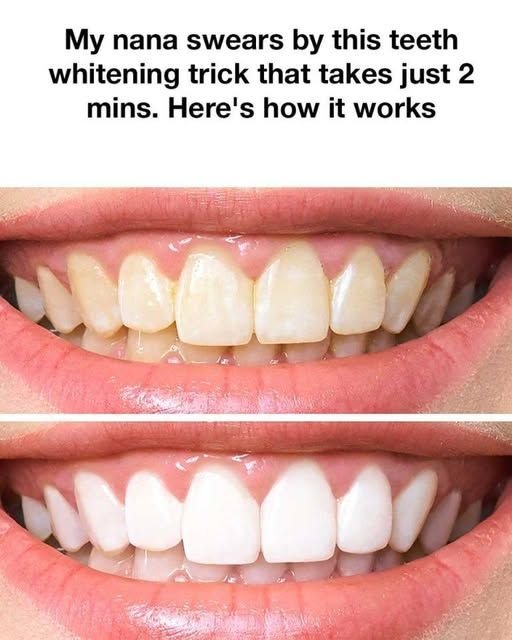
My Nana Swears by This “2-Minute Teeth Whitening Trick”—But Does It Actually Work or Damage Your Teeth?
A viral 2-minute teeth whitening trick claims instant results—here’s what actually works, what’s risky, and what dentists really recommend in 2026.
The Viral Trick Everyone’s Grandma Seems to Know
It usually starts the same way.
Someone leans in and says, “My nana used this teeth whitening trick… takes just 2 minutes and it actually works.”
No dentist. No expensive kit. No waiting weeks.
Just a quick DIY method that promises visibly whiter teeth almost instantly.
And honestly? That’s exactly why it spreads so fast online and through family “oral traditions.” It sounds simple, cheap, and too good to question.
But here’s the uncomfortable truth most viral whitening hacks don’t tell you:
What works fast on enamel appearance isn’t always what keeps your teeth healthy long-term.
In this deep dive, we’ll break down what this “2-minute teeth whitening trick” usually refers to, why people believe it works, what dentists actually say about it, and safer alternatives that won’t quietly damage your enamel while chasing a brighter smile.
What Is the “2-Minute Teeth Whitening Trick” Everyone Talks About?
Across social media, forums, and word-of-mouth advice, the so-called “2-minute whitening trick” is not one single method—it’s a category of DIY whitening hacks.
Most versions involve combinations of:
- Baking soda-based pastes
- Acidic ingredients like lemon juice or vinegar (in older variations)
- Activated charcoal rubbing
- Hydrogen peroxide rinses (diluted or homemade misuse)
- Salt or abrasive scrubs
The common promise is the same:
A visibly whiter smile in minutes, without professional treatment.
And technically… some of these methods can create short-term surface brightness.
But “whitening” in dentistry is more complex than removing surface stains.
Why People Think It Works So Quickly
To understand the appeal, you need to understand how tooth staining actually works.
Teeth discoloration usually falls into three categories:
- Surface stains – from coffee, tea, smoking, and food
- Internal stains – changes inside the enamel or dentin
- Age-related darkening – natural enamel thinning over time
Most DIY tricks only affect surface stains.
So when someone uses an abrasive substance, what happens is:
- The outer layer is slightly polished
- Surface discoloration is temporarily reduced
- Teeth reflect more light, appearing “whiter”
That’s why people think it “worked instantly.”
But polishing is not the same as whitening—and that difference matters more than most realize.
The Hidden Problem: Enamel Is Not Replaceable
Dental enamel is the hardest substance in the human body, but it has one major limitation:
It does not regenerate.
So when aggressive DIY whitening methods are used repeatedly, they may:
- Thin enamel over time
- Increase tooth sensitivity
- Expose yellowish dentin underneath
- Make teeth more prone to staining later
This is why dentists often warn against repeated abrasive whitening hacks.
The American Dental Association has consistently emphasized that whitening products should be used carefully and ideally under professional guidance, especially when peroxide or abrasive agents are involved.
Why the “2-Minute Fix” Is So Misleading
The biggest issue isn’t just safety—it’s expectation.
A true dental whitening process involves chemistry, not quick scrubbing.
Professional whitening works by:
- Using controlled peroxide levels
- Penetrating enamel safely
- Breaking down deep pigment molecules
- Preserving enamel integrity
That process takes time—even if the results can be fast.
DIY hacks skip safety controls, which is why they may look effective but come with trade-offs.
Real Talk: Does the Trick Ever “Work”?
Yes—but with conditions.
Some people do see short-term brightness from:
- Removing surface plaque
- Light abrasion of stains
- Temporary polishing effects
But here’s the catch:
The effect is often:
- Temporary
- Inconsistent
- Dependent on enamel condition
- Reversible within days
So what feels like “whitening” is often just stain removal, not actual shade change.
What Dentists Actually Recommend Instead
If your goal is a visibly whiter smile without risking enamel damage, dental professionals generally recommend:
1. Whitening Toothpaste (Safe Abrasives)
Designed to gently polish without stripping enamel.
2. Professional Whitening Treatments
Dentist-supervised bleaching gels or in-office treatments provide controlled results.
3. Custom Whitening Trays
These allow gradual whitening at safe concentrations.
4. Lifestyle Adjustments
- Reducing coffee and tea frequency
- Using a straw for dark beverages
- Rinsing after staining foods
These approaches take longer—but preserve enamel health.
Comparison: DIY Trick vs Dental Whitening
| Factor | 2-Minute DIY Trick | Professional Whitening |
|---|---|---|
| Speed | Immediate appearance | Gradual or same-day |
| Safety | Unregulated | Clinically controlled |
| Longevity | Short-term | Long-lasting |
| Enamel risk | Higher | Minimal |
| Cost | Low | Higher |
The difference is less about “fast vs slow” and more about “surface change vs structural whitening.”
Common Mistakes People Make With Whitening Hacks
1. Using acidic ingredients repeatedly
Lemon juice or vinegar can erode enamel over time.
2. Scrubbing too hard
Aggressive brushing doesn’t whiten—it wears teeth down.
3. Expecting instant permanent results
True whitening requires chemical oxidation, not friction.
4. Mixing random ingredients
DIY combinations can increase sensitivity and damage.
What’s Actually Happening When Your Teeth Look Whiter After a Hack
This part surprises many people:
Even if a trick “works,” the effect often comes from:
- Light reflection changes
- Temporary dehydration of enamel surface
- Removal of soft stains
- Optical illusion from smoother surfaces
Once saliva rehydrates enamel and stains return, the effect fades.
So it’s not transformation—it’s temporary optical enhancement.
Safer At-Home Alternatives That Actually Help
If you want gradual improvement without risk, here are safer approaches:
- Use fluoride toothpaste consistently
- Brush twice daily for at least two minutes
- Floss to remove hidden staining buildup
- Limit highly pigmented drinks
- Maintain regular dental cleanings
These don’t promise overnight results—but they prevent long-term discoloration.
Mini Scenario: The “It Worked… Until It Didn’t” Story
A college student tries a viral whitening hack before graduation photos.
At first, the results look impressive. Teeth appear brighter within minutes.
Encouraged, they repeat it multiple times over a few weeks.
Then something changes:
- Increased sensitivity to cold drinks
- Uneven color patches
- Dentist mentions early enamel wear
The whitening effect wasn’t permanent—but the enamel impact was.
This is the trade-off most viral hacks don’t show upfront.
The Psychology Behind Why We Love Quick Fixes
There’s a reason these tricks go viral.
Our brains are wired to prefer:
- Instant results over delayed benefits
- Low effort over structured routines
- Social proof (“my nana swears by it”) over clinical data
That doesn’t make people irrational—it makes them human.
But dental health is one of those areas where slow, consistent care beats fast experimentation every time.
Future of Teeth Whitening: What 2026 Trends Show
In 2026, dental care is moving toward:
- Lower-abrasion whitening formulas
- AI-guided dental care apps tracking enamel health
- More enamel-safe peroxide delivery systems
- Personalized whitening plans based on tooth biology
The trend is clear: safer, not faster.
The industry is actively moving away from harsh DIY methods and toward precision-based cosmetic care.
FAQ: The Truth About the 2-Minute Teeth Whitening Trick
1. Does the 2-minute whitening trick actually work?
It may temporarily remove surface stains, but it does not provide long-term whitening.
2. Is baking soda safe for teeth whitening?
Occasional use may be safe, but frequent use can be abrasive and damage enamel.
3. Can lemon juice whiten teeth?
No. It is acidic and can erode enamel, leading to sensitivity and discoloration.
4. Why do my teeth look whiter after DIY tricks?
It’s usually due to surface cleaning or temporary optical changes, not real whitening.
5. What is the safest way to whiten teeth at home?
Use fluoride toothpaste, whitening toothpaste approved by dental associations, and good oral hygiene.
6. How long does professional whitening last?
Typically several months to a few years depending on habits.
7. Do whitening strips damage teeth?
When used correctly, they are generally safe, but overuse can cause sensitivity.
8. Can yellow teeth become white again?
Yes, depending on the cause of discoloration and treatment method.
9. Why do dentists warn against DIY whitening hacks?
Because many involve abrasives or acids that can damage enamel over time.
10. How often should I whiten my teeth safely?
It depends on the method, but professional guidance is always recommended.
Action Checklist: Safe Whitening Approach
Do:
- Brush twice daily with fluoride toothpaste
- Use dentist-approved whitening products
- Get regular cleanings
- Drink staining beverages in moderation
- Follow professional guidance
Don’t:
- Use acidic ingredients like lemon or vinegar
- Scrub teeth aggressively
- Repeat DIY whitening daily
- Expect permanent results from quick fixes
- Ignore sensitivity signals
Fast Hacks vs Long-Term Smiles
The idea of a “2-minute teeth whitening trick” is appealing because it promises transformation without effort.
And yes—it may create a temporary visual change.
But real dental aesthetics aren’t built in minutes. They’re maintained through consistency, protection, and informed care.
Sometimes the best-looking smile isn’t the one that was “whitened fastest,” but the one that’s been protected the longest.
Quick whitening tricks may change how your teeth look for a moment—but only safe, consistent care protects how they look for years.